





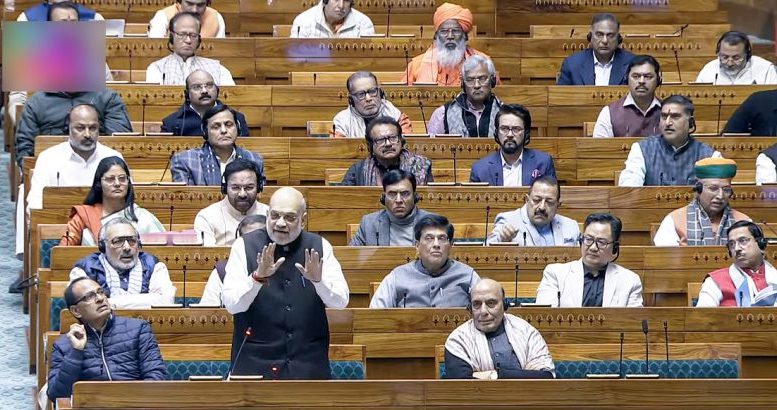
The Government has approved a comprehensive plan to strengthen the cooperative movement and extend its reach to the grassroots level. The vision entails the creation of two lakh new multipurpose Primary Agricultural Credit Societies (PACS), along with dairy and fishery cooperative societies, to ensure every panchayat and village is covered within a five-year timeframe. This was informed in the Lok Sabha by the Union Home and Cooperation Minister Amit Shah.
This ambitious expansion will be achieved through the convergence of various central government schemes, including the Dairy Infrastructure Development Fund (DIDF), National Programme for Dairy Development (NPDD), and PM Matsya Sampada Yojana (PMMSY), with implementation support from NABARD, NDDB, NFDB, and state governments.
To transform PACS into viable economic hubs, the Ministry of Cooperation has formulated Model Byelaws enabling PACS to engage in over 25 economic activities. These range from dairy and fishery ventures to foodgrain procurement, fertilizer and seed distribution, fuel retailing, LPG/CNG distributorship, short- and long-term credit services, custom hiring centers, Fair Price Shops, irrigation services, and the operation of Common Service Centres (CSCs). The goal is to diversify PACS activities, enabling them to become financially self-reliant and service-oriented community institutions.
Among the most transformative efforts is the computerization of functional PACS to enhance efficiency and transparency. With an outlay revised from Rs 2,516 crore to Rs 2,925.39 crore, the project aims to onboard all functional PACS across the country onto a unified ERP-based national software system.
These societies will be digitally linked with NABARD via State Cooperative Banks and District Central Cooperative Banks. So far, 73,492 PACS in 31 states and union territories have been sanctioned under this project, of which 59,920 have already been integrated into the ERP system, with hardware procurement completed in 30 states and UTs.
The plan also supports the establishment of new PACS and cooperatives. As per the National Cooperative Database, a total of 22,606 new PACS, dairy, and fishery societies have been registered nationwide since the plan’s launch. Complementing this, the Government has initiated the world’s largest decentralized grain storage program in the cooperative sector.
Under this, infrastructure like warehouses, processing units, and custom hiring centers are being constructed at PACS level by leveraging schemes such as AIF, AMI, SMAM, and PMFME. Construction has been completed in 11 PACS across 11 states under the pilot phase.
PACS are also being transformed into Common Service Centres, with 47,918 now delivering over 300 e-services like banking, insurance, health services, and utility payments in rural areas. Additionally, 36,592 PACS have been designated as Pradhan Mantri Kisan Samriddhi Kendras (PMKSK), offering fertilizers and other agricultural inputs, while 762 PACS are ready to function as Pradhan Mantri Bhartiya Janaushadhi Kendras, supplying quality generic medicines.
The Government has also made PACS eligible for fuel retail outlets and LPG distributorships to further diversify their operations. Oil Marketing Companies have approved the conversion of 117 PACS from wholesale fuel consumers to retail outlets, with 59 already commissioned.
Other innovative steps include allowing PACS to manage operations and maintenance of rural piped water supply systems, adopting solar energy under PM-KUSUM and Surya Ghar Yojana, and forming new Farmer Producer Organizations (FPOs). NCDC has already helped PACS establish 1,117 FPOs, exceeding its target of 1,100, opening new avenues for income and sustainability.
To ensure effective delivery of these expanded roles, training programs are being conducted, including in districts like Palghar in Maharashtra. This holistic model is helping professionalize PACS and integrate them into the national cooperative and digital ecosystem.
Additionally, the Ministry is supporting entrepreneurship in cooperatives through schemes like Yuva Sahakar for startups, Nandini Sahakar to empower women-led cooperatives, and Swayamshakti Sahakar Yojna for credit access to women SHGs. Together, these initiatives are reshaping India’s cooperative landscape into a robust, inclusive, and future-ready rural development engine.