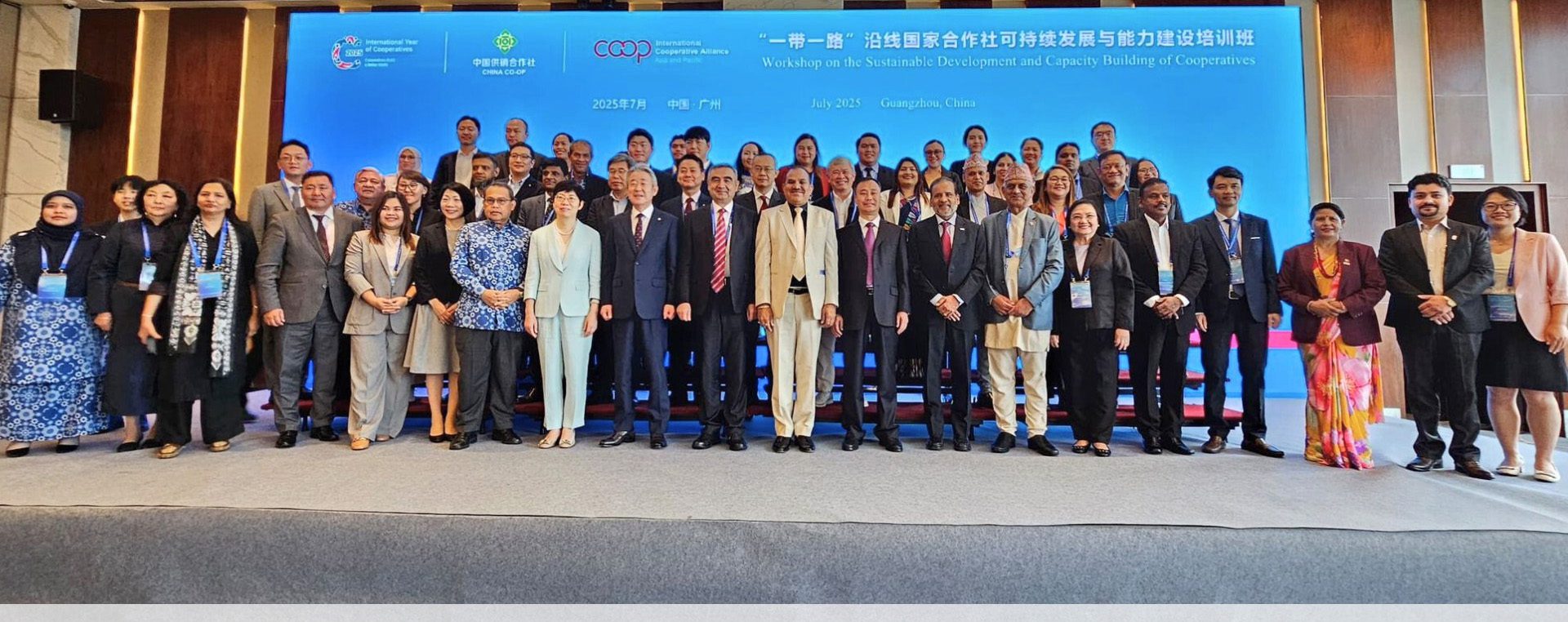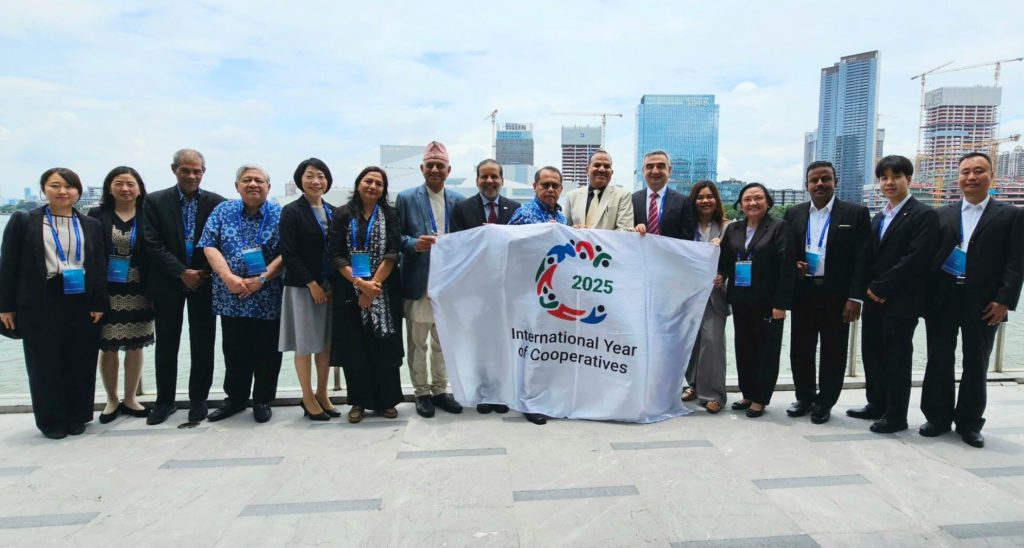
The International Cooperative Alliance Asia and Pacific (ICA-AP) Regional Office convened a high-level strategic meeting last week titled “ICA-AP Strategy 2026–2030: Discussion with the Regional Board Members” in Guangzhou, China.
Hosted by the All-China Federation of Supply and Marketing Cooperatives (ACFSMC), the session aimed to outline a bold and forward-looking roadmap for strengthening the cooperative movement across the Asia-Pacific region over the next five years.
Delivering the opening address, Dr. Chandrapal Singh Yadav, President of ICA-AP, emphasized the strategic importance of the meeting. He noted that under the guidance of the new Director General of ICA, a measurable and inclusive Global Strategy for the cooperative movement had been recently developed and adopted unanimously at the ICA General Assembly in Manchester.
Dr. Yadav, who played a key role in shaping the strategy as part of the ICA leadership team, called for aligning regional strategies with this global framework while addressing the unique realities of the Asia-Pacific.
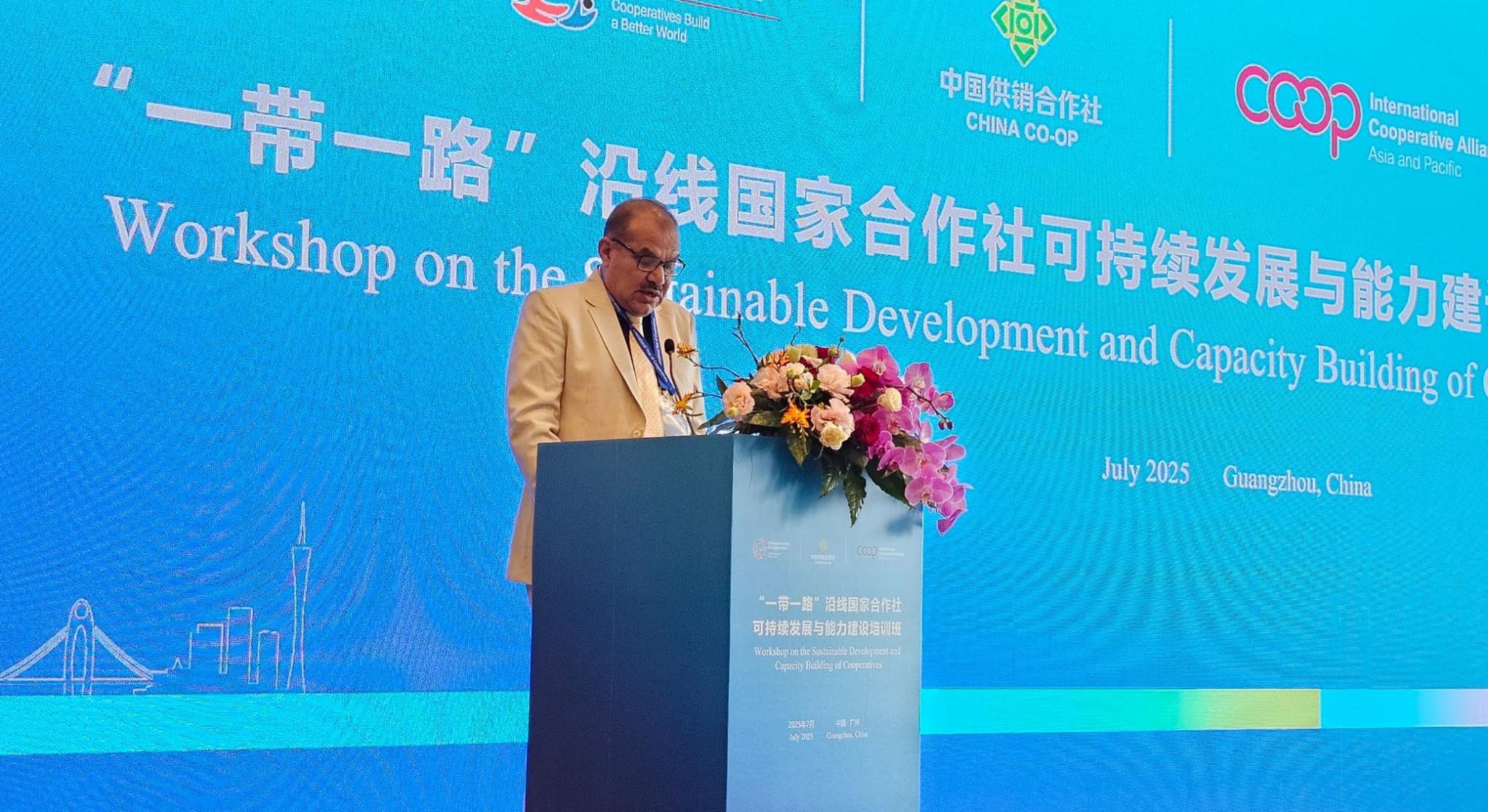

Dr. Yadav urged the members to collaborate in shaping a resilient and impactful strategy that reflects the collective vision of the region.
In parallel with the board meeting, ACFSMC hosted a three-day workshop on “Sustainable Development and Capacity Building of Cooperatives” from 23 to 25 July 2025. This high-level workshop brought together cooperative leaders, policymakers, and experts from across the region to deliberate on strategies to fortify the cooperative model amid evolving global challenges.
India was represented at the event by Dr. Chandrapal Singh Yadav and Mrs. Savitri Singh, Deputy Chief Executive of the National Cooperative Union of India (NCUI). In his keynote address, Dr. Yadav highlighted the critical role cooperatives can play in addressing interlinked global crises such as climate change, digital transformation, food insecurity, and rising inequality.
He stressed that cooperatives, anchored in democracy, equity, and sustainability, offer people-centric solutions that foster inclusive and resilient economies.
Dr. Yadav cited examples from countries like China, India, Japan, the Philippines, Malaysia, and Nepal, where cooperatives are making tangible contributions to societal development. He urged stakeholders to leverage the cooperative model to achieve lasting development across the region.
On the sidelines of the workshop, Dr. Yadav engaged in meaningful discussions with leading cooperative figures including Mr. Ho-dong Kang (President, NACF, South Korea), Datuk Seri Dr. Abdul Fattah Haji Abdullah (Chairperson, ANGKASA, Malaysia), and Min Raj Kadel (NCF, Nepal). The interactions focused on deepening regional cooperation, enhancing knowledge-sharing, and advancing joint initiatives in capacity building.
The outcomes of the Guangzhou meetings are expected to significantly influence the final shape of the ICA-AP Strategy 2026–2030, setting the stage for a more united, dynamic, and forward-thinking cooperative movement in the Asia-Pacific.