






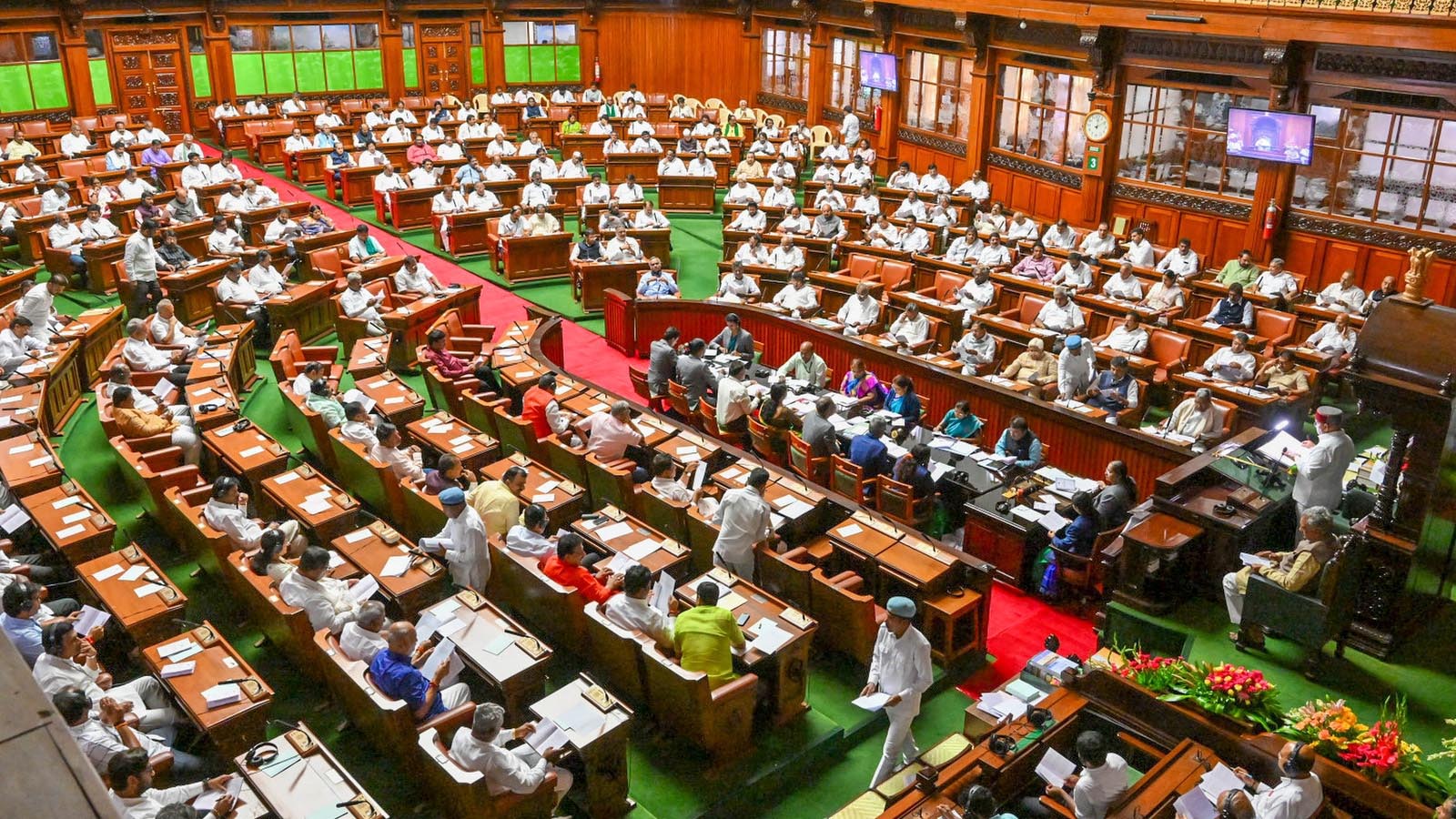
In a strategic move aimed at wresting control of the influential Souharda cooperative federation from the Bharatiya Janata Party (BJP), the Karnataka Congress government succeeded in passing the Karnataka Souharda Cooperative (Amendment) Bill, 2025.
The Bill, which was initially rejected in the Legislative Council, was reintroduced and cleared on Friday, sparing the government further embarrassment. It had already been re-approved in the Legislative Assembly on Thursday last week before Law and Parliamentary Affairs Minister H.K. Patil brought it back to the Council, where Chairman Basavaraj Horatti announced its acceptance, reversing the earlier setback.
The BJP and Janata Dal (Secular) had strongly opposed the Bill, particularly the provision that mandates a 20 percent statutory liquidity ratio for Souharda cooperatives and the classification of these reserves as statutory liquid assets.
Critics argued that this amounted to government overreach and interfered with the autonomy of cooperative societies. Despite this opposition, the Congress pushed ahead, viewing the legislation as a tool not only for financial discipline but also for strengthening its political position within the cooperative sector.
Souharda, formally known as the Karnataka State Souharda Federal Cooperative Ltd, was established under the Karnataka Souharda Sahakari Act of 1997 as India’s first apex body for new-generation cooperatives.
It is a democratically elected self-regulatory body, and membership is mandatory for all cooperatives registered under the Act. The movement has expanded rapidly, and today more than 6,500 institutions are part of Souharda, with 6,194 cooperatives registered as of the 2023–24 fiscal year.
Collectively, they account for a massive business turnover exceeding ?77,000 crore, with deposits of ?43,704 crore, advances of ?34,030 crore, and profits of ?626 crore in the last fiscal. With such scale and reach, Souharda has become a powerful grassroots economic institution in Karnataka, one that political parties are eager to influence.
The new Bill introduces several significant measures. Apart from the statutory liquidity requirement, it tightens the rules for elections and board composition, expanding seat reservations for Scheduled Castes, Scheduled Tribes, women, and Other Backward Classes.
It also mandates asset and liability disclosures from board members, candidates, and chief executives to curb misuse of power. Provisions have been made for performance audits and the appointment of special officers in cases of irregularities or urgent need, along with the power to initiate criminal proceedings against those found guilty of fraud or financial misconduct.
While the government has defended the amendments as reforms meant to improve accountability and safeguard public interest, the political undertone is unmistakable.
Souharda cooperatives have long been considered a BJP stronghold, and by pushing through this legislation, the Congress government has signaled its determination to bring the powerful federation within its sphere of influence.