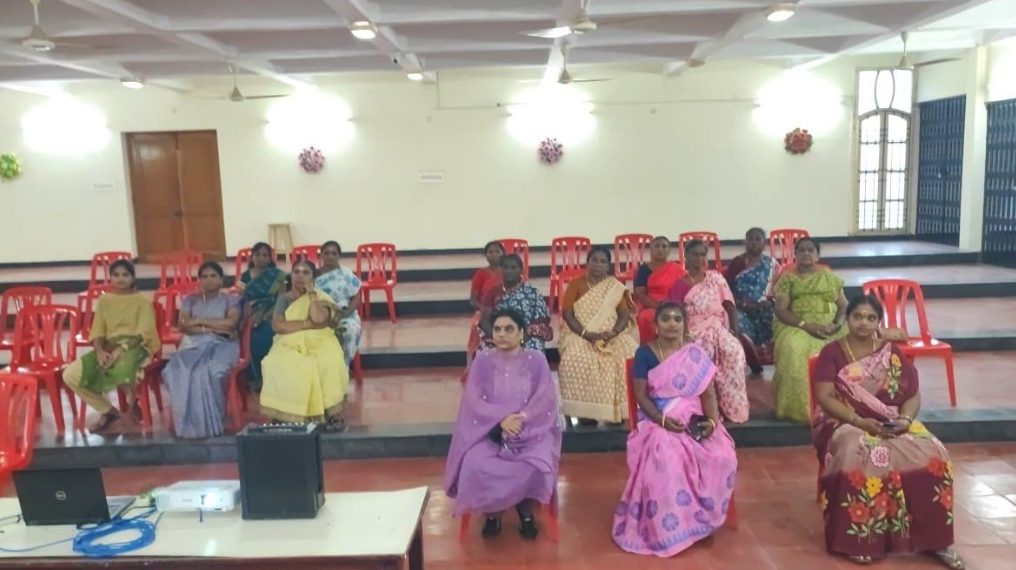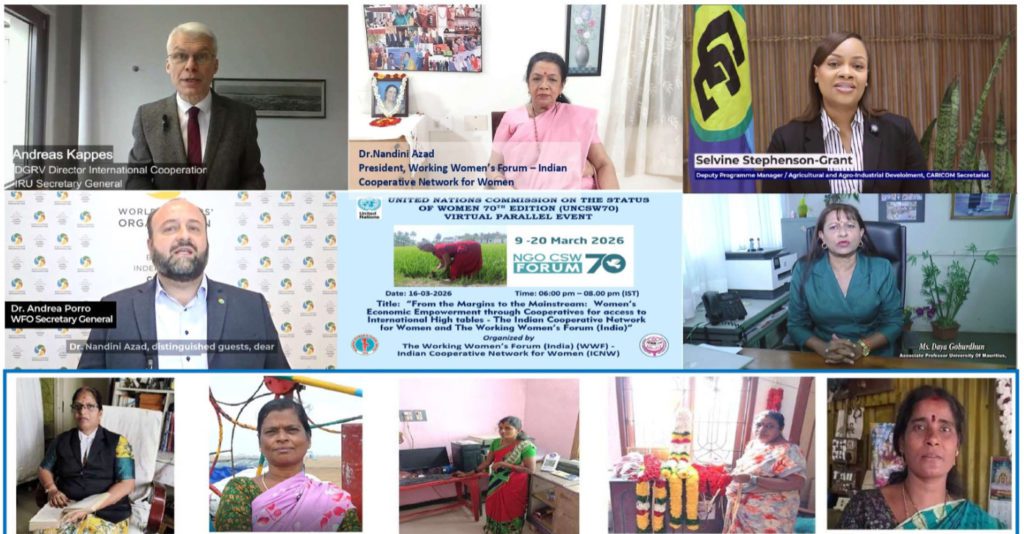
A landmark parallel event at the United Nations Commission on the Status of Women (70th edition) brought global attention to the transformative role of women’s cooperatives in advancing economic empowerment and policy participation, as leaders and grassroots representatives converged virtually from Chennai.
Organised by the Working Women’s Forum (WWF) and the Indian Cooperative Network for Women, the event titled “From the Margins to the Mainstream” showcased how collective action has enabled marginalized women to access global decision-making platforms.
Welcoming participants, Nandini Azad, President of WWF-ICNW, highlighted the organisation’s journey from mobilising informal sector women into cooperatives to becoming a globally recognised voice in policy forums. She underlined that over four decades, women once excluded from formal economic systems have evolved into leaders influencing international discourse. Drawing inspiration from Tamil philosophical and literary traditions, she emphasised unity and collective strength as the foundation of this transformation.
The event witnessed participation from over 20 countries and representatives from 13 cooperative branches across southern India, reinforcing the global resonance of grassroots-led models. Speakers from leading international organisations echoed the significance of cooperatives in addressing systemic inequalities.
Andreas Kappes of the International Raiffeisen Union praised WWF-ICNW’s leadership, noting that cooperatives provide women with the tools to build economic independence, leadership skills, and social recognition. He also cited global initiatives such as mentorship programs for women leaders in cooperatives as key drivers for achieving gender equality goals.
From the Caribbean, Selvine Stephenson-Grant of CARICOM highlighted the parallels between India and other regions where women’s contributions to agriculture and informal economies remain undervalued. She stressed that cooperatives enable women to transition from isolated economic activity to structured participation in markets and governance, while also enhancing resilience against economic and climate-related disruptions.
Similarly, Andrea Porro of the World Farmers Organization pointed out that women farmers, despite being central to food systems, face persistent barriers such as limited access to land, finance, and technology. He called for structural reforms and greater inclusion of women in leadership roles, especially in the context of 2026 being marked as a significant year for recognising women farmers globally.
Academic perspectives from Mauritius and Italy added depth to the discussions, illustrating how women-led cooperatives are driving sustainable agriculture, entrepreneurship, and social change. Case studies ranged from post-crisis recovery through organic farming initiatives to design-led empowerment projects for marginalized women, reinforcing the adaptability of cooperative models across diverse contexts.
A key highlight of the event was the presentation of the Jaya Arunachalam Awards, named after the founder of WWF, recognising women entrepreneurs who rose from poverty through cooperative support. Awardees shared powerful stories of transformation, from small loans enabling micro-enterprises to achieving professional milestones for their children, demonstrating the long-term impact of financial inclusion and collective support systems.
The programme also showcased WWF-ICNW’s initiatives in digital financial literacy, where women are trained to use mobile technology for managing finances, accessing services, and expanding businesses. These efforts have significantly enhanced financial autonomy and confidence among women, enabling them to participate more effectively in economic activities.
The event further highlighted WWF-ICNW’s growing global footprint, including participation in major international platforms such as the G20 Social Summit and multiple UN forums. The organisation’s consistent presence at UNCSW sessions underscores its unique position as a grassroots movement influencing global policy.
Concluding the session, Azad noted that the rise of poor women’s cooperatives to global leadership is a historic development, demonstrating that inclusive growth must be rooted in grassroots empowerment. The interactive session that followed allowed women from different regions to directly engage with global stakeholders, reinforcing the central message that voices from the margins are increasingly shaping the mainstream.