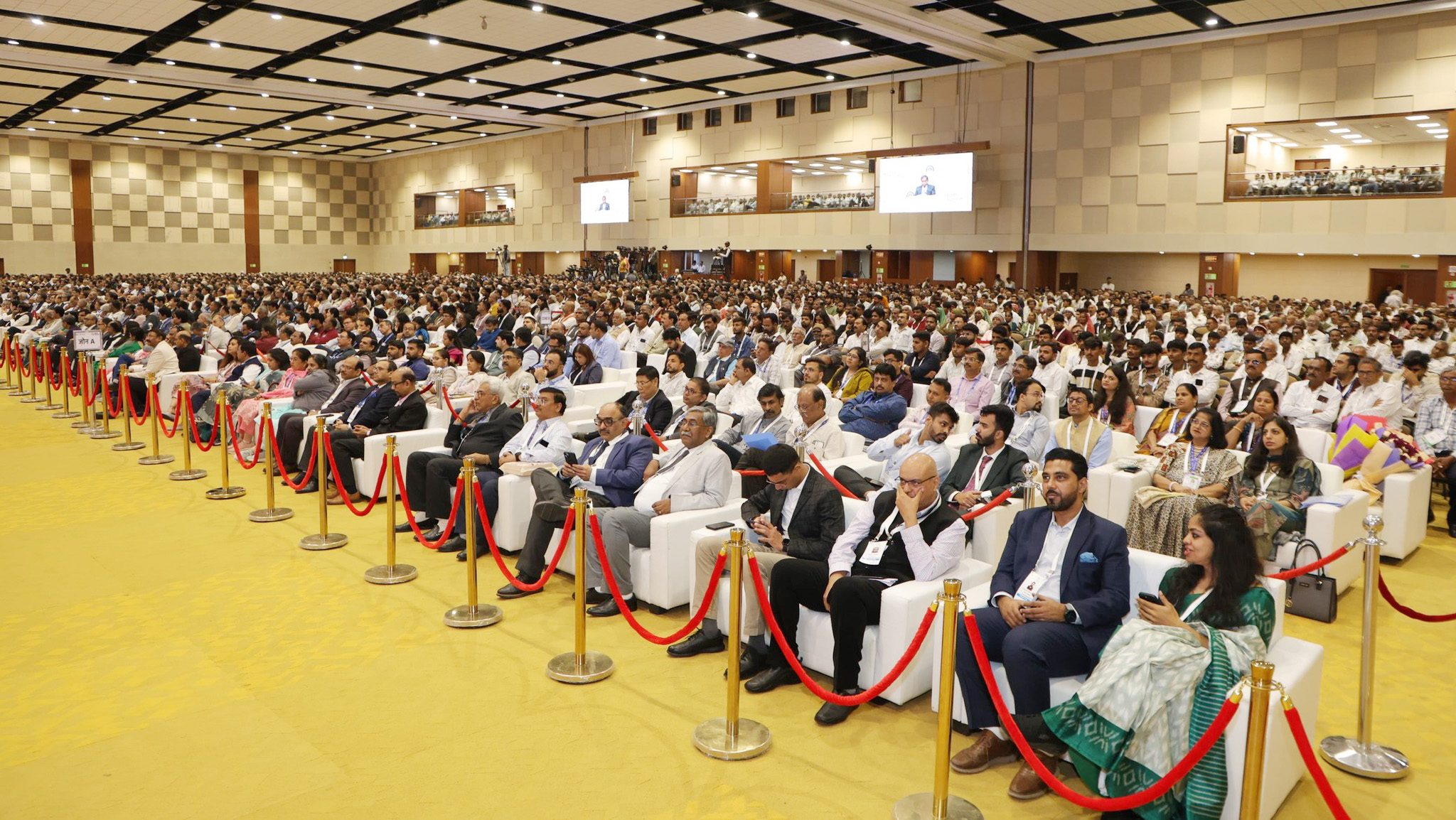





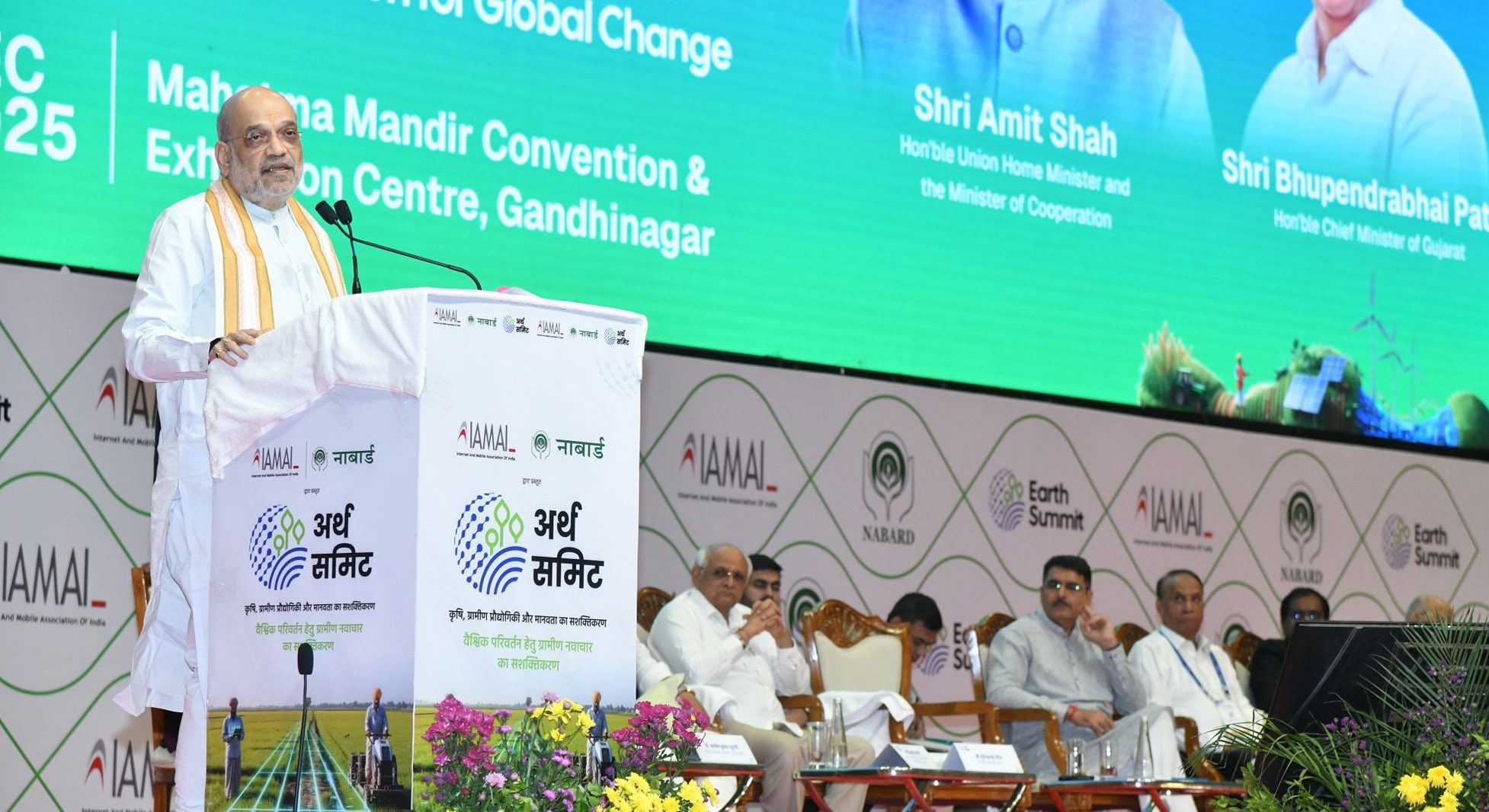
Union Home and Cooperation Minister Amit Shah inaugurated the EARTH Summit 2025 at Mahatma Mandir in Gandhinagar on Friday, marking the second event in a nationwide series aimed at strengthening and reshaping India’s rural development framework through cooperative-driven transformation.
In the presence of Gujarat Chief Minister Bhupendra Patel, Legislative Assembly Speaker Shankarbhai Chaudhary, Agriculture and Cooperation Minister Jitu Bhai Vaghani, NAFED Chairman Jetha Bhai Ahir, Cooperation Secretary Dr. Ashish Kumar Bhutani, Gujarat State Cooperative Bank Chairman Ajay Bhai Patel and NABARD Chairman Shaji K.V alongside several dignitaries, Shah unveiled more than 13 new digital and institutional services under the ‘Sahakar Sarathi’ initiative.
The newly launched services include Digi KCC, Campaign Sarathi, Cooperative Governance Index, ePACS, the World’s Largest Grain Storage Application, Sarathi Technology Forum, Website Sarathi, Shiksha Sarathi and multiple technology-support features intended to modernize the country’s cooperative framework.
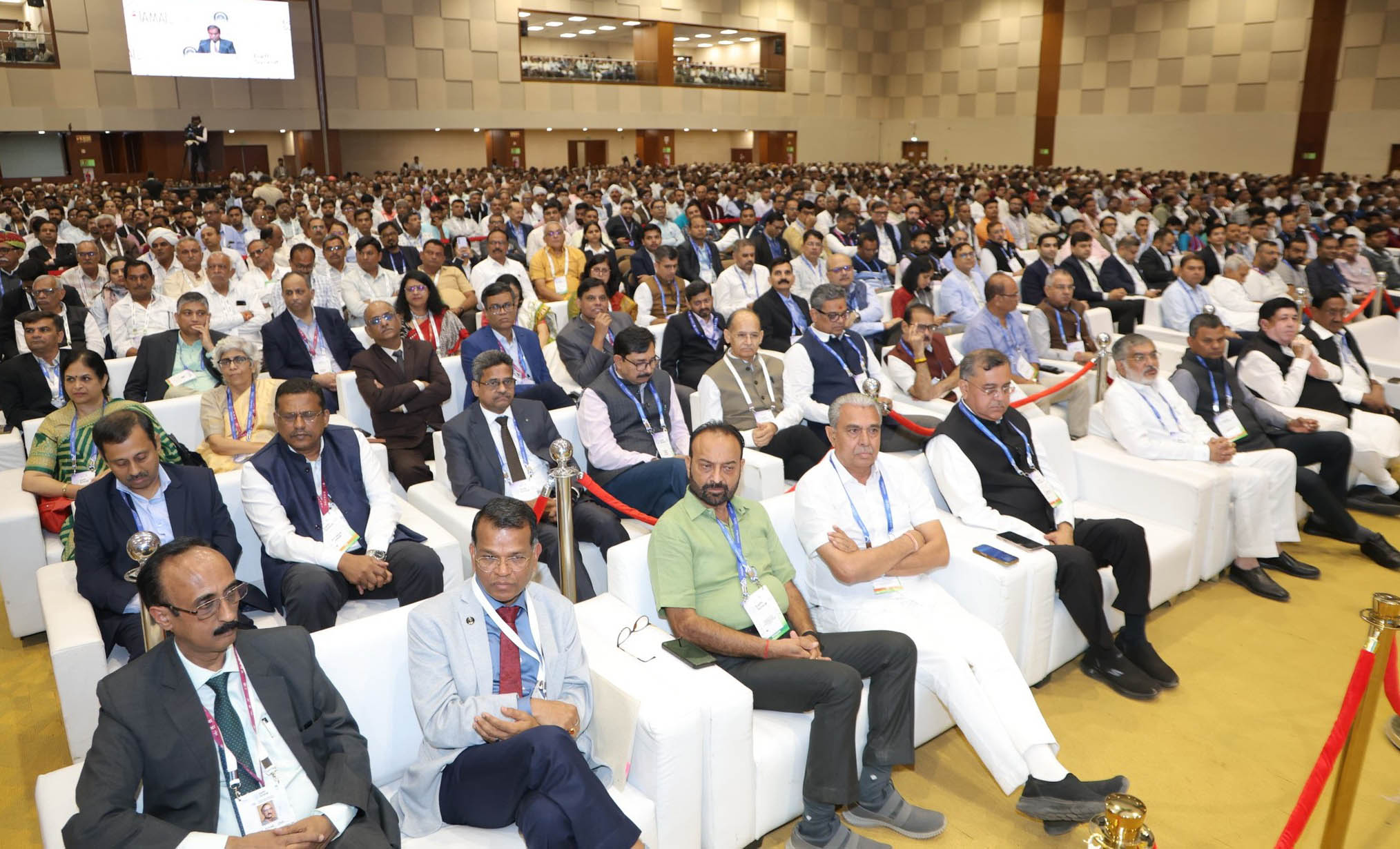
Addressing stakeholders, Shah emphasized that the three-phase EARTH Summit series is designed not only to boost the rural economy but to rethink development strategies, derive practical solutions and prepare an integrated policy blueprint. The upcoming third summit scheduled in Delhi next year will finalize these recommendations into a unified policy document.
 He noted that despite Mahatma Gandhi’s vision of village-centric development, post-Independence policies overlooked agriculture, animal husbandry and cooperatives, resulting in decades of neglect. However, he said, a decisive shift came in 2014 under Prime Minister Narendra Modi, after which rural development was repositioned as a central pillar of national growth.
Shah announced an ambitious roadmap to establish a cooperative institution in every Panchayat and expand the cooperative membership base to over 50 crore citizens in the coming years. He stated that such expansion would raise the cooperative sector’s contribution to GDP significantly and ensure that no section of rural society, including small farmers and women engaged in animal husbandry, remains excluded from economic opportunity.
He cited Gujarat’s model of cooperative-linked economic integration where district-level banking, dairies, PACS and market networks have been unified, generating large volumes of low-cost deposits. The model, which mandates cooperative institutions to bank only with cooperative financial structures, is expected to be replicated nationwide to multiply credit capacity fivefold and maximize Priority Sector Lending utilization.
Highlighting digital transformation as essential, Shah said NABARD’s support under Sahakar Sarathi has brought modern banking tools to even the smallest rural cooperatives, enabling digital KYC, recovery monitoring, credit appraisal, website development and legal documentation through one technology platform.
With RBI’s backing, e-KCC services will soon offer facilities comparable to global credit systems. He also announced expansion of organic agriculture where 49 lakh farmers are already engaged and more than 40 certified products are listed online. A national testing lab network in collaboration with Amul and Bharat Organics is under development to scale India’s presence in the global organic market by 2035.
Shah further informed that ‘Sahakar Taxi’ has attracted over 51,000 drivers during its trial phase and is planned to evolve into India’s largest cooperative taxi enterprise. Cooperative-based insurance covering health, life, agriculture and accidental protection will soon be offered under a unified mechanism. He likened the cooperative movement to a Kalpavriksha whose roots nourish public welfare and whose branches sustain millions of livelihoods.