





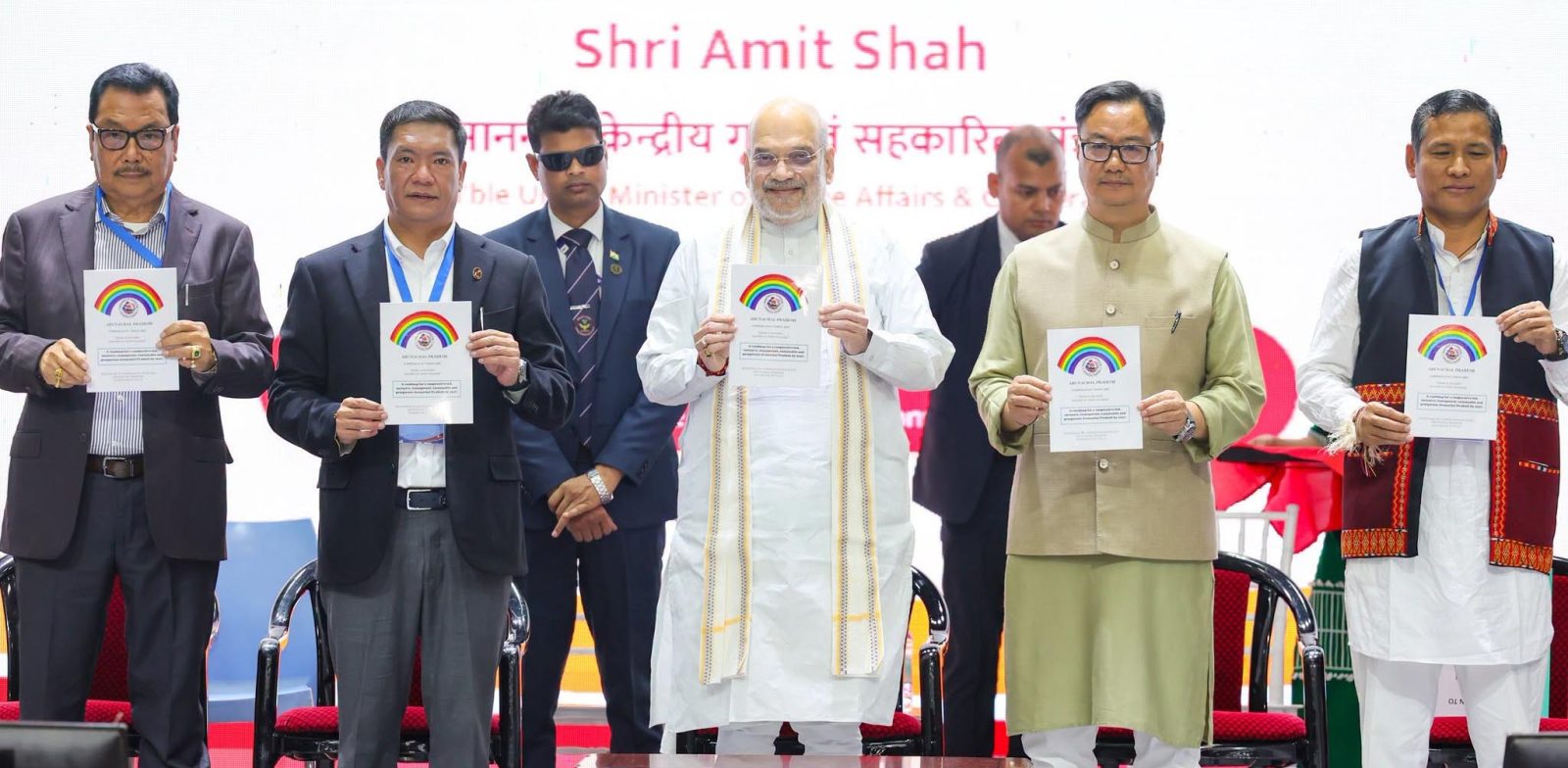
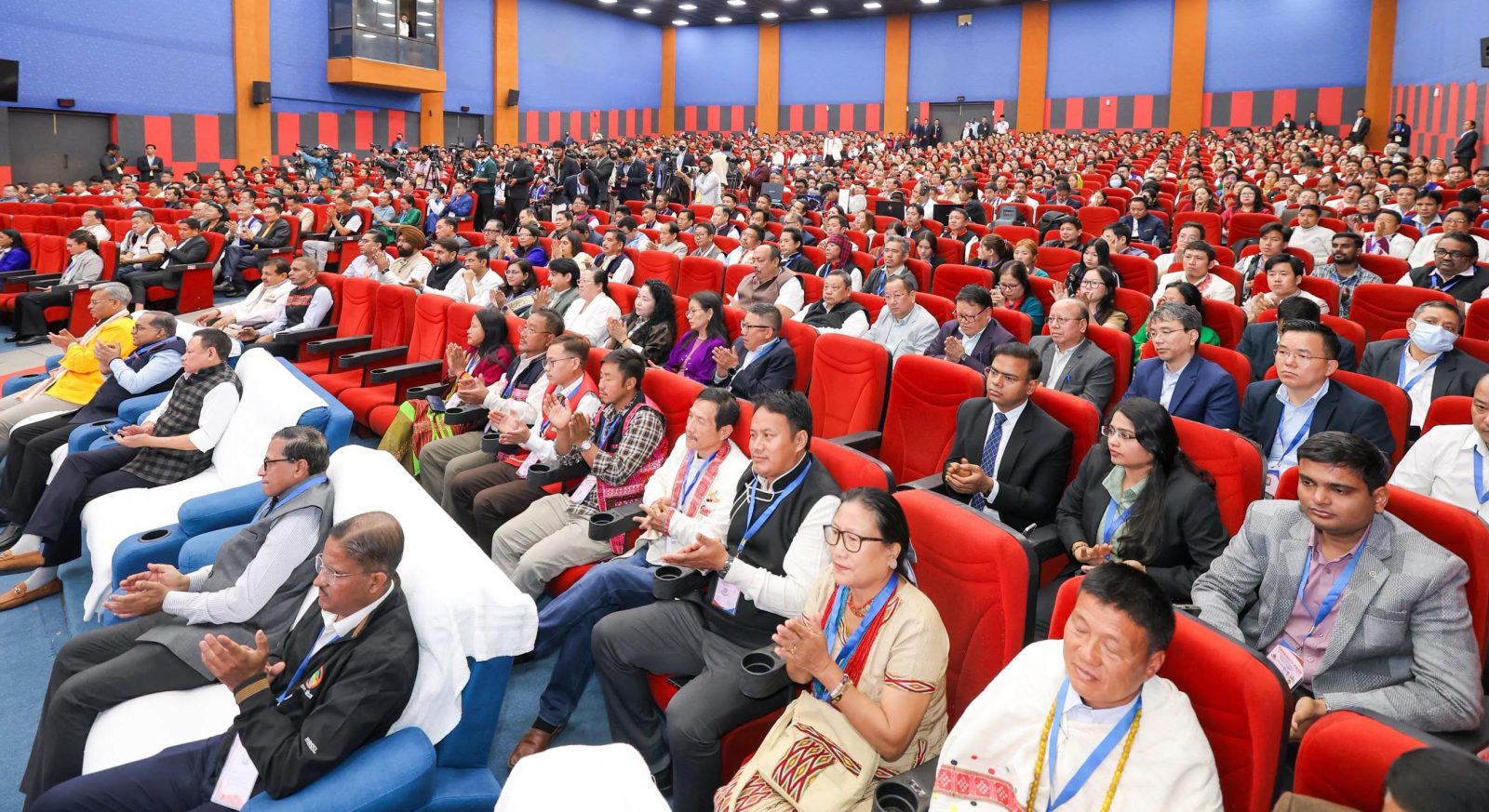
Union Home and Cooperation Minister Amit Shah has unveiled the ‘Arunachal Pradesh Cooperative Vision 2047’, placing cooperatives at the centre of the State’s strategy for rural prosperity, employment generation and economic self-reliance. The vision was launched at a Cooperative Festival in Itanagar, attended by Chief Minister Pema Khandu, Union Minister Kiren Rijiju and other senior leaders.
Shah said Arunachal Pradesh had the potential to become self-reliant in milk, eggs, meat and fish, reducing its dependence on supplies from outside the State. Achieving this goal through dairy, fisheries and other cooperative institutions could make at least 32,000 families economically self-reliant. He urged the State Government, cooperative societies and women’s Self-Help Groups to work towards this objective, assuring financial support from NCDC and NABARD.
Currently, more than 56,000 people are associated with the cooperative movement in Arunachal Pradesh through 185 PACS, 52 dairy cooperative societies and 43 fisheries cooperatives. Shah highlighted the State’s vast water resources and hydropower reservoirs as opportunities for developing cooperative-based fisheries and generating rural employment.
On the dairy front, he assured that Amul and the National Dairy Development Board (NDDB) would facilitate the procurement of milk produced in the State. NDDB and Amul representatives would soon visit Arunachal Pradesh to prepare a district-level dairy development roadmap. Milk processing facilities, quality livestock and stronger dairy cooperatives would form part of the proposed expansion.
 Highlighting the importance of cooperatives in border areas, Shah said the Vibrant Villages Programme was reversing migration in villages along the China border. Earlier, residents were leaving nearly 40 villages, but people had started returning following improvements in electricity, education, healthcare, drinking water and employment. The Army and ITBP were also procuring essential supplies from local villages and cooperative institutions, creating markets for women producing dairy products, eggs, vegetables and other items.
Shah cited the growth in Central assistance to Arunachal Pradesh, which increased from Rs 33,530 crore during 2004-14 to Rs 1,49,664 crore during 2014-24. The State budget has also risen from approximately Rs 12,000 crore to Rs 36,000 crore over the last 12 years.
Among the major infrastructure projects, he highlighted the Rs 44,000-crore Frontier Highway and the Rs 32,000-crore Dibang Hydropower Project. He also referred to the expansion of road connectivity and the development of airports in the State.
The event also saw the launch of four major development initiatives with a combined outlay of Rs 5,610.95 crore, including Mission Shikshit Arunachal Phase II (Rs 1,500 crore), the State Power Development Programme (Rs 2,000 crore), the Rural Road Development Programme (Rs 2,000 crore) and 199 projects under the Vibrant Villages Programme (Rs 110.95 crore).
Several cooperative institutions were recognised for their performance. Namsai Dairy Cooperative Society received the Cooperation Excellence Award, while Lower Subansiri Fish Farmers Cooperative Society was recognised as the Best Fisheries Cooperative. Kemli LAMPS and Jang LAMPS also received awards in their respective categories.
Other initiatives included a foodgrain storage warehouse at Raga LAMPS, an e-commerce platform for products made by women’s Self-Help Groups and the distribution of seed kits and micro-ATM facilities. Shah also flagged off solar-powered mobile medical vans for 11 border districts.
He stressed that development should ultimately be measured by improvements in people’s lives, with cooperatives becoming instruments of prosperity for every family and contributing to the goal of a developed Arunachal Pradesh by 2047.