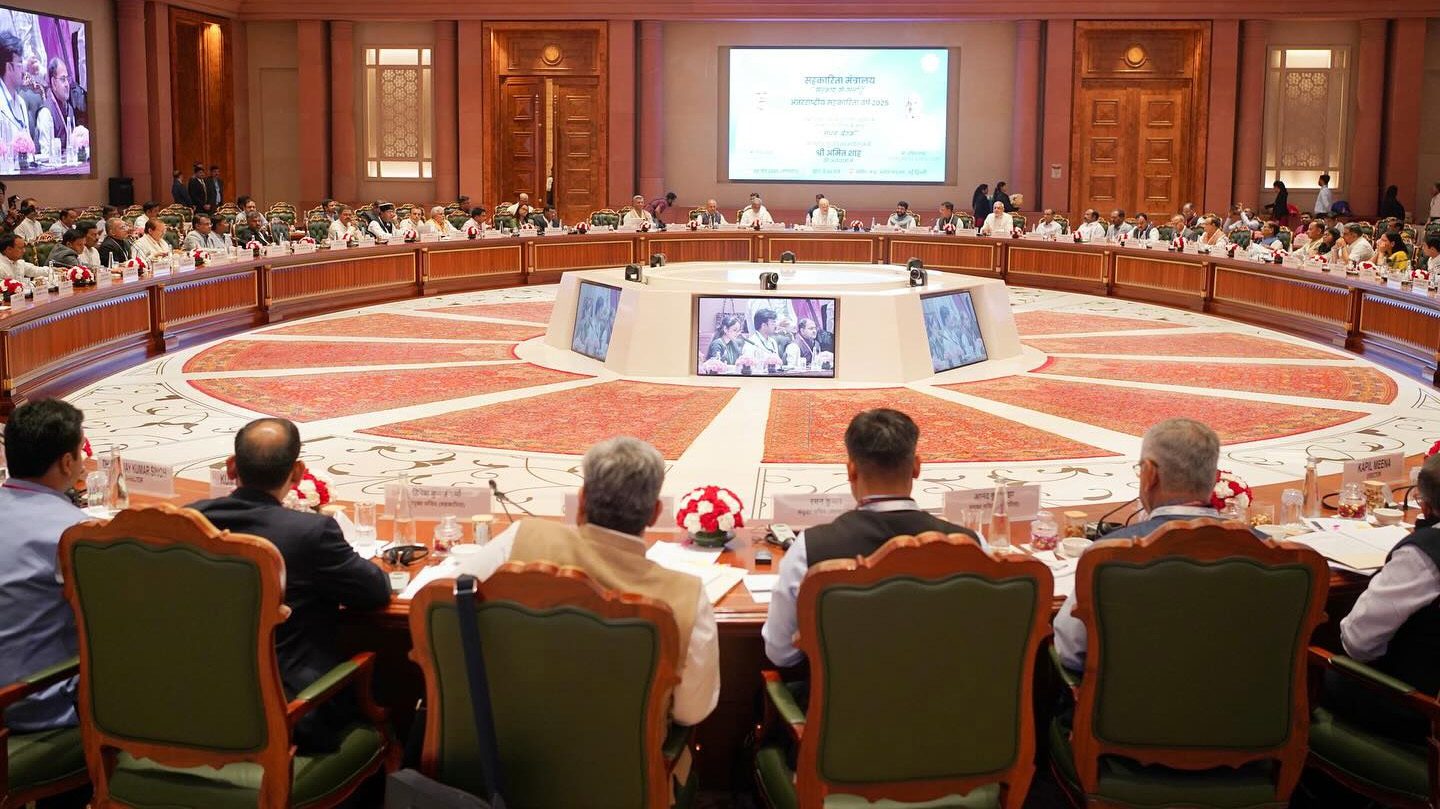






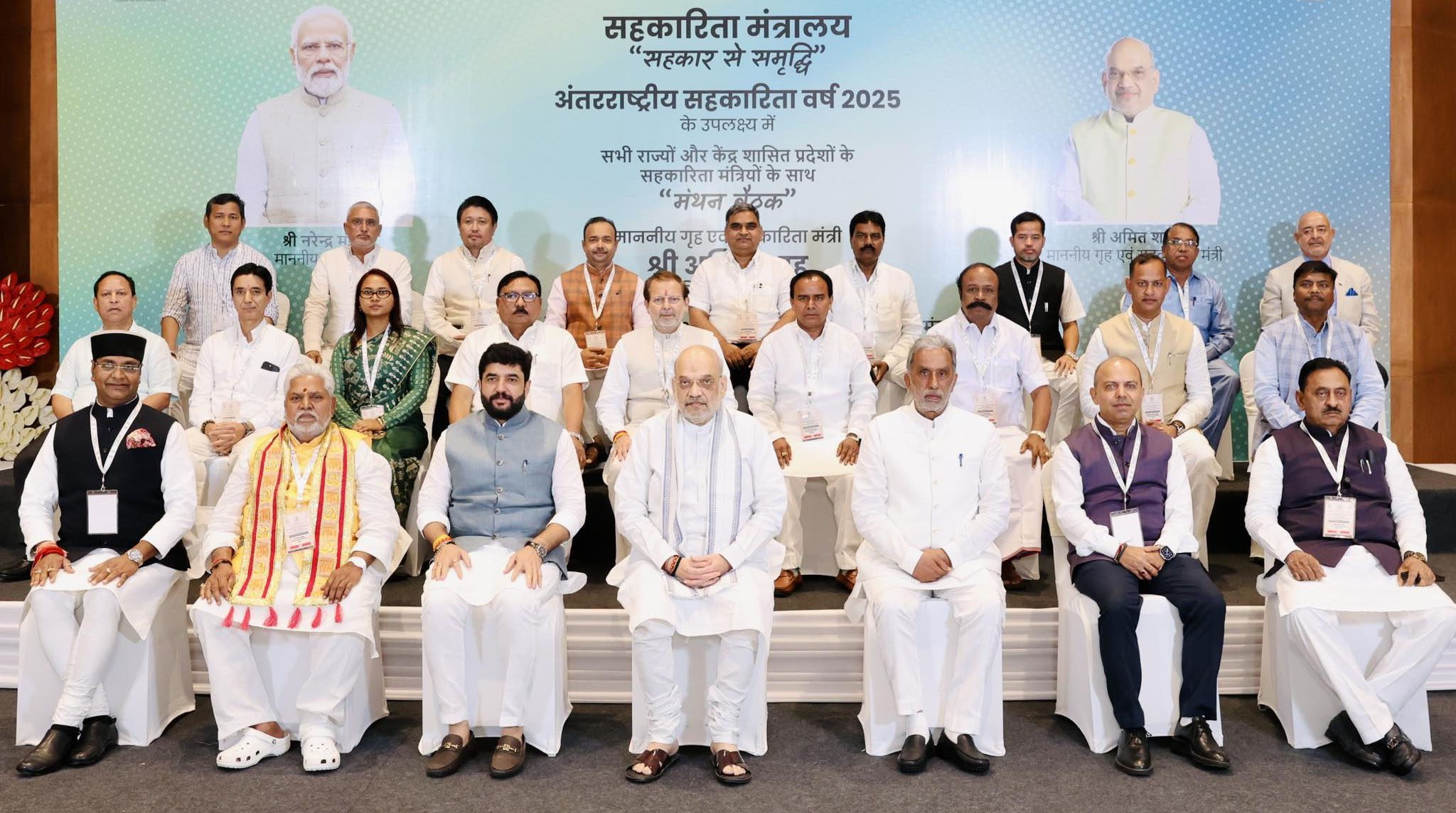
In a major effort to strengthen India’s cooperative ecosystem, Union Home Minister and Minister of Cooperation Amit Shah chaired the “Manthan Baithak” in New Delhi on June 30, 2025. The high-level meeting, attended by Cooperation Ministers and senior officials from all States and Union Territories, marked the beginning of celebrations for the International Year of Cooperatives 2025 and focused on shaping the next two decades of cooperative development in India.
Shah said that the purpose of this reflection and brainstorming can only be fulfilled if all 140 crore people of the country get employment and live their lives with hard work, and to make this successful, the Government of India has taken 60 initiatives.
Shah outlined the government’s ambitious vision to ensure the presence of cooperative institutions in every village within the next five years. He emphasized the critical role of cooperation in uplifting rural India and empowering over 60 crore people who now aspire to become entrepreneurs after a decade of access to basic facilities like housing, electricity, healthcare, and clean water under the Modi government. “Cooperation is the only option to ensure employment and economic participation for all 140 crore Indians,” he said.
The Minister highlighted key reforms initiated by the Modi government in the cooperative sector, including the modernization of laws, expansion of activities, and transparent recruitment practices. He also stressed the importance of the National Cooperative Database, a tool to identify gaps and plan expansion, stating it will guide efforts to establish cooperatives in underserved villages.
Addressing systemic issues, Shah pointed to past neglect in updating laws and practices, leading to inefficiencies and corruption. In response, the government established Tribhuvan Sahkari University (TSU) to bring consistency and professionalism to cooperative training. He urged states to affiliate at least one training institution with TSU and manage all cooperative education through it.
One of the key announcements was the forthcoming National Cooperative Policy 2025–2045, which will guide the movement toward India’s centenary of independence. The policy will be adapted by each state based on its unique socio-economic context, with a deadline of January 31, 2026, for finalization. A Model Cooperative Policy Act is also on the anvil to bring uniformity, discipline, and innovation across the sector.
The Baithak also reviewed progress on major national goals, including the creation of two lakh Multi-Purpose Primary Agricultural Credit Societies (M-PACS), boosting dairy and fisheries cooperatives, and implementing the world’s largest grain storage plan through cooperatives. The importance of natural farming was underlined, with a call for closer cooperation between state Agriculture and Cooperation departments.
Participants reviewed digital reforms such as the computerization of PACS and RCS offices and the integration of cooperative data systems. Financial sector reforms were discussed, including improved oversight of Urban Cooperative Banks, recruitment transparency, and the launch of umbrella organizations to support them. The role of new national-level cooperative entities—NCEL, NCOL, and BBSSL—in driving exports, organic farming, and seed distribution was also highlighted.
The meeting concluded with a reaffirmation of the Centre and States’ collective resolve to transform the cooperative sector into a key pillar of India’s inclusive, employment-driven, and sustainable economic growth, in line with the vision of “Sahkar Se Samriddhi” (Prosperity through Cooperation).