





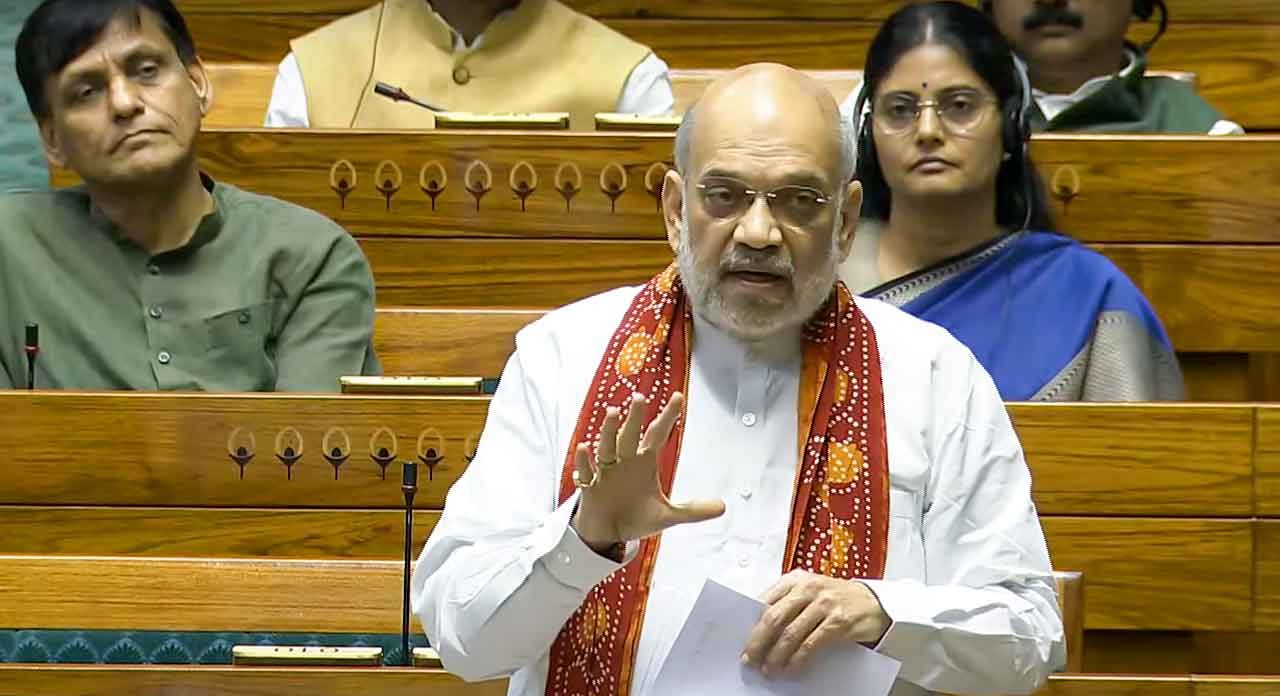
Replying to a query in the Parliament, Union Minister Amit Shah said that the government has intensified efforts to strengthen the cooperative movement, aiming to expand its reach to the grassroots level. As part of this initiative, a comprehensive plan was approved on February 15, 2023, to establish new multipurpose Primary Agricultural Credit Societies (M-PACS), dairy cooperatives, and fishery cooperatives across villages and panchayats.
This five-year plan seeks to integrate various existing government schemes such as the Dairy Infrastructure Development Fund (DIDF), the National Programme for Dairy Development (NPDD), and the Pradhan Mantri Matsya Sampada Yojana (PMMSY). These efforts are being supported by key institutions like the National Bank for Agriculture and Rural Development (NABARD), the National Dairy Development Board (NDDB), the National Fisheries Development Board (NFDB), and state governments.
Since the approval of this plan, significant progress has been made in expanding the cooperative sector. According to the National Cooperative Database, as of January 27, 2025, a total of 12,957 new cooperative societies have been registered across the country.
These include Primary Agricultural Credit Societies (PACS), dairy cooperatives, and fishery cooperatives, each playing a vital role in boosting rural economic development and financial inclusion. The state-wise data indicates that states like Odisha, Rajasthan, Uttar Pradesh, and Jammu & Kashmir have witnessed a significant rise in the establishment of new cooperative societies, contributing to the overall goal of strengthening the rural economy.
To further empower PACS and diversify their business operations, the government has introduced Model Bye-laws in consultation with various stakeholders, including state governments, national-level cooperative federations, State Cooperative Banks (StCBs), and District Central Cooperative Banks (DCCBs).
These Model Bye-laws enable PACS to engage in more than 25 different economic activities, such as dairy and fishery farming, floriculture, setting up godowns, procurement of food grains, fertilizers, and seeds, as well as distribution of LPG, CNG, petrol, and diesel.
Other activities include providing short-term and long-term credit, operating custom hiring centers, running Common Service Centers (CSCs), managing Fair Price Shops (FPS), and even engaging in community irrigation and business correspondent services.
So far, 32 states and union territories have adopted these Model Bye-laws or have aligned their existing laws with them, ensuring smooth implementation across the country. The impact of these measures is already visible, with 42,080 PACS currently functioning as Common Service Centers, offering banking and digital services to rural populations.
Additionally, 36,193 PACS are serving as Pradhan Mantri Kisan Samridhi Kendras (PMKSK), providing farmers with essential agricultural inputs and advisory services. Furthermore, 22,311 PACS are operating Fair Price Shops (FPS), ensuring the distribution of subsidized food grains to millions of beneficiaries under the Public Distribution System (PDS).
The expansion of the cooperative sector under this initiative is expected to drive rural economic growth, create employment opportunities, and enhance financial inclusion. With cooperative societies now playing a broader role in various economic activities, they have the potential to transform the rural economy, ensuring sustainable livelihoods and improved financial security for millions of people across India.