





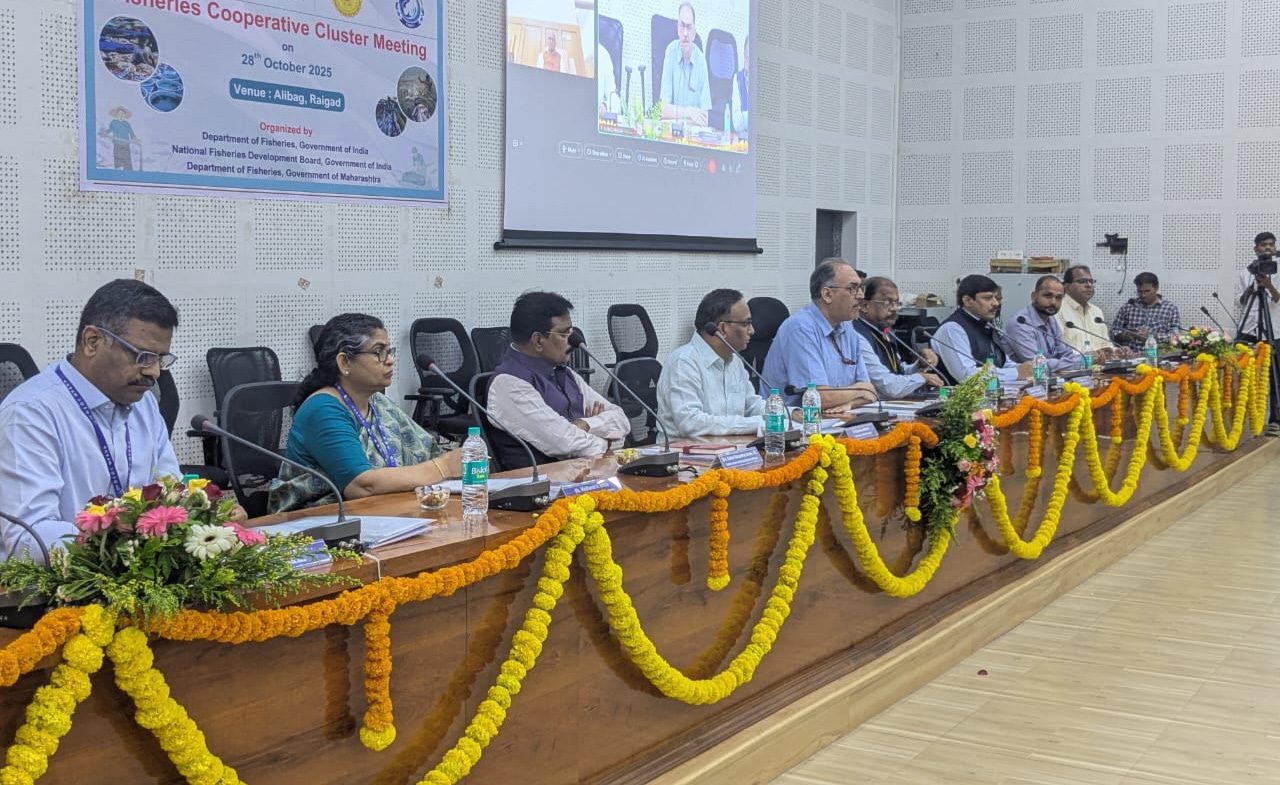
The cooperative-led model of fisheries development gained new momentum as Union Fisheries Secretary Dr. Abhilaksh Likhi reviewed the Raigad Fisheries Cluster in Maharashtra, one of the 34 clusters being developed under the Pradhan Mantri Matsya Sampada Yojana (PMMSY) as engines of India’s Blue Economy.
The visit underscored the government’s focus on a cooperative-driven value chain, aimed at enhancing infrastructure, market linkages, and livelihoods across the fisheries sector.
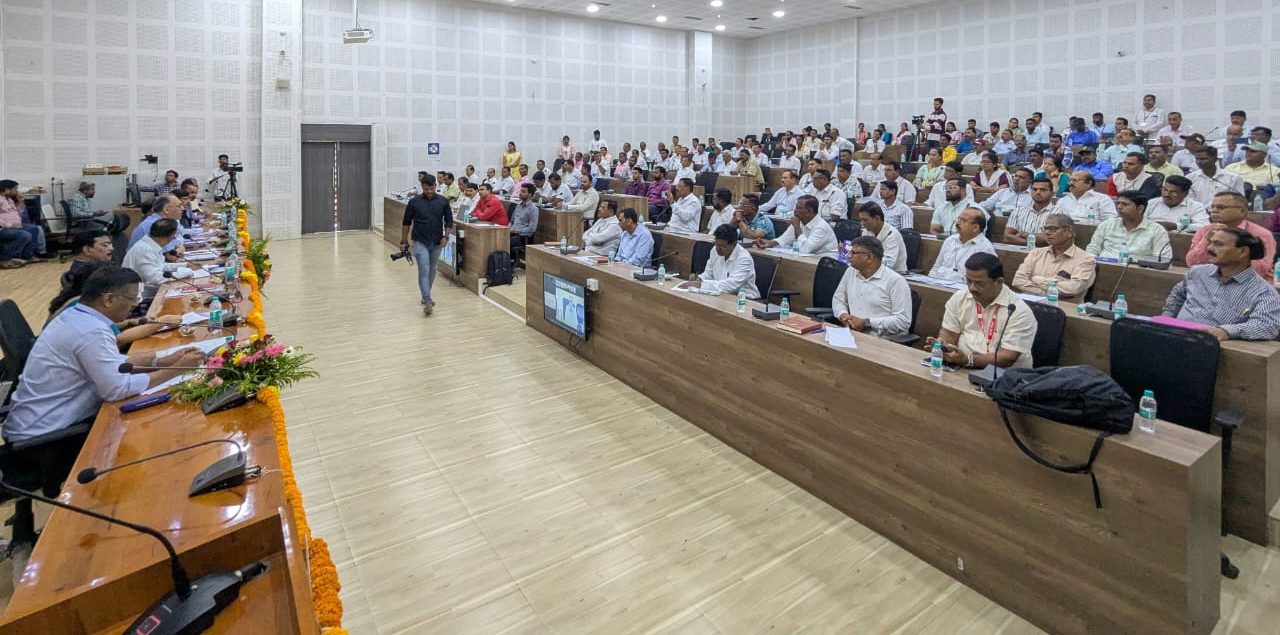
Dr. Likhi met over 250 representatives from 156 Fisheries Cooperative Societies and 9 Fish Farmer Producer Organizations (FFPOs) in Raigad, reflecting the growing network of collective fisheries institutions. He emphasized that the cluster model represents a practical roadmap for achieving Sahkar se Samriddhi, prosperity through cooperation, by integrating production, processing, and marketing. Aligning local cluster initiatives with flagship programs such as PMMSY and the Fisheries Infrastructure Development Fund (FIDF), he noted, will ensure the sector’s long-term sustainability and resilience.
A Joint Task Force between the Department of Fisheries and the Ministry of Cooperation has been constituted to strengthen fisheries cooperatives nationwide. This initiative complements the broader government vision, recently reiterated by Union Minister Amit Shah, to position cooperatives as the “cornerstone of India’s Blue Economy.”
The Raigad cluster, designed as a pilot for integrated value-chain development, embodies this approach, combining infrastructure development with capacity building and technological adoption.
During the review, Dr. Likhi directed the National Fisheries Development Board (NFDB) to launch district-wide awareness and training camps for cooperative members to ensure efficient implementation of schemes.
He also assured that infrastructure priorities such as fishing jetties, ice plants, cold storages, and dredging facilities raised by stakeholders will receive due attention. He called for innovative cooperative strategies to expand exports, strengthen credit access, and enhance market integration.
Joining virtually, Joint Secretary (Inland Fisheries) Sagar Mehra advocated for convergence between ministries to create technology-driven, sustainable fisheries clusters, while Joint Secretary (Marine Fisheries) Neetu Kumari highlighted the development of Standard Operating Procedures (SoPs) for harbour management, empowering cooperatives to take the lead in managing landing centres and harbours effectively.
NFDB Chief Executive Dr. B.K. Behera outlined the next five-year roadmap for Raigad, including projects focused on cold chain expansion, processing infrastructure, and welfare measures aligned with Maharashtra’s fisheries growth strategy. These initiatives will strengthen cooperative enterprises and improve the socio-economic conditions of fishing communities.
The consultation drew active participation from fishers across marine, freshwater, and brackish water segments, who shared their experiences and concerns. Participants also urged for women-centric initiatives such as health and sanitation facilities, and exposure visits to states like Andhra Pradesh to replicate successful cooperative practices. Financial institutions like NABARD reaffirmed their commitment to supporting cooperative-led enterprises and enhancing access to affordable credit.
The Raigad cluster is part of a national strategy to build integrated fisheries hubs that bring together cooperatives, FFPOs, SHGs, start-ups, and private players to achieve economies of scale and sustainable livelihoods. These clusters aim to modernize India’s fisheries ecosystem by promoting innovation, entrepreneurship, and value addition, while deepening the cooperative movement’s role in the Blue Economy.
The collaboration between the Department of Fisheries, Ministry of Cooperation, NCDC, and partner institutions reflects a “whole-of-government” approach that seeks to make India’s fisheries sector more organized, competitive, and resilient, transforming coastal livelihoods through cooperative strength and collective enterprise.