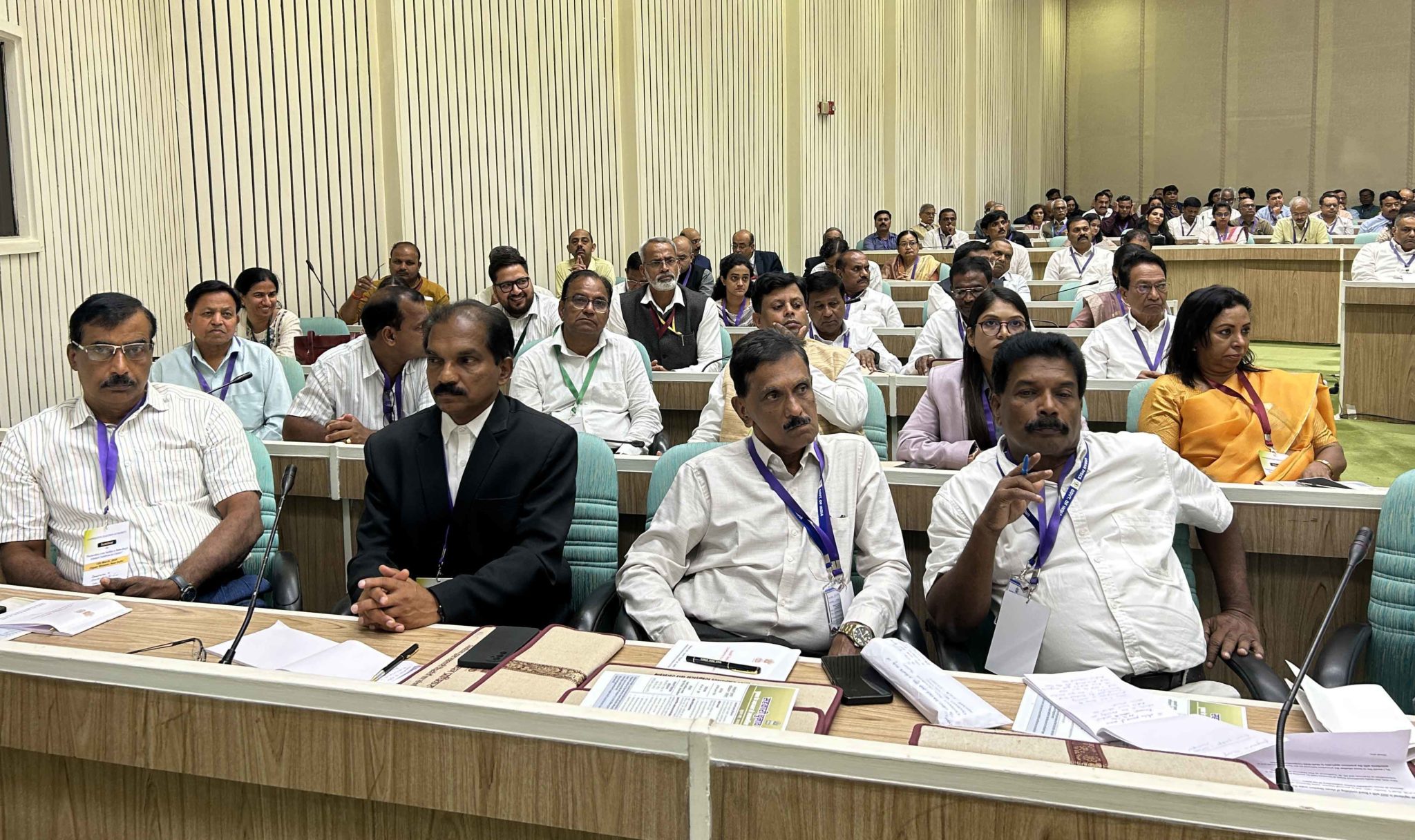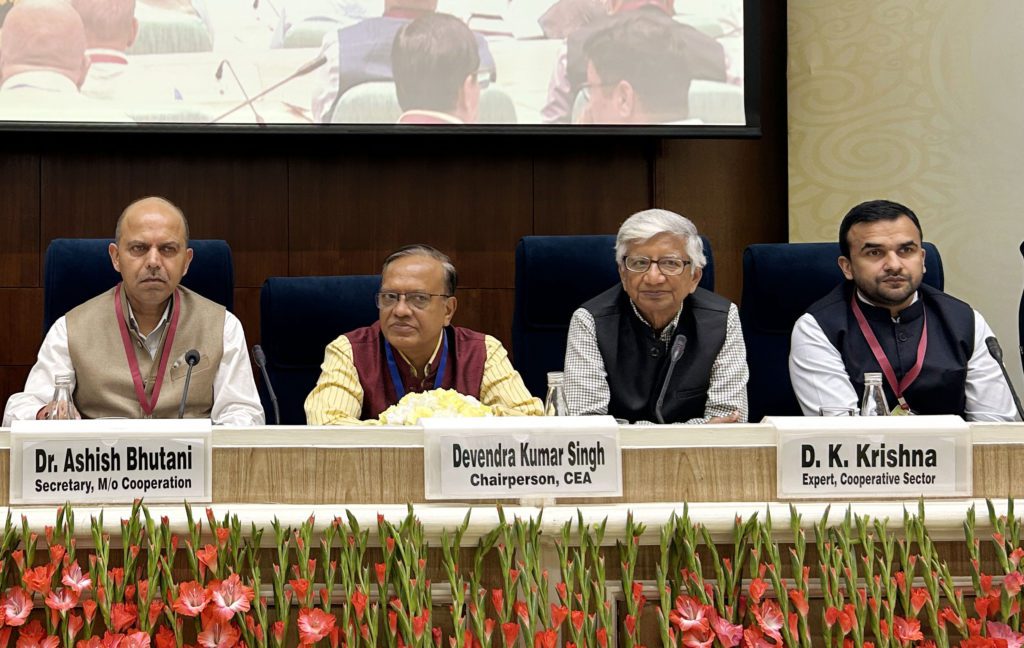
The need for clearer rules governing Representative General Bodies (RGBs) and stronger mechanisms for conducting elections in multi-state cooperative societies was highlighted during a seminar organised by the Cooperative Election Authority at Vigyan Bhavan on Thursday.
Addressing the seminar titled “Pardarshita and Suchita se Bahu-Rajya Sahakari Samitiyon ke Chunav,” cooperative sector expert D. Krishna emphasised that the introduction of the Cooperative Election Authority under the amended Multi-State Cooperative Societies Act, 2002 has significantly strengthened transparency and accountability in the conduct of elections in multi-state cooperative institutions.
Krishna observed that the establishment of the Ministry of Cooperation has brought the cooperative sector into sharper national focus. Guided by the vision of “Sahakar se Samriddhi” championed by Amit Shah, the ministry has launched several major initiatives to revitalise the cooperative ecosystem. These include the modernization of Primary Agricultural Credit Societies (PACS), creation of a national cooperative database, and strengthening governance structures across cooperative institutions.
Referring to the election framework introduced through the 2023 amendments to the Multi-State Cooperative Societies Act, Krishna noted that the Cooperative Election Authority, headed by D. K. Singh, has already conducted elections in around 225 multi-state cooperative societies within a relatively short period. However, he cautioned that conducting elections in large cooperatives, particularly those with members spread across multiple states, poses considerable administrative and logistical challenges.
A key concern highlighted by Krishna relates to the functioning of Representative General Bodies in societies with very large membership bases, such as urban cooperative banks and national-level cooperative federations. While the law allows for the creation of delegate-based bodies to represent the general membership, he pointed out that the absence of clear operational guidelines often leads to confusion and inconsistencies in the electoral process.
To address this, Krishna suggested that the law should clearly define the membership threshold beyond which the formation of an RGB becomes mandatory. It should also specify the number of members each delegate represents, the method for forming electoral constituencies, and the process for electing delegates to the Representative General Body. He further recommended that elections to RGBs should ideally be conducted under the supervision of the Cooperative Election Authority to ensure greater transparency and credibility.
Krishna also emphasised the importance of conducting elections before the expiry of the term of the existing board. Delays in the electoral process, he warned, could result in the appointment of administrators, which may not be conducive to the democratic functioning of cooperative institutions.
Looking ahead, he called for wider adoption of technology in cooperative elections, including the use of electronic voting systems, especially in societies with geographically dispersed memberships. He also stressed the need for accurate and updated electoral rolls based on active membership, in line with provisions introduced after the 97th Constitutional Amendment, which strengthened the constitutional framework for cooperatives.
Concluding his address, Krishna said that while the Cooperative Election Authority has made commendable progress in institutionalising transparent elections in multi-state cooperatives, greater clarity in rules governing Representative General Bodies and increased use of technology will be essential to deepen democratic participation and strengthen governance in the cooperative sector.