
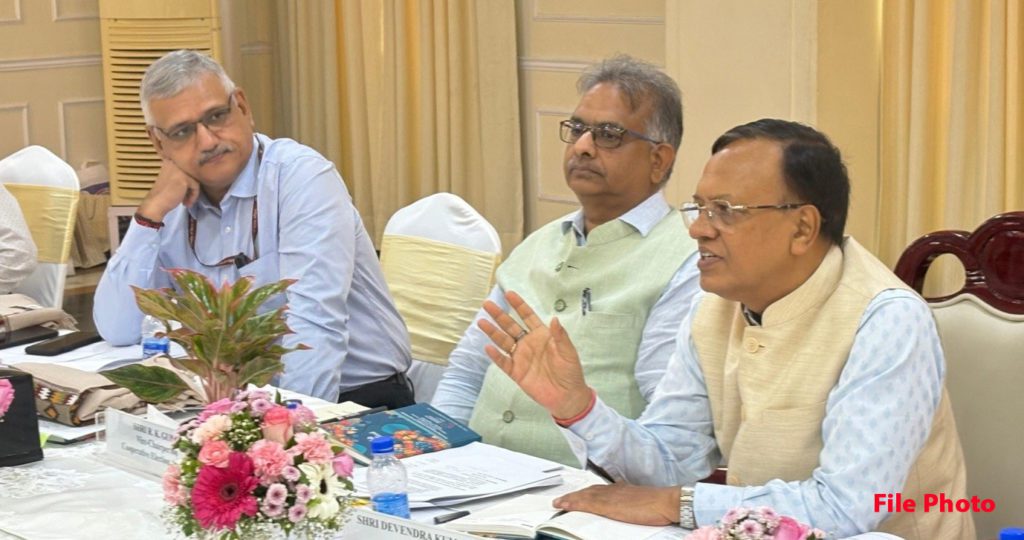
The Co-operative Election Authority (CEA) has significantly accelerated the election process of Multi-State Cooperative Societies (MSCS) across the country, completing 225 elections and initiating 74 more as part of a structured push to strengthen democratic governance in the cooperative sector.
Constituted under Section 45(1) of the Multi-State Cooperative Societies Act, 2002, the CEA was established by the Central Government to ensure free, fair and transparent elections in multi-state cooperatives. The Authority comprises a Chairperson, Vice-Chairperson and Members, including one woman member, and is headquartered at the World Trade Centre, Nauroji Nagar, New Delhi. It is mandated to conduct elections, supervise the preparation of electoral rolls and oversee the election of Boards of Directors and office bearers of MSCS.
As of January 2026, the Authority has issued 299 election programmes, out of which 225 have been successfully concluded. Seventy-four elections are currently underway. In January alone, eight societies completed their Board elections, while 11 fresh election programmes were announced. To ensure neutrality and administrative oversight, District Magistrates and Collectors are generally appointed as Returning Officers.
The CEA has also stepped up its engagement with major national federations such as TRIFED, National Cooperative Housing Federation Limited and Indian Farmers Fertiliser Cooperative Limited to align their bye-laws with the 2023 amendments to the Act. The alignment process is aimed at ensuring uniform compliance and strengthening institutional governance frameworks.
Among its key interventions, the Authority has enforced Department of Personnel and Training (DOP&T) guidelines restricting Central Government employees from contesting cooperative elections without prior approval. It has also introduced checks to curb excessive representation of close relatives on Boards, seeking to prevent conflicts of interest and disproportionate dominance by specific groups or regions.
Compliance measures have been tightened further through strict adherence to Rules 19U and 19V concerning election expenditure statements. Election programmes now incorporate a formal code of conduct barring the use of society vehicles for canvassing and restricting Board meetings that could potentially influence poll outcomes. Consolidated instructions have been issued for the preparation of member lists, voter lists and standardized formats for Returning Officers, while remuneration rates for Returning Officers and Assistant Returning Officers have been revised to streamline operations.
With these structured reforms and compliance mechanisms, the CEA is positioning itself as a central pillar in reinforcing accountability, transparency and democratic functioning within India’s multi-state cooperative framework.
Meanwhile, uncertainty continues over elections to the National Cooperative Union of India (NCUI). Cooperative leaders indicate there is no clarity yet on the schedule. The NCUI Board had earlier been dissolved and an Administrator appointed to conduct fresh elections. However, the organisation was unable to elect a new Board within the stipulated timeframe due to delays in revising its bye-laws and obtaining clearance from the office of the Central Registrar.
In addition, Sahakar Bharati reportedly raised objections to certain provisions in the proposed amendments and sought ministerial intervention, expressing concerns over preserving NCUI’s democratic ethos. Until these issues are resolved, the timeline for NCUI elections remains uncertain even as the CEA continues to expedite polls across other multi-state cooperatives.