





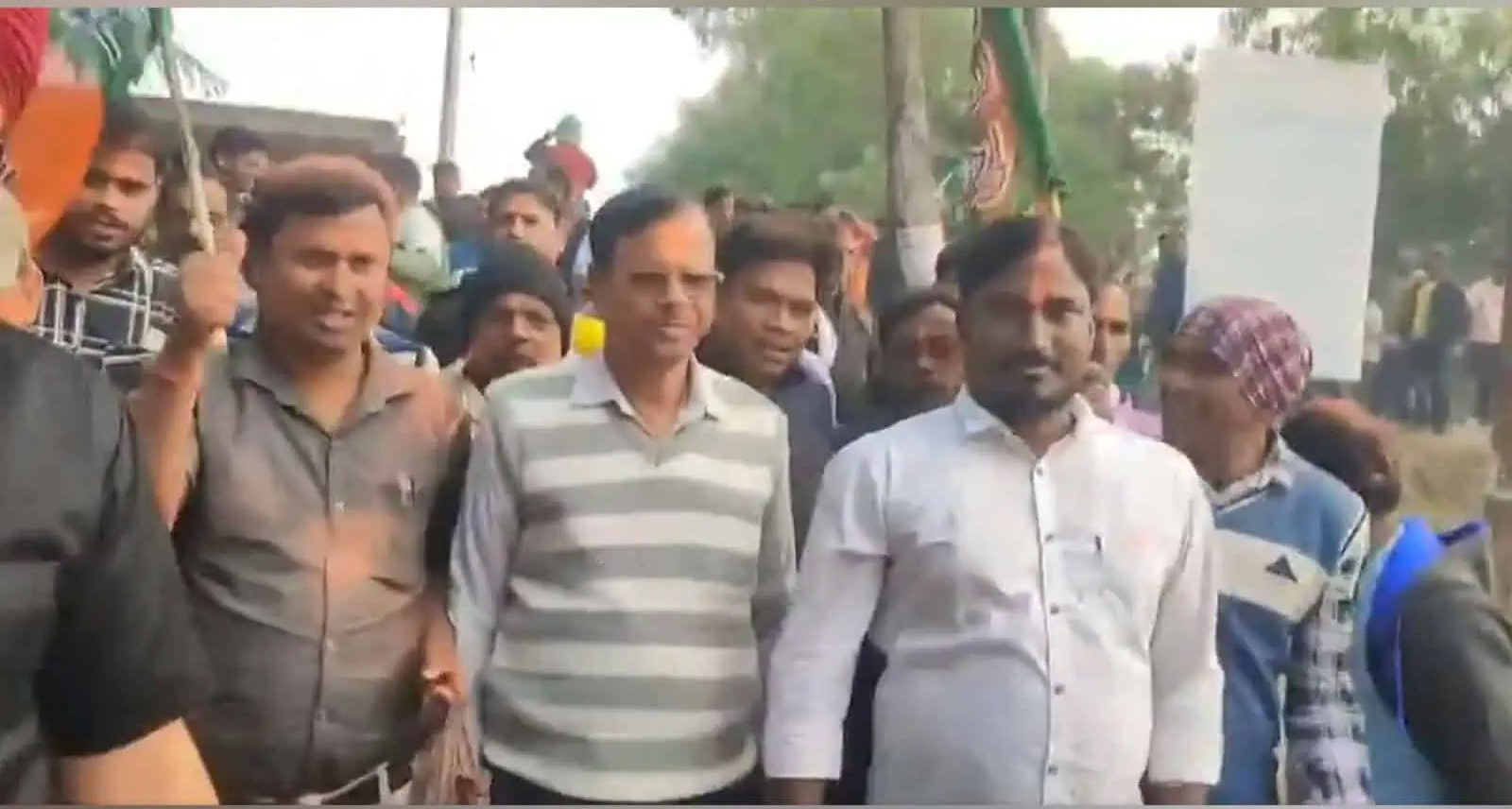
The Bharatiya Janata Party’s clean sweep in the Nandigram Cooperative Agricultural Development Committee elections is being widely seen as more than a routine local victory. By winning all nine seats and shutting out the Trinamool Congress completely, the BJP has sent a strong political signal from a constituency that has come to symbolise resistance to the ruling party in West Bengal.
Nandigram holds special political significance as the assembly seat of Suvendu Adhikari, the Leader of the Opposition, who defeated Chief Minister Mamata Banerjee from the same constituency in the 2021 Assembly elections. The latest cooperative poll result reinforces the perception that the BJP’s organisational grip in the area remains firm and that the party continues to enjoy grassroots support in pockets that were once considered TMC strongholds.
BJP workers celebrated the victory as a morale booster ahead of the 2026 Assembly elections, which are expected to be a direct contest between the BJP and the TMC. Party leaders argue that cooperative and local body elections often reflect voter sentiment more honestly, as they are less influenced by personality-driven campaigning and more by day-to-day governance issues.
The political messaging from the BJP has also grown sharper. Senior party leaders have repeatedly highlighted what they describe as administrative failures, corruption allegations and erosion of democratic institutions under the TMC government. BJP MLA Shankar Ghosh, reacting to Mamata Banerjee’s recent remarks about “shaking” the BJP, said that the Chief Minister had already been politically shaken in Nandigram in 2021 and accused her of relying on rhetoric rather than performance.
At the national level, the BJP leadership has made it clear that West Bengal is a priority state. Union Home and Cooperation Minister Amit Shah has publicly asserted that the party is working towards forming the next government in Bengal, claiming that public dissatisfaction with the TMC is steadily growing.
The BJP’s focus has expanded beyond traditional political rallies to include outreach programmes targeting youth, cultural groups and professionals, indicating a more nuanced campaign strategy than in previous election cycles.
Electoral data from recent years also suggest that the BJP has managed to consolidate itself as the principal challenger to the TMC. From a marginal presence a decade ago, the party emerged as the main opposition after the 2021 Assembly elections and retained a significant footprint in the 2024 Lok Sabha polls. Local victories such as the one in Nandigram add to this momentum by strengthening cadre confidence and organisational discipline.
The TMC, however, remains a formidable force. Mamata Banerjee continues to command a strong personal following, particularly in rural areas and among women voters. The party has dismissed BJP gains as episodic and has set ambitious targets for the 2026 elections, projecting confidence in retaining power.
Yet, political observers note that repeated setbacks in symbolic constituencies and grassroots institutions could gradually dent the TMC’s aura of invincibility. Cooperative bodies, panchayats and local committees play a crucial role in Bengal’s political ecosystem, and control over them often translates into electoral advantage.
While it would be premature to predict a decisive BJP victory in 2026, the Nandigram result underlines a clear trend: the BJP is no longer an outsider in West Bengal politics. With sustained organisational work and an aggressive campaign narrative, the party appears increasingly well-positioned to mount its strongest challenge yet to the TMC in the upcoming Assembly elections.