




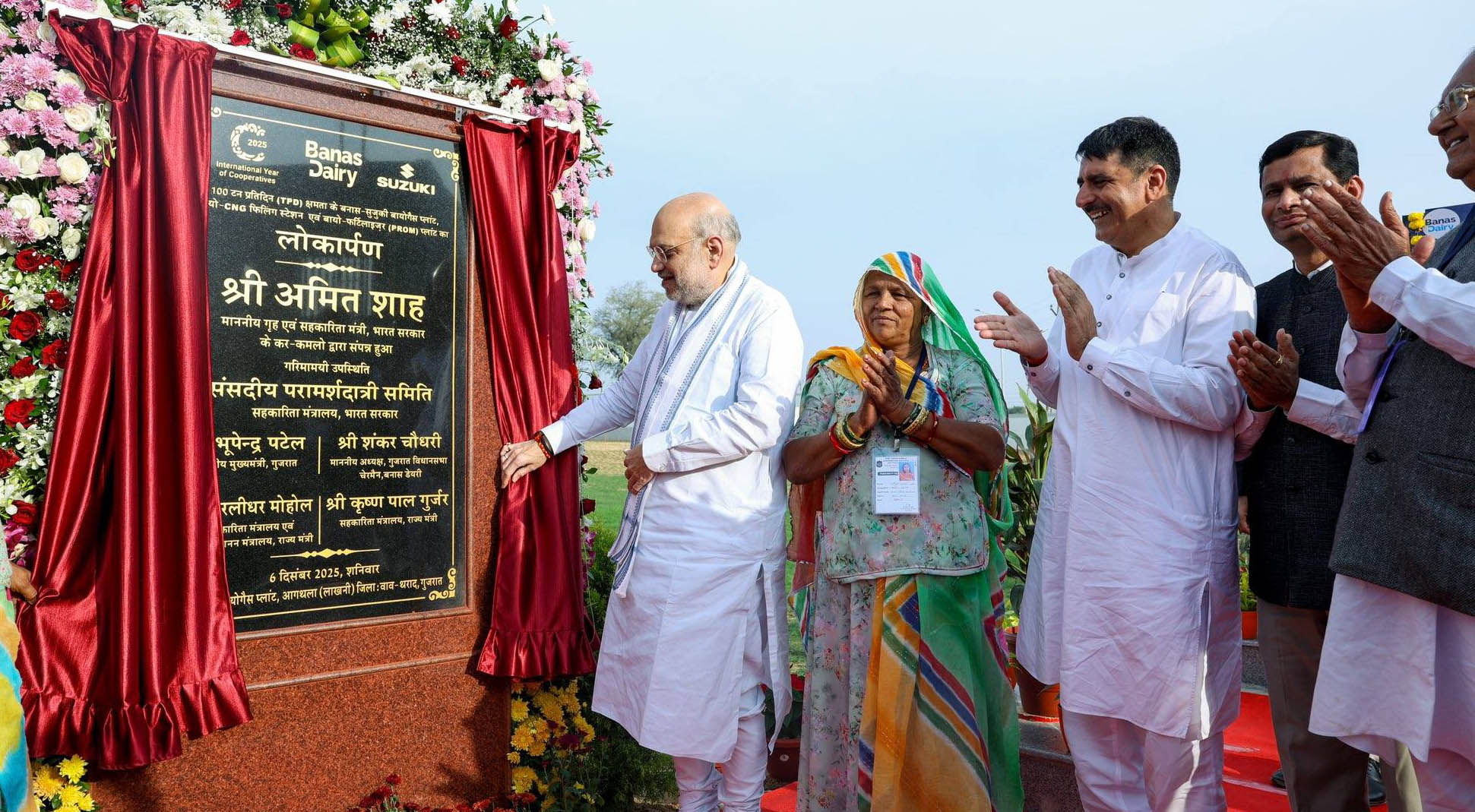
Banas Dairy’s expansion drive took a major step forward in Vav-Tharad, Gujarat, where Union Home and Cooperation Minister Amit Shah inaugurated a new Bio-CNG and fertilizer plant and laid the foundation stone for a 150-ton milk powder unit.
The event also saw the launch and dedication of protein and automated paneer plants, marking an accelerated shift toward a circular economy model within the dairy sector. The programme was attended by national and state representatives, cooperation ministry officials and dairy stakeholders.
Speaking at the event, Shah reflected on Banas Dairy’s growth from a small cooperative movement into what is now Asia’s largest milk producer with a turnover of Rs 24,000 crore. He credited women dairy farmers for driving this transformation, noting that milk collection and supply networks in Banaskantha are largely run by women whose payments directly reach their bank accounts, offering a practical model of grassroot economic empowerment.
Highlighting the transformation in agricultural output, he recalled that Banaskantha once struggled to grow even a single crop annually during the drought years of the 1980s. Today, farmers harvest up to three crops, groundnut, potato, pearl millet and kharif produce, backed by irrigation expansion through projects like Sujalam-Sufalam, which channelled surplus water from Narmada and Mahi rivers to the region.
Shah said the story of how water availability reshaped the region’s economy should be fully documented, and that two universities have been tasked with compiling research on the long-term impact of water conservation and cooperative development.
Reiterating the legacy of founder Galbabhai Patel, he said Banas Dairy began in 1960 with societies from eight villages in Vadgam and Palanpur, proving that large achievements can emerge from collective contributions of people with limited means.
He stated that the cooperative journey will now serve as a model for other states and international cooperative movements. Shah also offered tributes on the death anniversary of Dr B. R. Ambedkar and noted the coincidence of the event with the completion of a padyatra organised in honour of Sardar Vallabhbhai Patel’s 150th birth anniversary, stating that Patel’s philosophy of cooperatives continues to influence India’s rural structure.
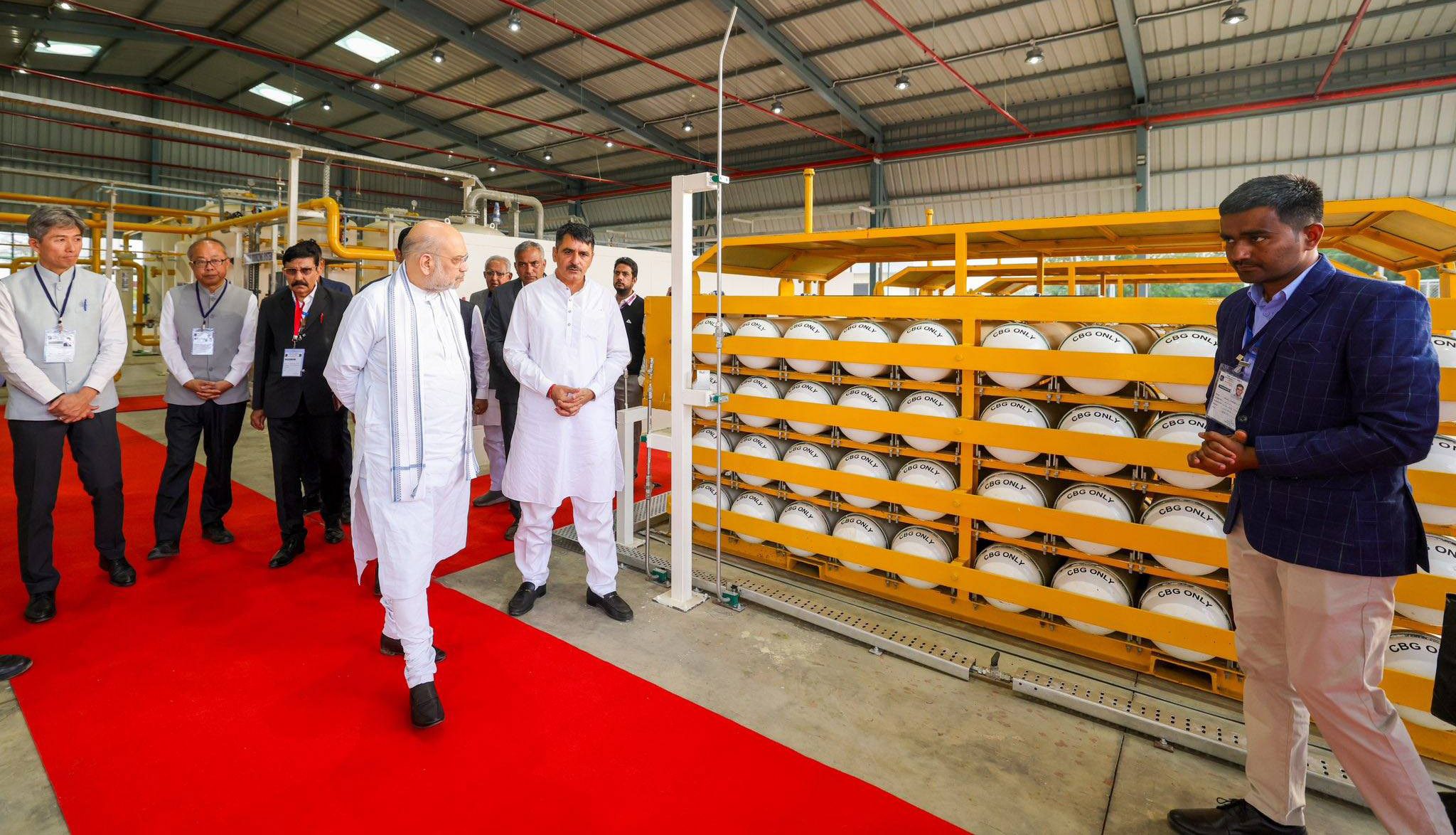 Focusing on the next phase of dairy growth, Shah emphasized the need to move beyond traditional output and integrate waste-based income systems. The Bio-CNG plant model, he said, is expected to be replicated nationally, ensuring that cow dung is not wasted but converted into manure, biogas and energy.
He argued that circular economy mechanisms can increase farmer income without requiring a rise in milk production levels, estimating that earnings could climb by at least 20 percent in five years. He also assured that the government has created the required technological and financial ecosystem to support this shift.
A roadmap to diversify high-value dairy products was announced, and Shah shared a list of globally demanded items with Amul leadership to speed up production. He noted that India lags in several high-profit dairy commodities, and tapping global demand could dramatically increase farmer earnings. Alongside dairy output, cooperative production of livestock feed will also be prioritized so that profits stay within farmer networks rather than flowing to private suppliers.
To support the sector, the government has formed six national-level cooperative institutions, three multi-state entities for dairy and three more for seed distribution, organic product marketing and agricultural exports. These will integrate dairy, processing, storage, food manufacturing and value chain operations so that returns reach livestock farmers directly.
Micro-ATM facilities have already been deployed across village dairy cooperatives and will soon offer financial services. Shah expressed confidence that White Revolution 2.0, supported by missions on animal husbandry, dairy infrastructure, improved breeding and disease control, will scale nationwide prosperity, using the Banas Dairy model as a central reference point for expansion.