
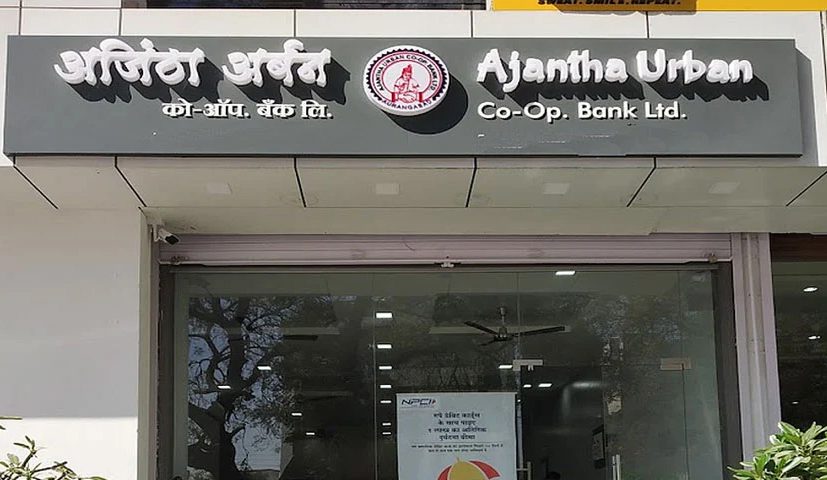
The Reserve Bank of India (RBI) has cancelled the banking licence of Ajantha Urban Co-operative Bank Maryadit, Aurangabad. The decision was formalized through an RBI order dated April 21, 2025, and the bank is now prohibited from carrying out any banking operations, effective from the close of business on April 22, 2025.
As per the provisions of the Deposit Insurance and Credit Guarantee Corporation (DICGC) Act, 1961, each depositor is entitled to receive up to Rs 5,00,000 as insurance cover for their deposits. Encouragingly, 91.55% of the bank’s depositors are expected to recover their full deposit amounts under the DICGC framework.
As of April 3, 2025, the DICGC has already disbursed Rs 275.22 crore in insured deposits to eligible account holders based on their submitted claims and consent.
According to the RBI, the bank’s licence was revoked due to inadequate capital and unsustainable earning prospects, making it non-compliant with multiple provisions of the Banking Regulation Act, 1949. The bank failed to meet the requirements under Sections 11(1), 22(3)(a) to 22(3)(e), and Section 56 of the Act.
In its official statement, the RBI gave several important reasons for cancelling the bank’s licence.
Firstly, the bank did not have sufficient capital and lacked the ability to earn profits in the future, making it financially weak. Secondly, the bank failed to comply with the rules and regulations set by the RBI, which are essential for operating a banking business.
Lastly, the RBI believed that allowing the bank to continue would not be in the public interest and could undermine trust in the banking system.
Following the cancellation, the Registrar of Cooperative Societies, Maharashtra has been requested to initiate the winding up of the bank and appoint a liquidator.
With its licence revoked, Ajantha Urban Co-operative Bank is now barred from accepting or repaying deposits, and from conducting any form of banking business, as defined under Section 5(b) read with Section 56 of the Banking Regulation Act, 1949.
It is worth mentioning that in the financial year 2024–25, the Reserve Bank of India (RBI) significantly tightened its regulatory oversight of cooperative banks. As per the data received by the analysis team of Indian Cooperative from various sources and research, the RBI imposed fines on four State Cooperative Banks (StCBs) and 51 District Central Cooperative Banks (DCCBs) for various violations. Urban Cooperative Banks (UCBs) faced even stricter measures, with a total of 215 penalties imposed on UCBs during the year.
Additionally, the RBI placed seven new UCBs under its All-Inclusive Directions (AID), restricting key operations, including deposit withdrawals. However, four UCBs were removed from AID after improving their performance.
As of March 31, 2025, 23 UCBs remained under AID, with Maharashtra leading with nine, followed by Karnataka (five) and Uttar Pradesh (four). Other states, including Rajasthan, Punjab, and West Bengal, each had one UCB under AID.