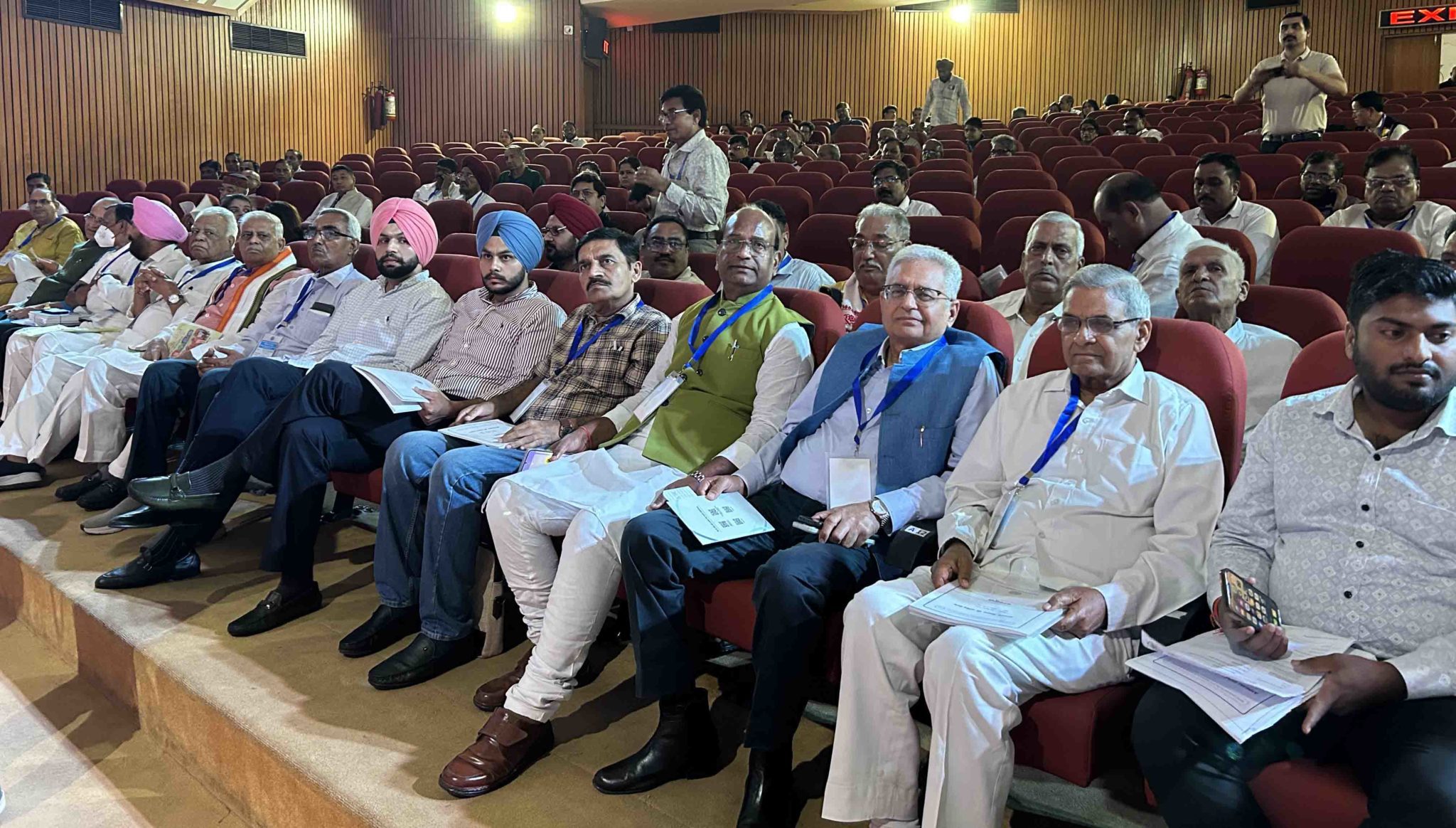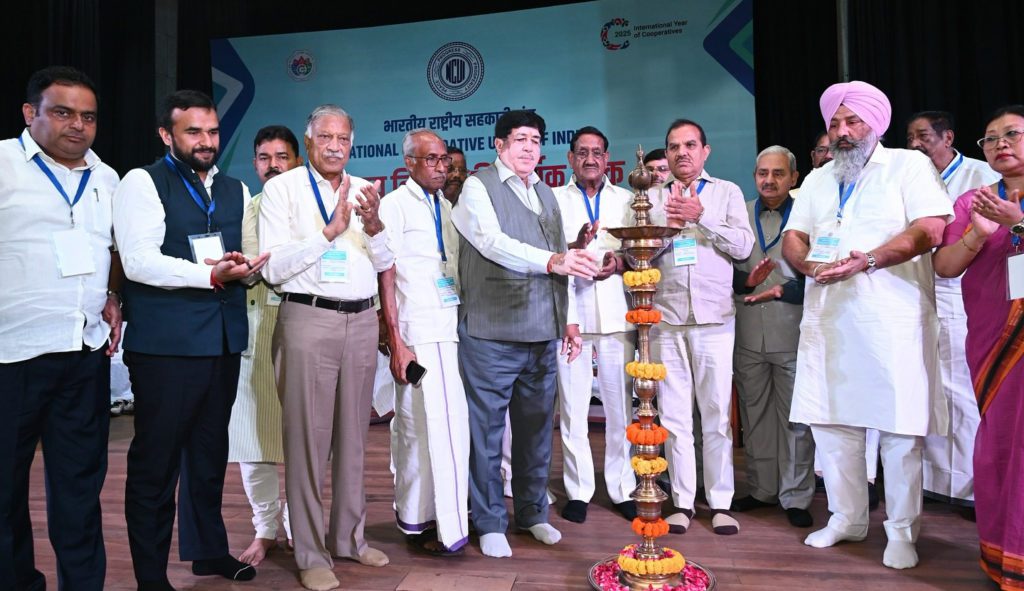
The National Cooperative Union of India (NCUI) held its Annual General Meeting (AGM) on Saturday at its headquarters in New Delhi, chaired by NCUI President Dileepbhai Sanghani. Alongside the passage of the regular agenda, the members unanimously approved amendments to the bye-laws of NCUI, with a rectification on the issue of votes for multistate co-ops, as suggested by shareholders.
The AGM witnessed the participation of several leading figures of the cooperative movement, including Chandra Pal Singh Yadav, Bijendra Singh, Vishal Singh, Uday Joshi, G. H. Amin and other senior cooperators. More than 150 delegates (Quorum of 116) from across the country also attended the session.
In his presidential address, Sanghani underlined that the AGM should not remain a routine exercise but serve as a platform to share ideas, assess achievements, and address challenges of the cooperative sector. He said cooperatives, rooted in democratic principles and self-reliance, have consistently shown resilience during crises and continue to play a vital role in India’s socio-economic development.
Sanghani emphasized that agriculture and cooperation remain the backbone of India’s economy, with agriculture contributing 16% to the GDP. He called for greater inclusion of small and marginal farmers in cooperatives to boost productivity, reduce costs, and secure better incomes.
Highlighting government initiatives, he noted that Prime Minister Narendra Modi’s vision of “Sahakar se Samriddhi” has given a major boost to the sector through the creation of the Ministry of Cooperation, which has already launched over 100 initiatives. These include the National Cooperative Policy, digitization of 75,000 PACS, tax concessions, and the establishment of Tribhuvan Sahakari University.
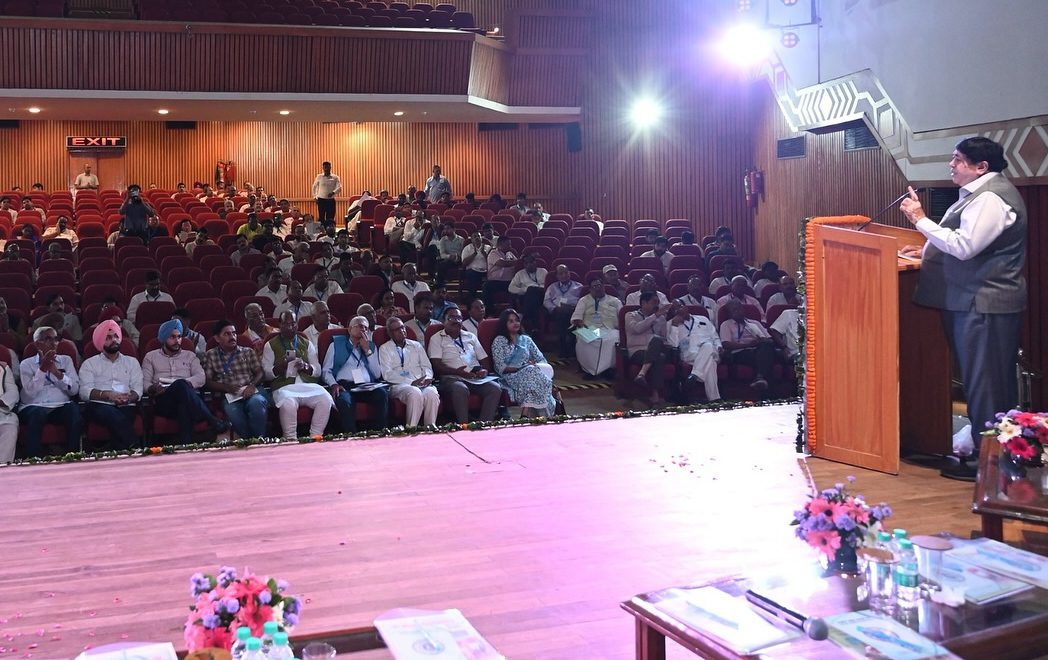

Calling for modernization, he stressed the need to professionalize human resources, upgrade cooperative training institutes, and explore emerging sectors such as renewable energy, health, tourism, insurance, and transport for cooperative ventures.
Referring to the United Nations’ declaration of 2025 as the International Year of Cooperatives, Sanghani said India’s successful hosting of the ICA General Assembly in November 2024 underscored the country’s growing leadership in the global cooperative movement.
Reviewing NCUI’s achievements during FY 2024–25, he shared that the National Centre for Cooperative Education (NCCE) organized 159 training programmes benefiting 6,336 participants, including SC and ST beneficiaries.
The Coop. Connect division worked to engage youth, while the National Cooperative Resource Centre (NCRC) rolled out new training modules and launched a digital learning platform to strengthen cooperative education and outreach.
Concluding his address, Sanghani reiterated that cooperatives are pivotal to realizing the vision of Atmanirbhar Bharat and a $5 trillion economy, while also contributing to social equity and sustainable development.
Dr. Sudhir Mahajan, Chief Executive of NCUI, presented the agenda items before the General Body for consideration and approval. The meeting was coordinated successfully by NCUI’s Ritesh Dey.
Several members shared their views during the occasion, with some calling for more seats for constituencies of multi-state co-ops, which not only contribute the most but also have the highest number of members. Ashok Dabas used the occasion to criticize Bijender Singh for alleged wrongdoing in the Delhi State Co-operative Bank, which the president disapproved of, noting it was unrelated to the current AGM.
Demonstrating a participative approach, Sanghani welcomed the suggestion to restrict voters to the zone from which a contestant is contesting, as proposed by several members at the AGM.