






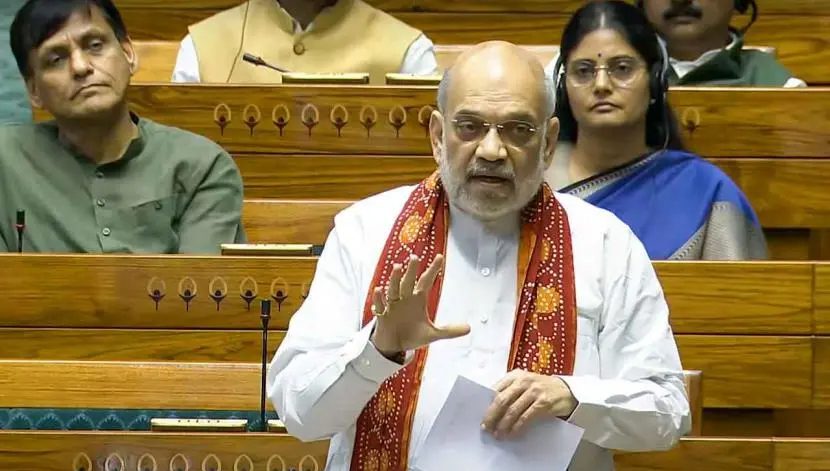
India’s first cooperative-led ride-hailing platform, Bharat Taxi, has emerged as a significant milestone in citizen-centric and people-owned mobility, with its user base nearing 10 lakh and driver enrolment crossing three lakh. Union Minister for Cooperation Amit Shah shared the update in a written reply in the Lok Sabha on Tuesday, highlighting the growing acceptance of cooperative enterprises in India’s digital economy.
According to the information provided, Bharat Taxi has registered 9.9 lakh customers and onboarded more than three lakh drivers, known as “Sarathis”, since its launch. The platform has already completed 2.91 lakh rides, reflecting increasing public confidence in a cooperative, driver-owned alternative to aggregator-dominated ride-hailing services. The steady rise in both ridership and driver participation indicates that the model is gaining traction among commuters as well as service providers seeking fairer working conditions.
Bharat Taxi was launched under the vision of “Sahkar se Samriddhi”, which seeks to place cooperatives at the centre of inclusive economic growth. Unlike conventional ride-hailing platforms that charge commissions and exert centralized control, Bharat Taxi follows a zero-commission model. Under this structure, the full fare earned from each ride is transferred directly to the drivers, strengthening income security and reducing dependency on intermediaries.
A defining feature of the platform is its cooperative ownership structure, which positions drivers not merely as service providers but as stakeholders in governance and value creation. This approach, the government believes, offers a more sustainable and dignified livelihood framework, particularly for those engaged in the informal mobility sector. By giving drivers a voice in decision-making, the initiative aims to address long-standing concerns related to earnings volatility, lack of transparency and limited social security.
Registered under the Multi-State Cooperative Societies Act, 2002, Bharat Taxi was formally established on June 6, 2025, by eight national-level cooperative institutions. The platform aligns closely with the Ministry of Cooperation’s broader strategy to revitalise and modernise cooperatives, positioning them as effective instruments of employment generation, social protection and grassroots economic participation in a rapidly digitising economy.
The operational footprint of Bharat Taxi is currently spread across key urban and pilgrimage centres. In the National Capital Region, services are available in Delhi, Gurugram and Noida, while in Gujarat the platform operates in cities such as Ahmedabad and Rajkot, as well as prominent pilgrimage destinations including Somnath and Dwarka. The presence in both metropolitan and religious tourism hubs underscores the flexibility and scalability of the cooperative-led model.
Government officials view Bharat Taxi as a transformative intervention in the mobility sector, demonstrating that cooperatives can successfully adopt digital platforms without compromising their core values of equity, participation and shared prosperity. The initiative is being closely watched as a potential blueprint for similar cooperative-led digital services in other sectors.
As India’s platform economy continues to expand, Bharat Taxi is increasingly being projected as a credible, people-centric alternative that balances technological innovation with social responsibility, reinforcing the relevance of the cooperative movement in the country’s evolving growth story.