
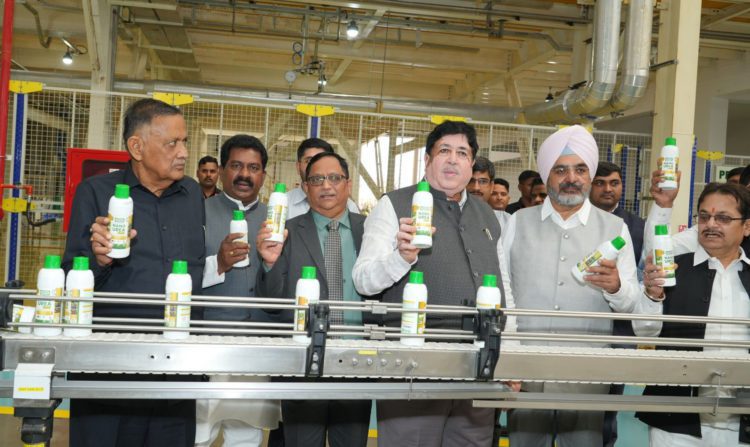
India’s transition toward next-generation agricultural inputs is gathering pace, with nano fertilisers witnessing widespread adoption among farmers across the country. Highlighting this trend, K J Patel, Managing Director of Indian Farmers Fertiliser Cooperative Limited, said that the growing use of nano-based nutrients is delivering measurable gains in both productivity and sustainability.
According to Patel, the increasing uptake aligns with the Government of India’s recent update on the rapid progress of nano fertilisers, which have emerged as a key component of modern agricultural practices.
Backed by extensive field validation conducted under the aegis of the Indian Council of Agricultural Research, nano fertilisers have demonstrated the potential to reduce conventional urea consumption by 25–50%, while simultaneously boosting crop yields by 3–8% across multiple crops.
These outcomes, supported by large-scale demonstrations in diverse agro-climatic zones, are being viewed as a breakthrough in addressing long-standing challenges of excessive fertiliser usage, soil degradation, and rising input costs. Experts believe that nano fertilisers, due to their higher nutrient use efficiency and targeted delivery, represent a shift toward precision agriculture in India.
IFFCO, the world’s largest fertiliser cooperative, has been at the forefront of this transformation. The organisation has developed and commercialised a range of nano fertilisers including Nano Urea, Nano DAP, Nano Zinc, and Nano Copper. These products are manufactured indigenously and are designed to provide crops with essential nutrients in a more efficient and environmentally friendly manner.
Nano Urea, in particular, has gained significant traction among farmers as a substitute for conventional urea. A single bottle of Nano Urea is considered capable of replacing at least one bag of traditional urea, reducing not only input costs but also the environmental burden associated with excessive nitrogen application. The Government has also actively promoted nano fertilisers as part of its broader strategy to reduce fertiliser subsidies and encourage sustainable farming practices.
The push for nano fertilisers is closely linked to national initiatives such as Atmanirbhar Bharat and Atmanirbhar Krishi, which aim to enhance self-reliance in agricultural inputs and improve farm incomes. By leveraging cooperative networks and farmer outreach programmes, IFFCO has been instrumental in creating awareness and facilitating the adoption of these innovative products at the grassroots level.
Agricultural scientists and policymakers note that widespread adoption of nano fertilisers could play a crucial role in achieving India’s twin objectives of food security and environmental sustainability. Reduced chemical load on soil and water systems, combined with improved crop productivity, is expected to benefit both farmers and the broader ecosystem.
Patel reiterated IFFCO’s commitment to driving this transformation through continuous innovation and farmer-centric initiatives. He emphasised that nano fertilisers embody the principle of “less input, more output,” offering a pathway to sustainable prosperity for millions of farmers.
As adoption continues to expand, nano fertilisers are poised to redefine nutrient management practices in Indian agriculture, positioning the country as a global leader in agri-innovation.