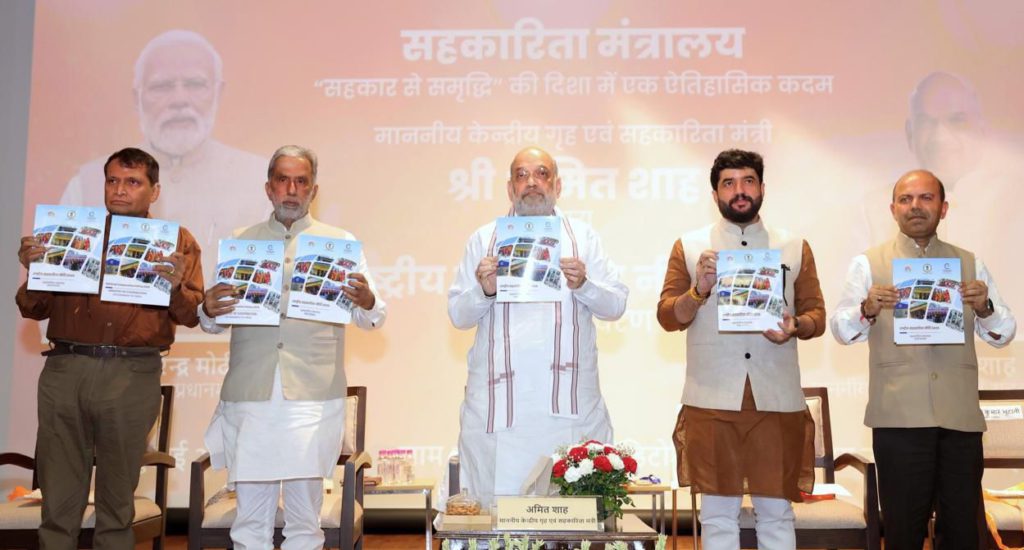
Union Home Minister and Minister of Cooperation Amit Shah unveiled the National Cooperative Policy – 2025 in New Delhi, marking a transformative moment for India’s cooperative movement. The policy aims to revitalize the sector with an ambitious target: to triple its contribution to the country’s GDP by 2034 and integrate 50 crore active members into its fold.
Addressing dignitaries including Ministers of states, Cooperation Secretary Ashish Kumar Bhutani, and former Union Minister Suresh Prabhu, who led the policy’s drafting, Shah hailed the policy as historic, visionary, and rooted in Prime Minister Narendra Modi’s vision of “Sahkar Se Samriddhi” (Prosperity through Cooperation).
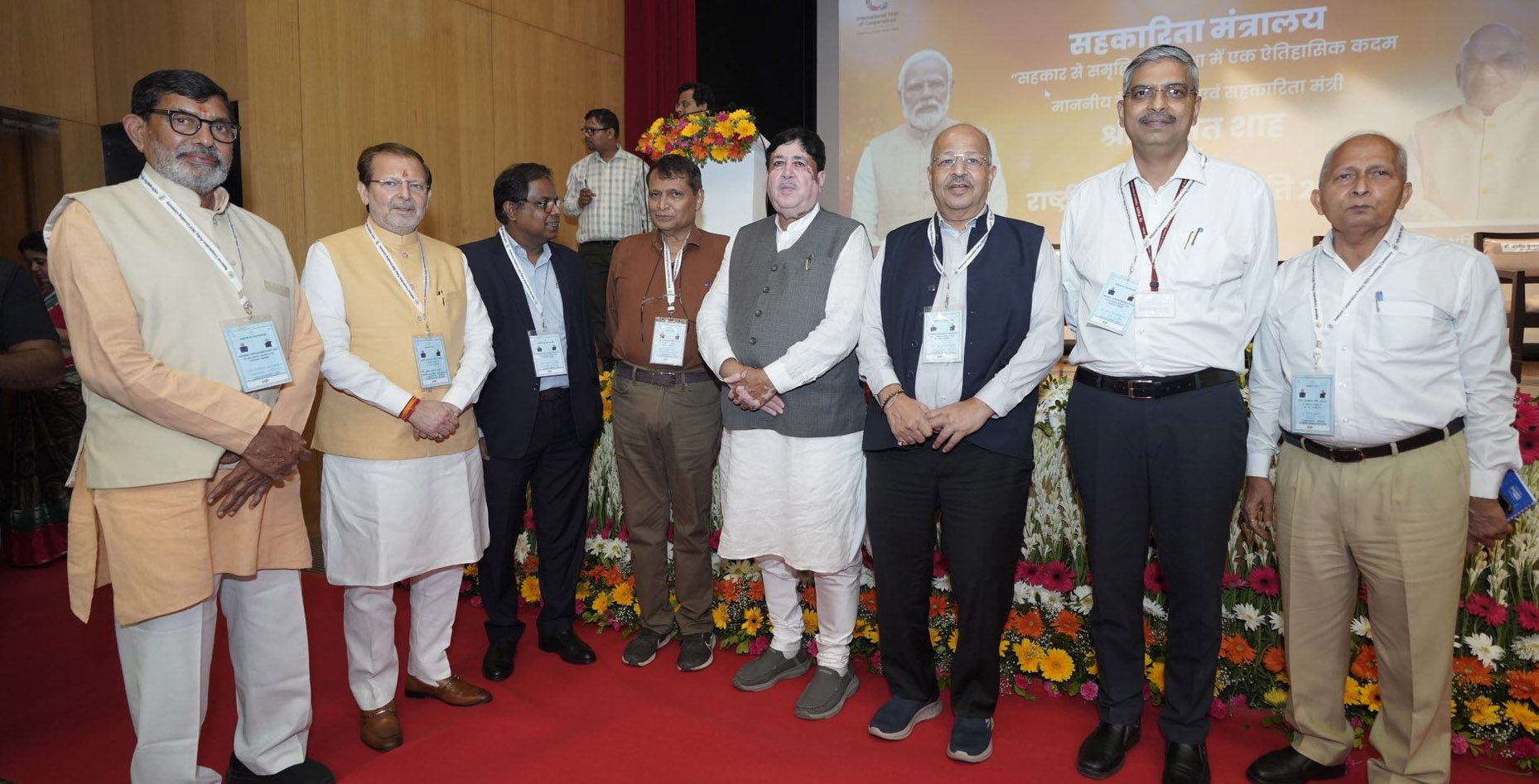
Almost all top cooperators associated with national cooperative federations, including Dileep Sanghani, IFFCO MD Dr. U.S. Awasthi, Satish Marathe, Jyotindra Mehta, Ravindra Rao, Vishal Singh, and many others, were present, along with a strong media presence.
Drafted after exhaustive consultations involving over 750 suggestions, 17 meetings, and input from RBI and NABARD, the policy reflects wide stakeholder engagement. Shah noted that India introduced its first cooperation policy in 2002 under Atal Bihari Vajpayee, and now, 23 years later, under Modi, the second such blueprint has been laid out, underscoring the long-term commitment of their party to cooperative development.
Key goals include increasing cooperative societies by 30%, establishing at least one cooperative in every village, and developing five model cooperative villages per tehsil. The scope of cooperatives will expand beyond traditional areas to include sectors like tourism, taxi services, green energy, and insurance, opening new employment avenues and economic potential.
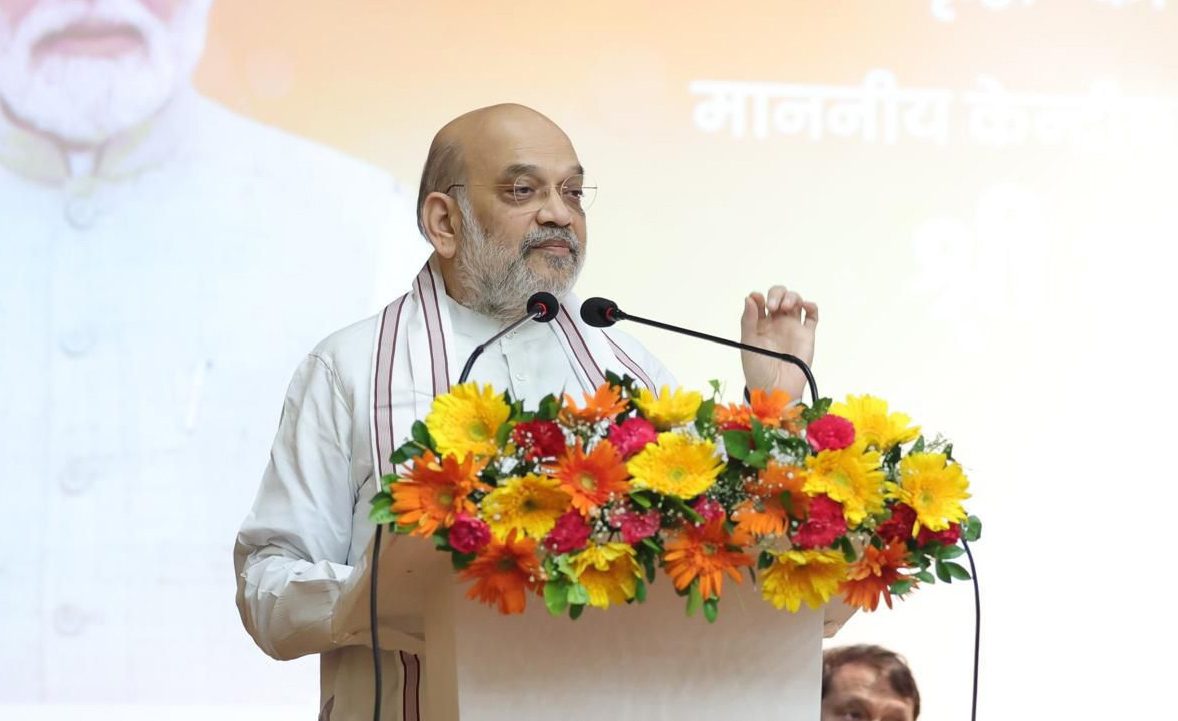

Shah emphasized the sector’s inclusive growth model, which pools small contributions from millions to create scalable enterprises. “India must grow collectively. Only the cooperative model can ensure development that includes all 1.4 billion citizens,” he stated.
To support this, 83 policy interventions have been identified, of which 58 are completed and 3 fully implemented. Notable milestones include near completion of 45,000 new Primary Agricultural Credit Societies (PACS), computerization of PACS, and their expansion into 25 new areas like Jan Aushadhi Kendras, LPG distribution, petrol pumps, and even managing government schemes like PM Surya Ghar Yojana.
In a strategic push for education and manpower, Tribhuvan Sahkari University has been established, while a dedicated ‘Sahkar Taxi’ initiative will be launched later this year, giving drivers full ownership of earnings.
Highlighting the shift in perception, Shah recalled how the cooperative sector was once written off as outdated. “There was a time when people said cooperation had no future. Today, the future belongs to cooperation,” he declared.
With six pillars guiding the policy, from inclusivity to preparing the sector for emerging opportunities—the government envisions making cooperatives a mainstream engine of growth. This includes parity in treatment for cooperative banks and international expansion through National Cooperative Exports Limited.
Shah concluded by stressing that the new policy is not only about boosting GDP but also about restoring dignity and self-respect to individual members. It positions India’s cooperative sector as an essential pillar of “Aatmanirbhar Bharat,” equipped to shape the next 25 years of national development.