
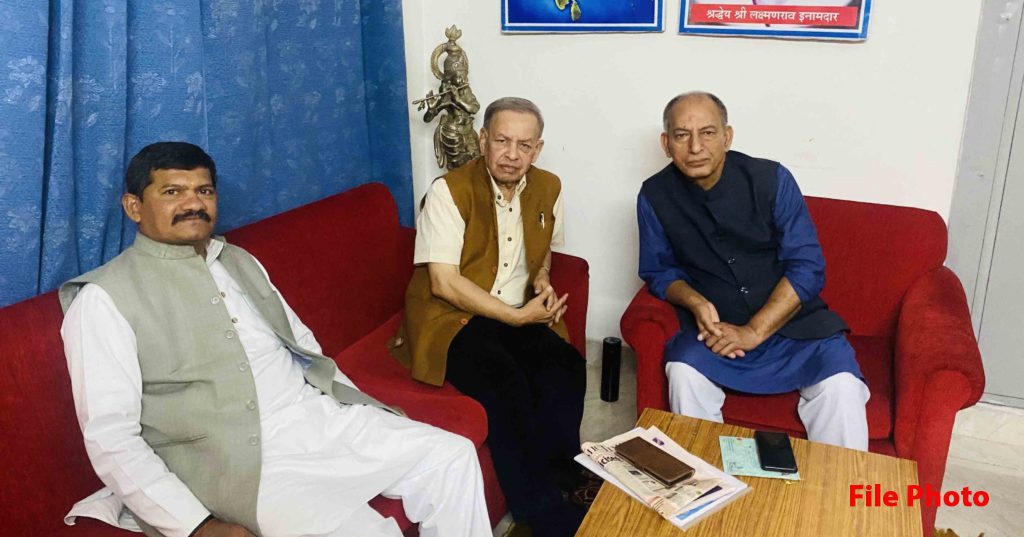
Ahead of the Union Budget 2026–27, senior leaders of Sahakar Bharati met Union Finance Minister Nirmala Sitharaman and submitted a detailed and wide-ranging charter of demands aimed at strengthening and revitalising India’s cooperative sector across rural, urban and allied segments. The meeting underscored the cooperative movement’s growing relevance in India’s development journey and sought targeted policy and fiscal interventions in the forthcoming Budget.
The Sahakar Bharati delegation, comprising noted cooperative leaders Satish Marathe, D.N. Thakur, Sanjay Pachpor and Deepak Chaurasia, highlighted that cooperatives remain a critical pillar of inclusive and participatory growth.
They pointed out that cooperatives play a central role in financial inclusion, employment generation, agricultural support systems and rural prosperity, particularly in regions where formal private sector presence remains limited. The delegation urged the Finance Minister to address several long-pending structural, regulatory and fiscal challenges that continue to constrain the sector’s full potential.
A key focus of the memorandum was the strengthening of Primary Agricultural Cooperative Societies, which form the grassroots foundation of the cooperative credit and service delivery system. Sahakar Bharati sought deposit insurance coverage of up to Rs 50,000 for deposits mobilised by PACS, recalling the long-standing recommendations of the Khusro Committee.
According to the delegation, such insurance cover would enhance depositor confidence, encourage savings at the village level and improve the financial stability of PACS.
The leaders also stressed the urgent need for deeper digitalisation of cooperatives. They called for the provision of payment gateways to PACS, integrated with District Central Cooperative Banks or designated lead banks, to enable seamless digital transactions and improve transparency.
Enhanced digital infrastructure, they said, would help PACS expand their service offerings, reduce operational inefficiencies and align with the broader national push for digital financial inclusion.
In addition, the delegation sought capital support for the creation of new multipurpose PACS, as well as fisheries and dairy cooperatives. They proposed a sustainable mix of grants and loans to support these institutions in their formative years, enabling them to build viable business models and serve local economic needs more effectively.
Such support, they argued, would strengthen rural livelihoods and diversify income sources beyond traditional agriculture.
On cooperative banking reforms, Sahakar Bharati raised several critical issues. The delegation demanded restoration of tax benefits under Section 80P of the Income Tax Act for District Central Cooperative Banks and State Cooperative Banks, along with exemption from TDS provisions. They also called for amendments to grant Scheduled Bank status to eligible DCCBs, which would significantly improve their access to liquidity and financial markets.
Further, the leaders pressed for the early issuance of Reserve Bank of India guidelines to allow cooperative banks to raise long-term funds and capital in a regulated manner. They emphasised the need to evolve new business models for cooperative banks that reflect the rising share of non-farm income in rural areas, ensuring that these institutions remain relevant and financially sustainable in a changing rural economy.
The delegation expressed hope that the Union Budget 2026–27 would recognise the cooperative sector as a key driver of balanced and inclusive development and provide the policy clarity and fiscal support required to unlock its full potential.