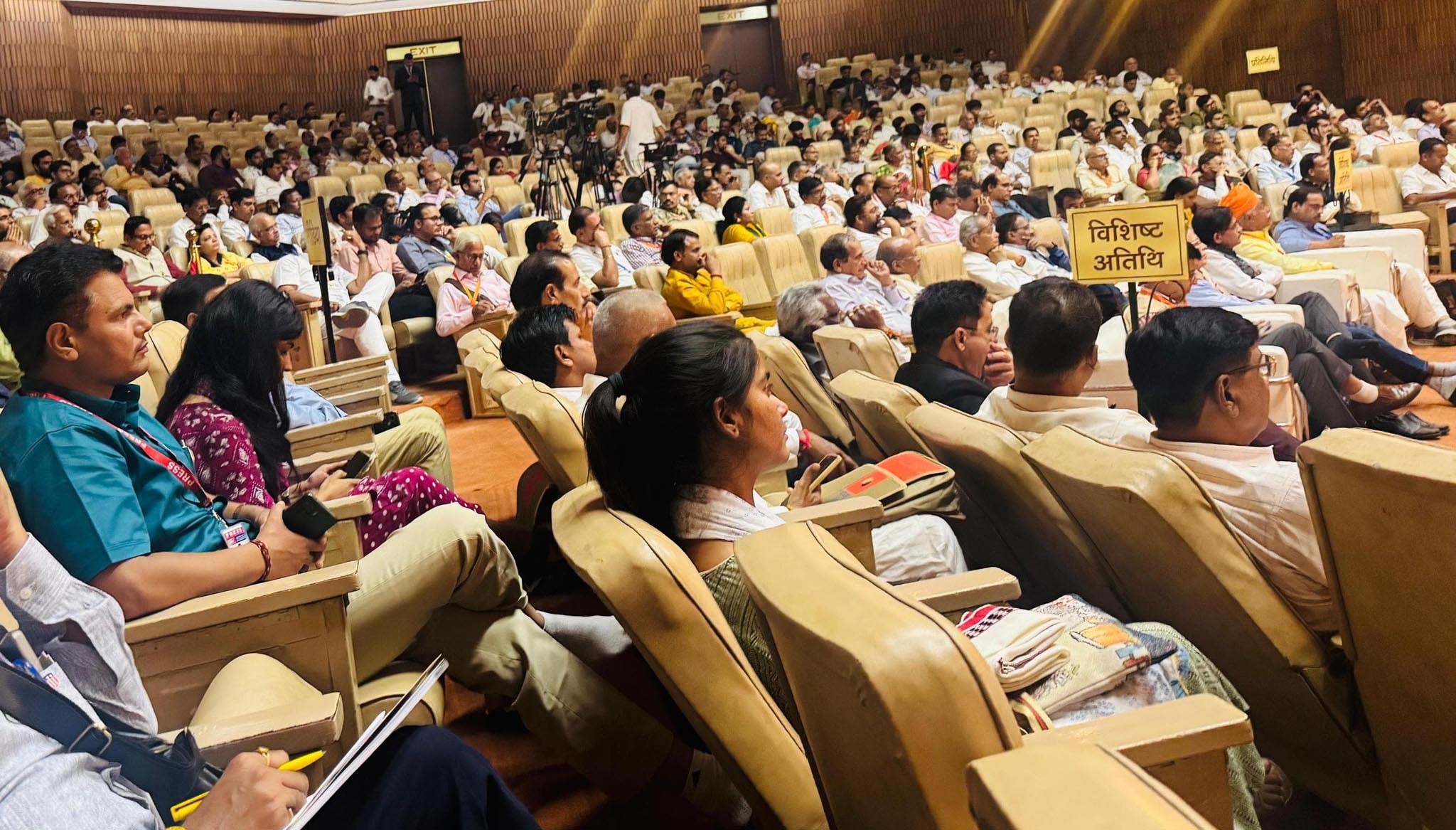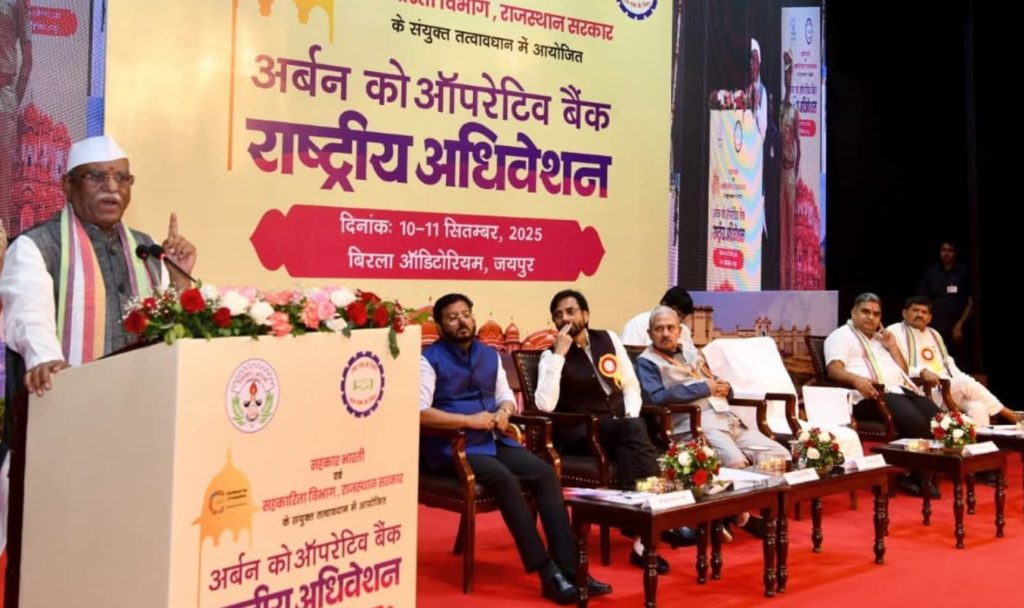
The two-day National Convention of Urban Cooperative Banks (UCBs), organized by Sahakar Bharati in collaboration with the Rajasthan Cooperative Department, concluded on Thursday at Birla Auditorium in Jaipur.
The valedictory session was graced by Rajasthan Governor Haribhau Bagde, who urged cooperative banks to dedicate themselves to empowering society economically and ensuring that the benefits of cooperative banking reach even the last person in line.
The concluding session was attended by Sahakar Bharati President Uday Joshi, Rajasthan Cooperation Minister Gautam Dak, Sanjay Pachpor, Deepak Chaurasia, and several representatives from UCBs across the country.
Addressing the gathering, Governor Bagde emphasized that the cooperative movement must play a central role in bridging social and economic gaps.
He noted that Rajasthan’s business communities are connected with economic activities nationwide and appealed to financially strong individuals to join hands with cooperatives.
“Only through such widespread participation can the pace of development in both the state and the nation be accelerated,” he remarked.
Highlighting the inclusive role of UCBs, Bagde said, “Cooperative banks must work with the objective of bringing the poor and the needy into the mainstream. Only then can we truly realize the vision of Sabka Saath, Sabka Vikas (collective efforts, inclusive growth).”
He described cooperative banks as not only the “backbone of the economy” but also a “strong source of livelihood for millions of families,” stressing the need for a spirit of “not for self, but for the growth of all.”
The Governor cited Denmark’s cooperative-led success in agriculture and dairy as an inspiring global model and praised Rajasthan’s Saras Dairy movement for its impact. He encouraged similar cooperative initiatives in marketing other products. He also noted India’s achievements in the dairy sector, where the country holds the top global position in milk production.
Tracing India’s cooperative history, Bagde recalled Sayajirao Gaekwad’s establishment of the first semi-cooperative factory in Baroda and the 1949 founding of the Pravara Cooperative Sugar Factory by Vithalrao Vikhe Patil and Dhananjayrao Gadgil.
As the event concluded, Uday Joshi reflected on the significance of the sessions and expressed confidence that the discussions would inspire actionable strategies, strengthen UCBs, and contribute to inclusive economic growth in the years ahead.