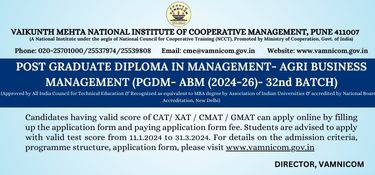






The National Council for Cooperative Training (NCCT), functioning under the Ministry of Cooperation, Government of India, plays a pivotal role in strengthening the country’s cooperative movement by professionalizing it.
Established in 1976 and registered under the Societies Registration Act, 1860, NCCT is tasked with organizing, monitoring, and evaluating cooperative training nationwide. It is worth recalling that Mrs. Minu Shukla Pathak, a 2009-batch IRS officer, is currently looking after the responsibilities of the National Council for Cooperative Training (NCCT) as Secretary.
Through its vast training infrastructure, which includes Vaikunth Mehta National Institute of Cooperative Management (VAMNICOM), five Regional Institutes of Cooperative Management (RICMs), and 14 Institutes of Cooperative Management (ICMs), NCCT ensures that cooperative education reaches every corner of India.
In the financial year 2023-24 alone, NCCT conducted 3,619 training programs, reaching over 2.21 lakh individuals. These efforts are designed to instill professionalism, build leadership, and promote self-reliance within cooperative organizations.
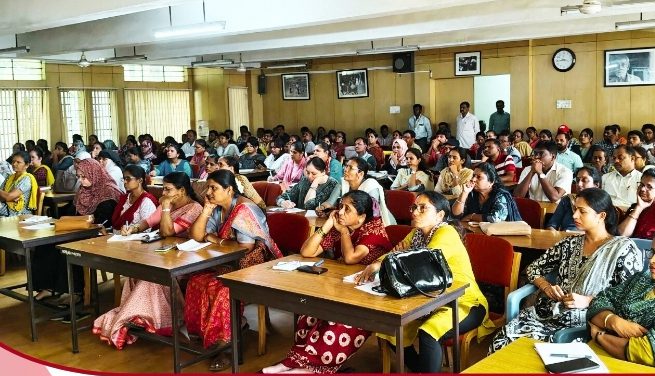
Across its various arms, NCCT delivers targeted programs catering to emerging needs. ICM Patna recently held a specialized session on “Commercial Dairy Farming” and “Entrepreneurial Opportunities in Animal Husbandry and Allied Sectors” for DGR participants, promoting rural entrepreneurship and self-employment through exposure to modern technologies.
ICM Kannur, from April 28 to 30, 2025, conducted a management program for newly elected directors of cooperative institutions, emphasizing governance and leadership. Similarly, RICM Bengaluru hosted a DGR-sponsored certificate course in Sales Management, inaugurated by Colonel Sanil Damodaran, aimed at transitioning armed forces personnel into civilian cooperative careers.
RICM Thiruvananthapuram organized a Leadership Development Programme for Chairpersons and Board Directors under Rule 50(A), fostering strategic thinking and cooperative values at the top level. Meanwhile, MICM Bhubaneswar, in collaboration with the Directorate of Fisheries, conducted capacity-building training for PFCS/FFPOS members, empowering stakeholders in Odisha’s fisheries sector.
ICM Nagpur contributed by organizing a soft skills workshop for DGR participants, focusing on personal and professional development—an essential element of cooperative leadership.
These diverse programs exemplify NCCT’s holistic approach to professionalizing the cooperative movement. By training personnel at every level—from grassroots to leadership—NCCT is not only building capacity but also instilling accountability, innovation, and economic resilience within the cooperative framework.
NCCT’s mission aligns with the broader vision of an Atmanirbhar Bharat (self-reliant India), where cooperatives serve as engines of inclusive growth. Through continuous capacity building, skill enhancement, and promotion of entrepreneurial spirit, NCCT is shaping a new generation of cooperative leaders, ultimately ensuring that the cooperative movement evolves into a dynamic, professionally managed force for socio-economic change across the country.