

At the Global Fintech Fest 2025 in Mumbai, NABARD used its platform to underline how digital innovation can strengthen India’s cooperative network alongside broader rural development. Rather than treating cooperatives as legacy institutions, NABARD positioned them as critical partners in digital lending, agri-value chains, and financial inclusion.
Its interventions at the event highlighted how technology, policy support and mission-based financing can modernise cooperative credit structures, link them with fintech ecosystems, and extend their reach to small farmers, producer groups and underserved regions.
A major announcement was the launch of the RuralTech CoLab portal, designed to bring together cooperatives, agritechs, fintechs and digital service providers. The platform aims to co-create scalable models that improve last-mile delivery, strengthen cooperative banking infrastructure, and integrate FPOs and rural collectives into digital value chains.
NABARD also showcased ongoing efforts to digitise cooperative banks through initiatives such as the Sahakar Sarathi Private Limited (SSPL) platform, which is backed by the Ministry of Cooperation, NCDC and NABARD to upgrade over 1,000 rural cooperative banks with technology, operational support and capacity-building.
The institution also marked the first investment under the AgriSURE Fund, jointly promoted with the Union Agriculture Ministry. The beneficiary, Fambo Innovation Pvt Ltd, connects farmers and Farmer Producer Organisations to food service businesses like QSRs and cloud kitchens. The model is designed to empower producer collectives and cooperatives by eliminating layers of intermediaries and linking them with stable markets.
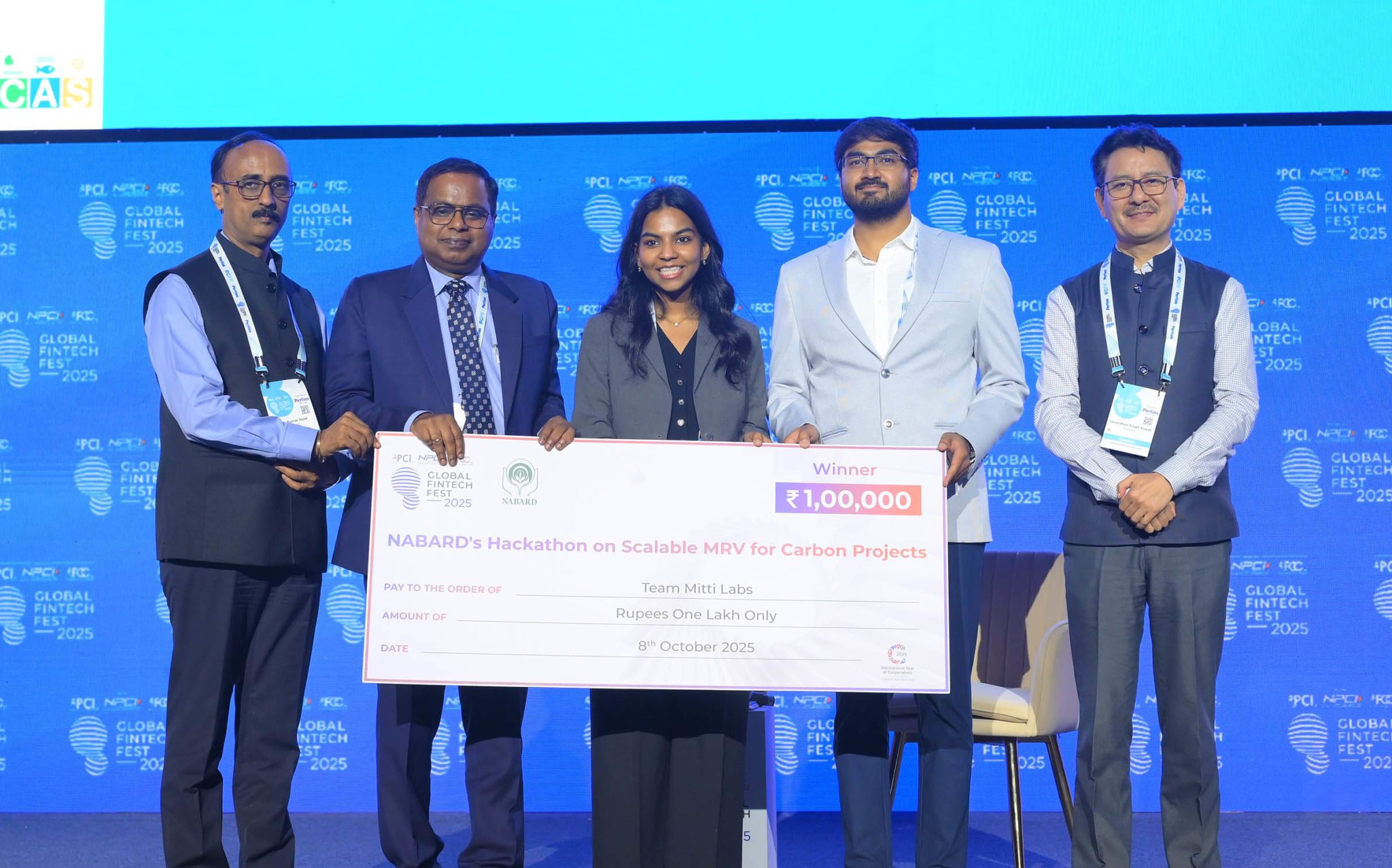
Innovation took centre stage through the NABARD Hackathon 2025, which drew solutions focused on rural sustainability and climate-linked income. The challenge centred on creating monitoring, reporting and verification systems that help small farmers and cooperatives measure the environmental impacts of their practices and access carbon credits. Mitti Labs won the challenge, with Varaha ClimateAg Pvt Ltd and Grow Indigo Pvt Ltd as runner-up and third place.

NABARD Chairman Shaji K. V. emphasised that responsible lending and credit education are as important as capital flow, especially for cooperatives and community institutions. He said that lenders carry a moral responsibility to help borrowers, particularly members of cooperative societies, understand credit and manage it sustainably.
He argued that the future of inclusion lies in long-term viability, ethical lending and impact-led operations rather than transactional profits. Collaborations with fintechs, agritechs and cooperative structures, he said, can improve underwriting, reduce costs and make rural communities bankable on their own terms.
By integrating technology with cooperative credit systems, Shaji added, the sector can expand outreach, promote transparency and build resilient institutions. He said NABARD’s aim is to create a rural economy where cooperatives are digitally empowered, livelihoods are protected and opportunities are equitably distributed.
Deputy Managing Directors Goverdhan Singh Rawat and Ajay Kumar Sood contributed to conversations on AI-driven inclusion, cybersecurity in credit systems, agritech’s growth logic and the future of green finance. Their interventions reinforced NABARD’s view that cooperatives will remain central to rural finance, but strengthened through digitisation, partnerships and innovation.
Overall, NABARD’s presence at GFF 2025 reflected its long-term vision: a rural economy where technology enhances the cooperative model, inclusion is system-driven, and innovation is shared across institutions rather than confined to startups or urban markets.