
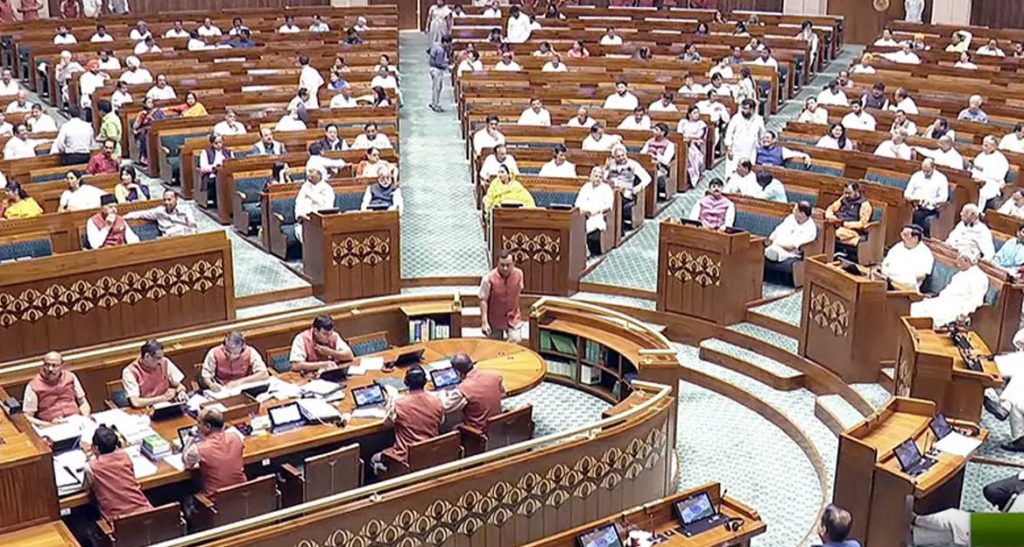
The Lok Sabha on Monday passed the Income Tax Bill, 2025, marking one of the most significant overhauls of India’s direct tax laws in more than six decades. While the new legislation applies across the economy, it contains several targeted provisions that could substantially benefit the cooperative sector, particularly manufacturing cooperatives and cooperative banks.
Union Finance Minister Nirmala Sitharaman introduced the updated Income Tax (No. 2) Bill, 2025 in the Lower House on August 11, replacing the Income Tax Act, 1961. The Bill streamlines the tax structure by reducing chapters from 47 to 23 and sections from 819 to 536, while adopting a digital-first, faceless compliance system to simplify procedures.
Clause 204 is a key highlight for cooperatives, offering an incentivized tax rate of 15% on manufacturing income for new manufacturing cooperative societies, subject to specified conditions. The clause also prescribes 22% on non-manufacturing income, 22% on short-term capital gains from non-depreciable assets, and 30% on certain deemed incomes. This optional regime aims to encourage new cooperatives to expand into manufacturing.
Clause 203 provides an alternative concessional tax rate for other cooperative societies not covered under Clause 204, provided they forgo specified deductions, simplifying compliance for those opting for a lower flat rate.
Clause 149 retains deductions for certain categories of cooperative income, allowing societies to continue claiming benefits for eligible income streams.
For cooperative banks, Clause 118 allows the carry forward and set-off of accumulated losses and unabsorbed depreciation in the event of business reorganisations, such as amalgamations or demergers. The provision details how such losses will be apportioned and utilised by successor or resulting entities.
Clause 64 sets special rules for computing deductions in cases of business reorganisation during the tax year, ensuring benefits are proportionately shared between predecessor and successor entities.
According to legal experts, these provisions are beneficial for cooperatives as they lower the effective tax rate, preserve existing deductions, simplify compliance, and protect tax benefits during restructuring.
Sector analysts believe the targeted measures will not only reduce the tax burden but also enhance the cooperative sector’s ability to expand in manufacturing and banking, strengthening its role in India’s economic growth.