





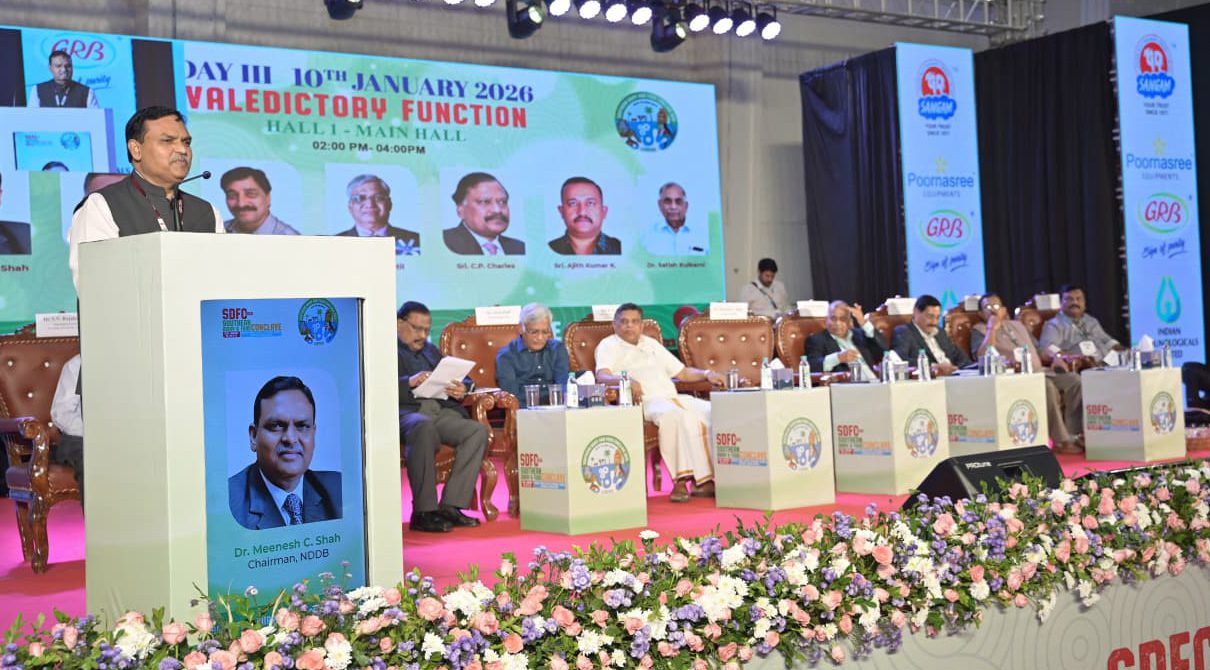
Dr Meenesh Shah, Chairman of the National Dairy Development Board (NDDB), on Monday outlined a comprehensive roadmap to address emerging challenges in India’s dairy sector, calling for stronger collaboration among southern dairy cooperatives and accelerated reforms under White Revolution 2.0.
He was addressing a Breakfast Meeting with Chairpersons and Managing Directors of Dairy Federations, Milk Unions and Milk Producer Organisations from across South India, along with leadership of the Indian Dairy Association (IDA), at Kozhikode.
In his address, Dr Shah highlighted a range of structural and market-related challenges confronting the dairy sector. These include rising input costs, increasing climate stress impacting milk production, persistent feed and fodder constraints, and the growing problem of milk adulteration.
He also drew attention to the emergence of analogue and synthetic dairy products, which pose both regulatory and market challenges, as well as intensifying competition in an increasingly dynamic and organised dairy market.
Emphasising the need for productivity-led growth, Dr Shah said that improving animal productivity and operational efficiency is critical to sustaining farmer incomes and ensuring the long-term viability of cooperatives. He underlined that southern dairy cooperatives, which have historically played a significant role in India’s milk economy, must deepen collaboration to respond effectively to these evolving challenges.
Outlining a future-oriented roadmap, the NDDB Chairman stressed the importance of expanding cooperative coverage to bring more milk producers into the organised sector. He said strengthening procurement systems remains central to White Revolution 2.0, with a focus on ensuring fair prices to farmers, improving milk quality, and reducing inefficiencies in the supply chain. Increasing the share of the organised sector in milk marketing was identified as a key priority to enhance transparency, traceability and consumer confidence.
Dr Shah also highlighted the need to expand the portfolio of value-added dairy products to improve margins and reduce dependence on liquid milk sales. Leveraging technology across procurement, processing and distribution was described as essential for improving efficiency, data-driven decision-making and farmer services. He further stressed the importance of strengthening governance structures within cooperatives to enhance accountability and professional management.
Sustainability featured prominently in his address, with Dr Shah calling for climate-resilient practices, efficient resource use and environmentally responsible growth to ensure the sector’s long-term future. He also emphasised the urgent need to upgrade procurement and processing infrastructure to ensure consistent quality, operational efficiency and export readiness of Indian dairy products. Aligning infrastructure and quality standards with global market requirements, he said, would help Indian cooperatives tap new domestic and international opportunities.
The address was followed by an interactive discussion session, during which Chairpersons and Managing Directors of Dairy Federations, Milk Producer Organisations and Milk Unions from across South India, along with IDA leadership, shared regional experiences, challenges and best practices. Participants discussed issues specific to different states, including procurement logistics, farmer engagement, market access and regulatory concerns.
The session served as a valuable platform for collective deliberation on building a resilient, farmer-centric and future-ready cooperative dairy ecosystem in South India, with a shared commitment to strengthening the cooperative model as a cornerstone of India’s dairy growth.