






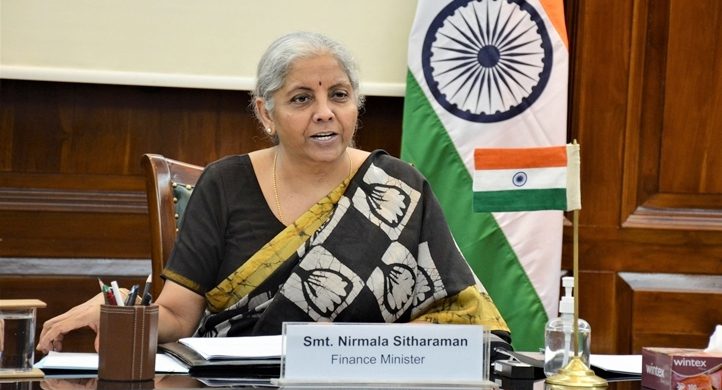
Several Urban Co-operative Banks (UCBs) from Bengaluru have jointly submitted a memorandum to Union Finance Minister Nirmala Sitharaman seeking rationalisation of the concessional tax framework for co-operative societies under the Income Tax Act, 2025.
The move is being viewed as a coordinated policy initiative by Karnataka’s urban co-operative banking sector to ensure competitive parity with corporate banks and strengthen the long-term sustainability of the co-operative banking ecosystem.
The representation specifically focuses on Clause 203 of the new Act, corresponding to the earlier Section 115BAD of the Income-tax Act, 1961, which allows co-operative societies to opt for a concessional tax regime subject to certain conditions.
While the UCBs welcomed the government’s decision to continue the concessional framework, they pointed out that the effective tax burden on co-operative banks still remains significantly higher than that on corporate banks, which benefit from lower tax options and greater operational flexibility.
According to the memorandum, the banks have urged the government to reduce the concessional base tax rate for co-operatives from the present 22% to 18% or lower. They argued that such a step would enable stronger internal capital generation, improve capital adequacy ratios, and provide much-needed financial stability to smaller and mid-sized urban co-operative banks that operate with limited capital buffers.
The banks also requested rationalisation of surcharge rates applicable under the concessional regime. They noted that the current surcharge structure creates a disparity between co-operative entities and smaller corporate firms that operate under comparatively favourable tax conditions. Aligning surcharge levels, they suggested, would help establish a more level playing field across different banking models.
Another key demand in the memorandum relates to transitional relief provisions. The UCBs have requested that co-operative banks opting for the concessional regime should be allowed to carry forward and set off accumulated losses and unabsorbed depreciation. Bank representatives stated that without such provisions, many institutions would face financial disincentives in shifting to the new tax framework despite its stated objective of simplification.
The memorandum also draws attention to the rapidly increasing compliance and technology-related costs faced by co-operative banks. With the banking sector undergoing accelerated digital transformation and stricter regulatory oversight, the UCBs have proposed targeted deductions or incentives for investments in core banking systems, cybersecurity infrastructure, digital banking platforms, and regulatory compliance systems. Such incentives, they argued, would help smaller co-operative banks modernise operations and meet evolving supervisory expectations.
The representation further emphasises the structural constraints under which co-operative banks operate. Unlike corporate banks, UCBs function under the Banking Regulation Act, 1949 and remain under the supervision of the Reserve Bank of India.
These regulatory conditions restrict their ability to raise capital through equity markets, making them heavily dependent on member contributions and retained earnings for capital formation.
Given these limitations, the banks argued that a more supportive tax framework would be essential for maintaining financial stability within the sector. They also highlighted the significant developmental role played by urban co-operative banks in extending credit to micro, small and medium enterprises (MSMEs), small traders, self-employed professionals, and local businesses.
In addition, UCBs continue to support agricultural activities and rural credit flows in peri-urban regions, thereby complementing the broader financial inclusion agenda of the government. The banks stated that rationalising the tax structure would strengthen their ability to expand lending to priority sectors without imposing any major burden on government revenues.
Sector observers note that the joint memorandum reflects a rare instance of unified advocacy by Bengaluru’s urban co-operative banking community. The initiative is expected to draw attention to the structural challenges faced by co-operative banks and could potentially shape future policy discussions on taxation and regulatory support for the co-operative banking sector.