






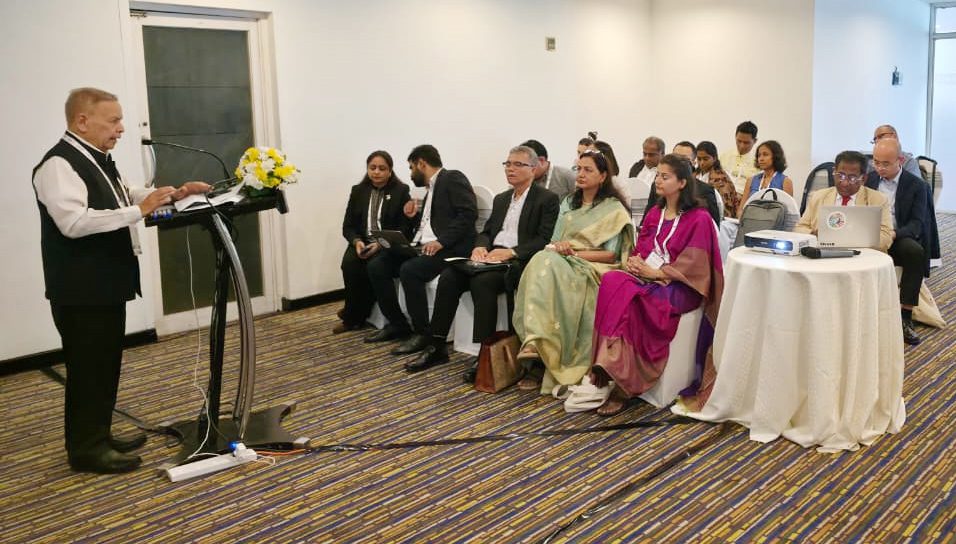
The 17th ICA-AP Regional Assembly in Colombo witnessed a powerful and insightful discussion during the session titled “Tackling the Cooperative Capital Conundrum with Resilient Financing.”
Experts from across the Asia-Pacific region shared transformative ideas on strengthening cooperative capital, making the session one of the most engaging of the event.
Chaired by Mr. Balasubramanian Iyer, Regional Director of ICA-AP, the session brought together thought leaders to address the evolving financial needs of the cooperative sector.
A key highlight was the comprehensive presentation by India’s veteran cooperator Satish Marathe, who spoke on “Avenues & Instruments for Raising Capital & Long-Term Funds by Cooperatives in India.”
Marathe delivered one of the day’s most in-depth analyses, explaining India’s legal and regulatory framework for cooperative capital. He outlined the inherent challenges in raising long-term funds while safeguarding democratic member control and drew parallels with global cooperative models that have successfully introduced hybrid capital structures.
During his address, Marathe detailed India’s current instruments for capital mobilisation. These include member share capital, statutory reserves, NABARD and NCDC funding channels, assistance from SIDBI and housing finance institutions, long-term borrowings and deposit instruments such as fixed deposits, recurring deposits and senior citizen deposits.
Taking the discussion further, Marathe identified critical gaps in India’s cooperative capital ecosystem and proposed a range of reforms. His suggestions included allowing non-voting shares, issuing cooperative bonds, adopting patronage-based equity, developing hybrid capital instruments similar to AT1 and Tier-2 instruments and creating a National Cooperative Investment Fund to provide long-term equity support for cooperatives.
He also stressed the importance of capacity-building through digital MIS systems, stronger risk management, governance reforms and structured reserves. “India’s cooperative sector stands at a historic turning point, with the Ministry of Cooperation and strengthened institutions like NABARD and NCDC offering unprecedented opportunities,” Marathe observed.
The session also featured insights from international experts including Ms. Anitha Munasinghe of Solidaridad Network and Prof. Sidsel Grimstad, who presented global experiences on worker-owned transitions, social impact investments and climate-linked financing strategies.
In its concluding note, the session underscored that cooperatives across the Asia-Pacific must adopt innovative financing models and forward-looking policy reforms to remain resilient, competitive and inclusive in a rapidly changing economic landscape.