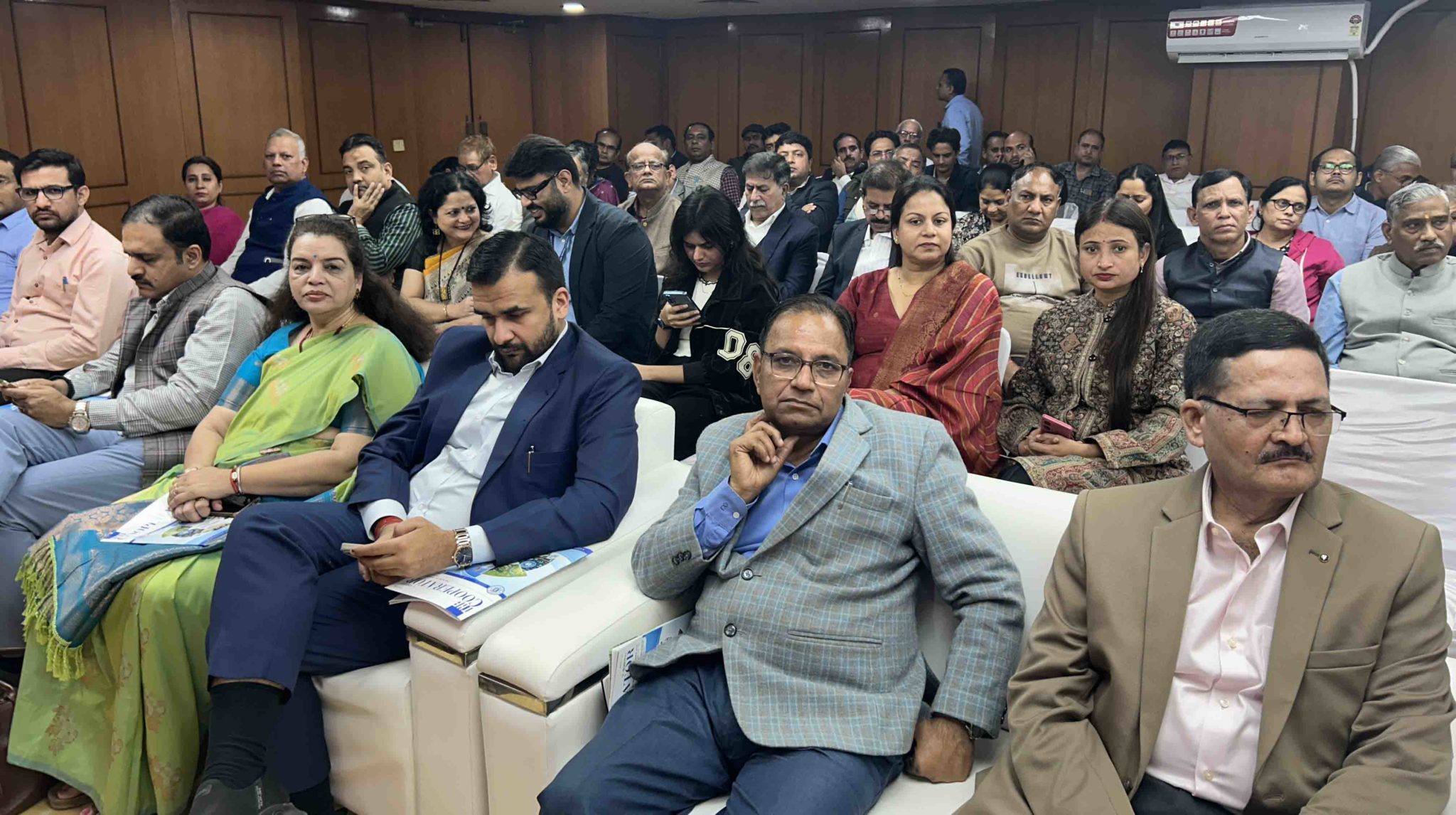







The National Cooperative Union of India (NCUI) celebrated the 72nd All India Cooperative Week at its headquarters on Friday, bringing together leading figures from India’s cooperative movement.
The event was attended by Delhi Cooperation Minister Ravinder Singh (Indraj), ICA-AP President Dr. Chandra Pal Singh Yadav, NCUI Vice-President Bijendra Singh, NCUI CE Sudhir Mahajan, NCCF Chairman Vishal Singh, K. K. Sivadasan Nair and several other prominent cooperators.
Addressing the gathering, Delhi Cooperation Minister Ravinder Singh (Indraj) delivered a forward-looking speech, reflecting on the evolution of the cooperative sector and outlining his vision for the coming decades.
He said his association with the cooperative movement is significant, especially as Delhi has a BJP government after 27 years and he has been entrusted with the responsibility of Cooperation Minister. He stated that although cooperatives have been active since 1904, the sector has witnessed major reforms since Amit Shah took charge of the Ministry of Cooperation. “Delhi too is entering a new phase, and very soon the strength of cooperatives will be visible across the capital,” he said.
Recalling the shift from barter-based systems to modern economic structures, he noted that Delhi needs cooperatives more than any other place, as people from across India come to the city for survival and opportunity. “Cooperation provides a platform where every individual finds the strength to sustain and grow,” he remarked.
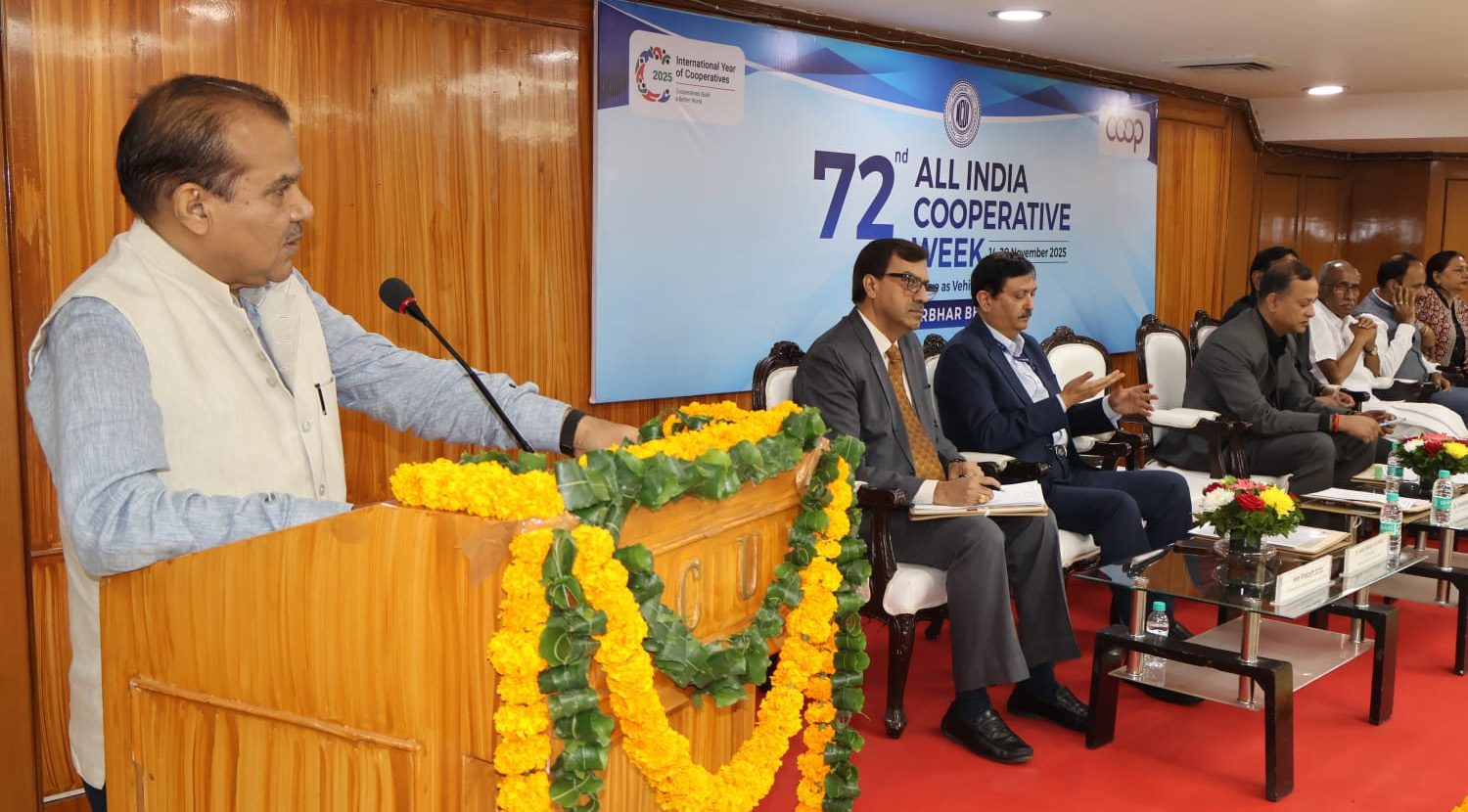 He stressed that India must move ahead with the spirit of Sahakar se Samriddhi, and strengthening cooperative ethics is essential for the movement’s progress.
Singh said that by 2047, cooperatives must emerge as one of the most impactful pillars of nation-building, and he called for reforms to the Delhi Cooperative Act to expand the sector’s reach. He welcomed suggestions from stakeholders, saying that any idea that helps Delhi’s cooperatives grow would be encouraged.
In his welcome address, NCUI CE Sudhir Mahajan said Cooperative Week allows the sector to evaluate both achievements and challenges. He highlighted major reforms including the creation of the Ministry of Cooperation, revision of state cooperative policies, and amendments to the MSCS Act aimed at strengthening governance and enhancing women’s representation.
He also pointed to key initiatives such as the world’s largest grain storage programme, PACs model bye-laws, the national cooperative database, expansion of fisheries and dairy cooperatives, and the formation of three new national-level cooperatives. NCUI, he said, is developing training modules and preparing to collaborate with the Cooperative University.
In his address, Dr. Chandra Pal Singh Yadav said that India’s identity as a Krishi-pradhan nation makes cooperatives indispensable for rural and economic development. He noted that cooperatives today reach 99 percent of the country’s villages, forming the world’s largest cooperative network. Under the vision of “Sahakar se Samriddhi,” he said,
“PACs are becoming multipurpose institutions, DCCBs are growing stronger, and national-level cooperatives in seeds, organic products and exports are opening new avenues for growth. He termed the proposed cooperative university a milestone, praising NCUI for its continuous efforts in cooperative education”, he added.
Speaking on the occasion, NCUI Vice-President Bijendra Singh observed that while individuals may not become Ambani, Adani or Tata, collective strength through cooperatives can surpass large corporates.
He thanked NCUI for organizing the national week and appreciated CE Sudhir Mahajan for “taking NCUI to greater heights.”
The event concluded with a vote of thanks by the NCUI Deputy Chief Executive. The event was moderated by NCUI’s Ved Prakash Setia.