






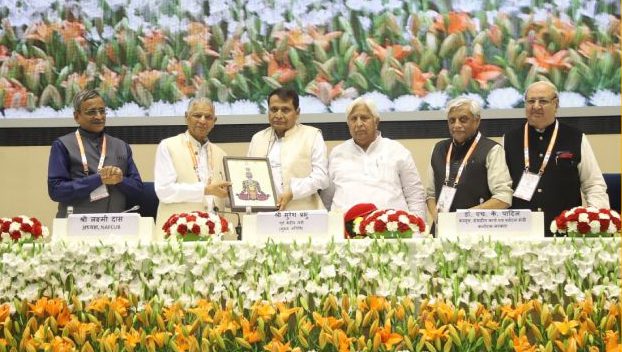
The two-day international conference of the urban cooperative credit sector-“Co-op Kumbh 2025”-concluded on a high note in New Delhi on Tuesday, celebrating the spirit of cooperation and charting a roadmap for transformative reforms.
The valedictory session featured Former Union Minister and Chairman of the National Cooperative Policy Committee, Suresh Prabhu, as the chief guest, alongside NAFCUB President Laxmi Das, H.K. Patil, Vice Chairman Milind Kale, Jyotindra Mehta, and O.P. Sharma.
Welcoming the dignitaries, Laxmi Das acknowledged the immense contribution of Suresh Prabhu to the cooperative sector and reflected on the highly constructive and enlightening discussions held during the two-day conference.
In his keynote address, Suresh Prabhu drew a symbolic parallel between the “Kumbh” and the cooperative movement, stating, “In Kumbh, we seek salvation, and if we wish to achieve true ‘moksha,’ we must align ourselves with the cooperative movement.”
He lauded the Modi government for establishing a dedicated Ministry of Cooperation under Amit Shah’s dynamic leadership, calling it a visionary step toward inclusive and sustainable growth.
Prabhu emphasized that since cooperatives are a state subject, both central and state governments must work in tandem. He noted that states like Uttar Pradesh, Maharashtra, and Goa have already begun drafting their cooperative policies and urged others to follow suit with legislative and structural reforms. “A regulator is essential, but not one that hinders expansion,” he said, stressing the need for fair and growth-oriented regulation.
Highlighting new areas of opportunity, Prabhu encouraged cooperatives to explore bamboo-based industries and other sustainable ventures while calling for greater youth and women participation in the movement. “They say anything can be done over coffee-I say anything can be done through cooperatives,” he remarked.
In his remarks, H.K. Patil expressed deep satisfaction with the outcomes of the event and lauded Prabhu’s long-standing contribution to NAFCUB. He also praised Amit Shah’s two-year expansion vision for the sector, noting that this was the first international cooperative conference organized with a clear, future-oriented agenda.
NAFCUB Vice Chairman Milind Kale presented the “Delhi Declaration 2025”, which called on Urban Cooperative Banks and Credit Societies to strengthen compliance, promote transparency, and embrace digital governance.
The declaration highlighted commitments to cybersecurity, data repositories, green finance, and social responsibility, reaffirming that cooperatives are not merely credit providers but engines of empowerment and mutual trust.
It bears recalling that on the inaugural day of Co-op Kumbh 2025, Union Home and Cooperation Minister Amit Shah unveiled a comprehensive roadmap for the digital and structural transformation of India’s urban cooperative banking sector. He announced plans to establish UCBs in every city with a population above two lakh and launched Sahkar Digi-Pay and Sahkar Digi-Loan to promote digital inclusion.
Dr. H.K. Patil urged revival-oriented reforms and a review of Section 80(P)(4), while Jyotindra Mehta introduced a Loan Origination System and backed Shah’s “One Town, One UCB” vision.
Uday Joshi called for self-regulation to strengthen credit cooperatives, and Rabindra Agarwal emphasized youth participation through the proposed Cooperative University. Collectively, the leaders envisioned a digitally empowered, inclusive, and self-reliant cooperative movement steering India’s sustainable growth.
The event concluded with a formal vote of thanks by O.P. Sharma, marking the close of a landmark conference that set the tone for a stronger, transparent, and digitally empowered cooperative future.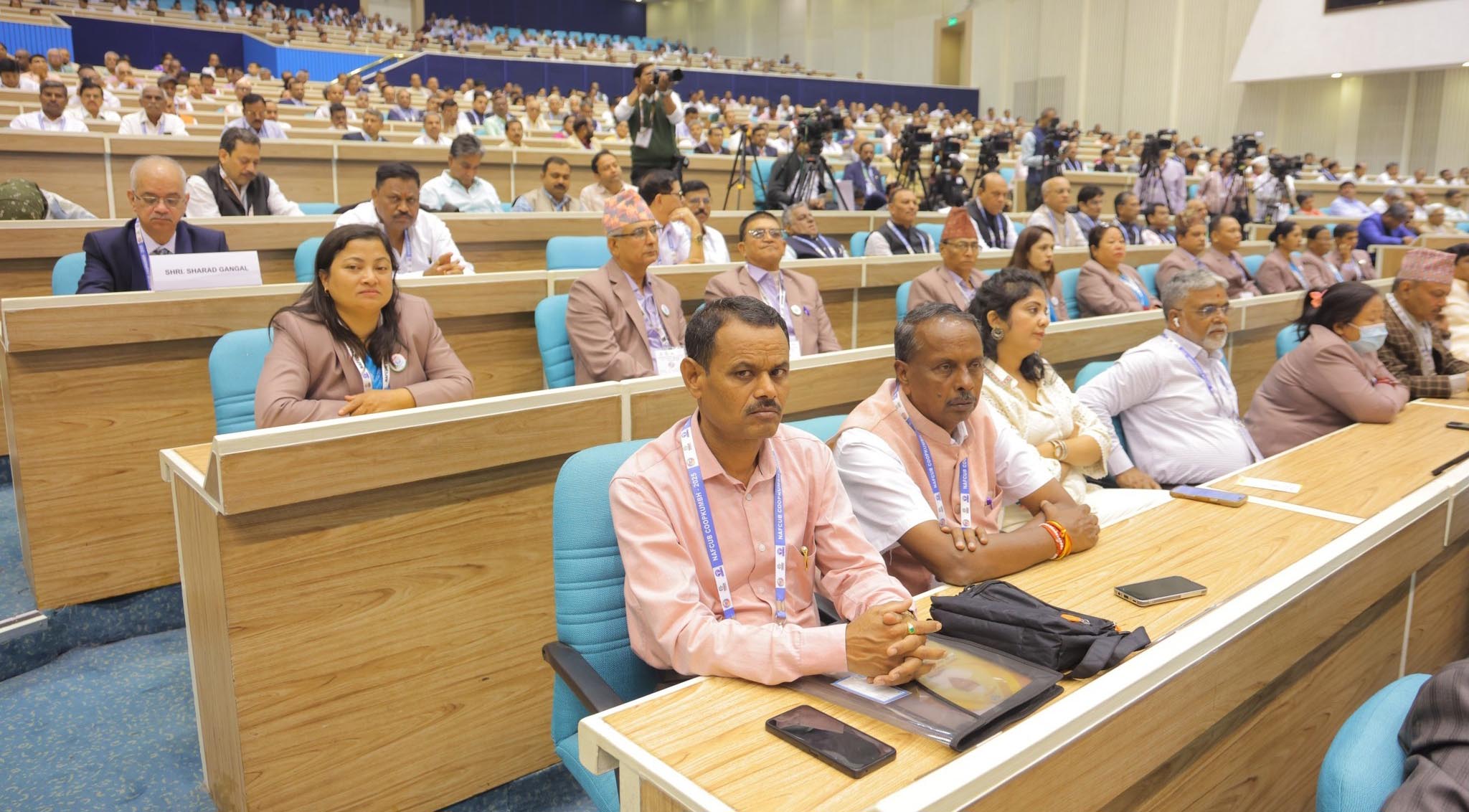














































Congratulations Mr Gautam Thakur for pointed references to how the boards of cooperative banks be.A board is the heart of the cooperative’s success as a economic entity.Yes, the Board has big responsibility of constituting a BOM with progressive knowledgeable and professional outlook, and have a mature, and constructive relationship with it.