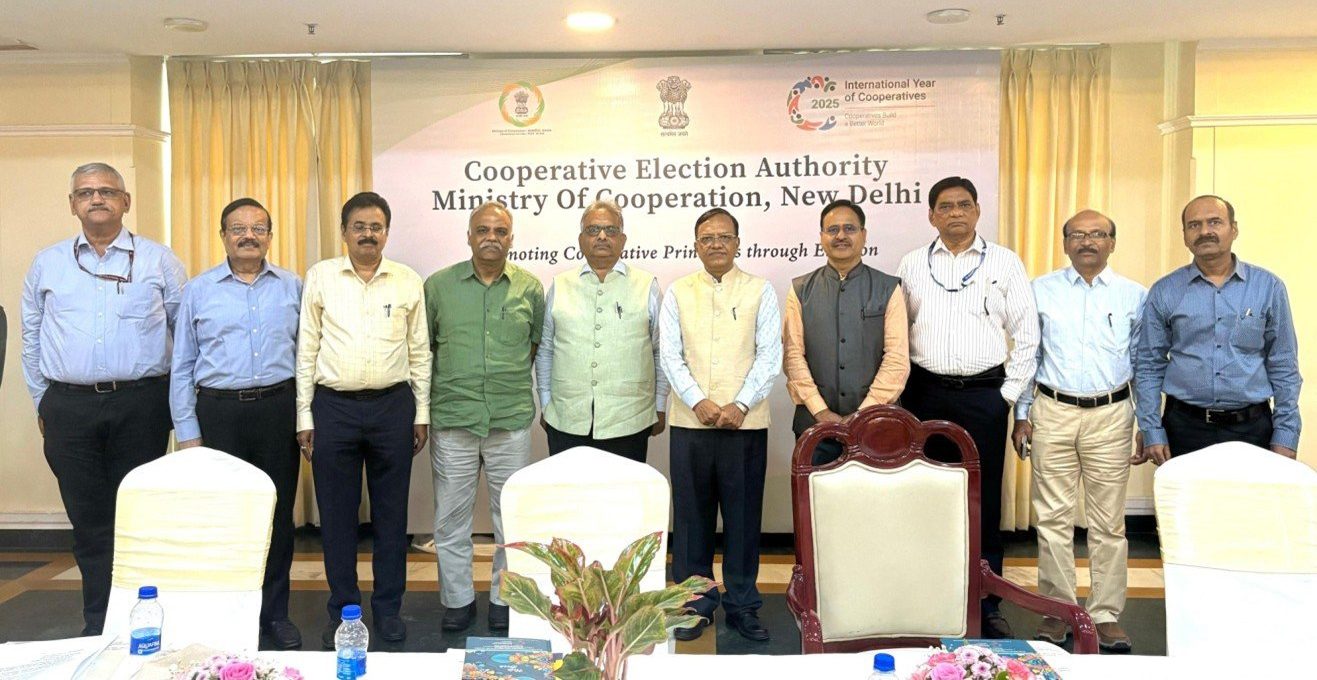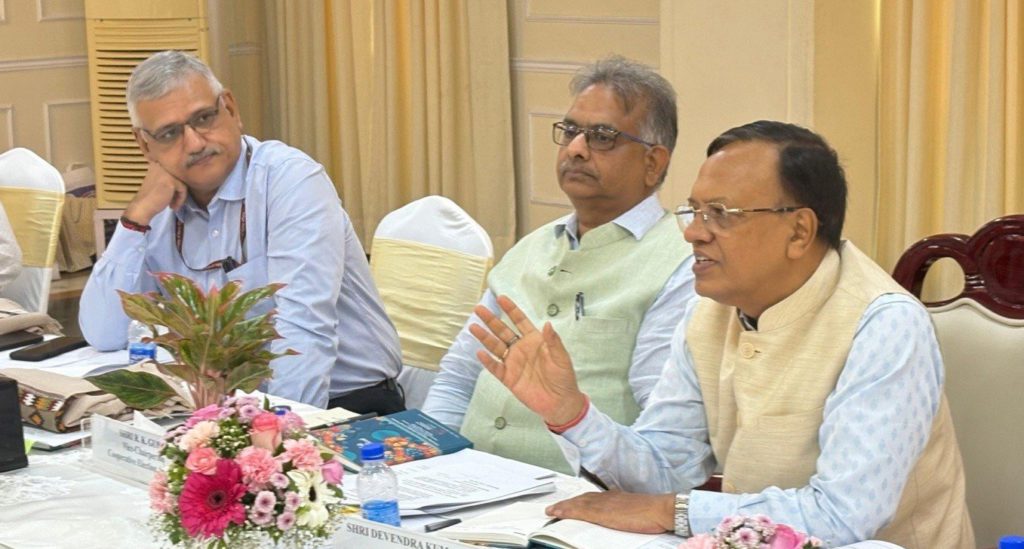
The Cooperative Election Authority (CEA) convened its first-ever consultative meeting with State Cooperative Election Authorities in New Delhi, marking a key step toward ensuring transparency and fairness in cooperative body elections across India.
Chaired by CEA Chairperson Devendra Kumar Singh, the meeting brought together State Election Commissioners from Odisha, Bihar, Tamil Nadu, Telangana, and Maharashtra, alongside senior officials including Vice Chairperson R. K. Gupta, Cooperative Ombudsman Alok Agarwal, and Ministry of Cooperation Joint Secretary Anand Kumar Jha.
The primary objective was to establish a structured dialogue mechanism between the national and state-level cooperative election authorities to enhance coordination, streamline processes, and foster free and fair electoral practices in the sector. The discussions also focused on framing standard guidelines, introducing uniform election procedures, and bringing in reforms to make the system more robust and credible.
Opening the deliberations, Singh credited the leadership of Prime Minister Narendra Modi and the guidance of Union Home and Cooperation Minister Amit Shah for ushering in transformative reforms in the cooperative sector.
He highlighted that the establishment of the CEA itself was a landmark measure, empowered under Section 45 of the Multi-State Cooperative Societies Act, 2002, as amended in 2023. Since its notification on March 11, 2024, the CEA has already conducted 159 elections, with 69 more scheduled in the near future.
Singh underscored that 2025, being celebrated as the International Year of Cooperatives, presented a fitting backdrop for strengthening electoral processes in the sector. He emphasized the need for a standardized code of conduct for candidates, a clear framework for the use of election symbols, and limits on campaign expenditure to prevent undue influence. Additionally, discussions touched upon the publication of a comprehensive handbook for Returning Officers to ensure procedural uniformity.
One significant proposal from the states was the potential introduction of Electronic Voting Machines (EVMs) in cooperative elections, which could modernize the process and enhance accuracy. Other agenda items included the election of delegates from member cooperative societies to represent them in national cooperative societies, guidelines for the use of indelible ink, and rules concerning members’ share capital during elections.
The Chairperson stressed that transparency and fairness were essential to building public trust in cooperative governance. He noted that regular interaction between the CEA and state bodies would help identify challenges early and enable swift solutions. The meeting concluded with a consensus to hold such consultative sessions every three months to review progress and advance reforms.
State-level participants shared their experiences and perspectives during the meeting. Odisha’s State Cooperative Election Commissioner Srikanta Prusty, Bihar’s Election Commissioner Girish Shankar with Advisor Kumar Shant Rakshit, Tamil Nadu’s Commissioner of Cooperative Societies Elections Thiru Dayanand Kataria, Maharashtra’s State Cooperative Election Authority head Anil Mahadeo Kawade with Secretary Ashok Gade, and Telangana’s Commissioner G. Shrivinas Rao all contributed to shaping the reform agenda. Their feedback reflected a shared commitment to ensuring cooperative elections are conducted with integrity, free from malpractices, and in line with democratic principles.
The CEA’s approach is aimed at strengthening the cooperative movement’s democratic foundations while aligning with broader government reforms to make the sector vibrant and self-reliant. The proposed measures, ranging from expenditure ceilings to the possible deployment of EVMs, reflect a forward-looking vision that balances tradition with technological advancement. By harmonizing election standards across states, the authority hopes to create a level playing field for all candidates, regardless of their cooperative’s size or resources.
The meeting also served as a reminder of the cooperative sector’s expanding role in India’s economy and governance. With thousands of cooperative societies spanning agriculture, credit, housing, and industry, ensuring their leadership is elected through fair means is vital for their credibility and effectiveness. As Singh noted, reforming the electoral system is not just an administrative necessity, it is a moral obligation to the millions of members whose livelihoods are tied to cooperative institutions.
With the momentum from this inaugural meeting, the CEA is set to move swiftly on its reform agenda, keeping dialogue open with all stakeholders. The quarterly consultative format will enable steady progress, ensuring that by the close of the International Year of Cooperatives, India’s cooperative elections reflect the highest standards of transparency and democratic governance.