
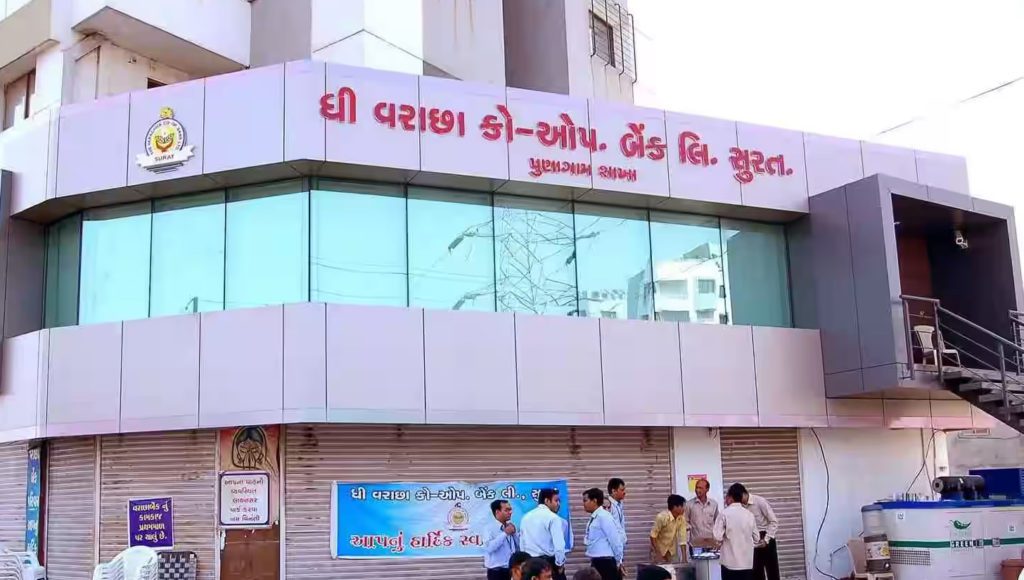
The ongoing election process of Surat-based Varachha Co-operative Bank, with polling scheduled for April 5, 2026, has drawn increased attention following a social media post by RTI activist Sanjay Ezhava, triggering discussions around governance, transparency, and democratic functioning within the institution.
Out of a total of 15 director seats, three positions, including one reserved for SC/ST and two for women, have already been filled unopposed. The remaining 12 seats will go to polls, with around 18 candidates in the fray.
The election is primarily witnessing a contest between the “Sahakar Panel,” backed by the existing management, and the “Parivartan Panel,” which has fielded five candidates, while one candidate from the general category is contesting independently. The contest is being viewed as more competitive compared to previous years.
In his widely circulated post, Ezhava emphasized the importance of democratic elections in cooperative institutions, stating that member participation and voting are essential to ensure accountability and transparency.
He has also raised concerns regarding the electoral process, including allegations that some candidates may not meet eligibility criteria as per cooperative norms. However, no official confirmation regarding these claims has been issued.
The post further highlights concerns about long-standing continuity in leadership and suggests the possibility of influence being concentrated among a limited group of individuals. It also raises broader issues such as proxy representation and internal alignments in candidate selection. These observations, however, remain unverified and reflect the views expressed by the activist.
Ezhava’s post also underlines the need for fresh leadership, stating that the inclusion of new and younger directors could bring greater transparency, accountability, and renewed focus on members’ interests. He has appealed to members to actively participate in the election process and exercise their voting rights.
According to sources, some outgoing directors have refrained from contesting the elections directly due to eligibility constraints under the amended Banking Regulation Act, 1949 relating to the directors’ tenure cap, and have instead fielded their own candidates.
Responding to the broader discourse, the bank’s CEO, Vitthalbhai B. Dhanani, stated that the bank maintains a gross NPA of around 0.4% and total advances of approximately Rs 2,500 crore. He added that NPAs remain low, at around Rs 10 crore, largely linked to the COVID period, and highlighted that the bank’s CASA ratio exceeds 50%, indicating a stable deposit base.
While no major financial irregularities have been officially reported in the bank, the activist’s post has intensified discussions among members and stakeholders regarding governance practices, transparency, and the role of democratic processes in cooperative institutions.
Observers believe that the April 5 election will be a significant moment for the bank, as members decide between continuity and change in leadership, which could shape the institution’s future direction.
It is pertinent to note that the election process is being conducted under the supervision of the Cooperative Election Authority under the Union Ministry of Cooperation. The District Collector/DM, Surat, Gujarat, has been appointed as the Returning Officer for the election.