
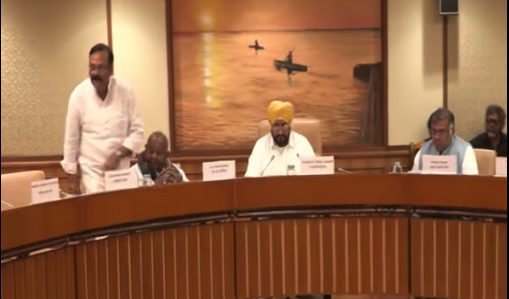
Raising concerns over the supersession of elected boards in cooperative societies, a Parliamentary Standing Committee led by Charanjit Singh Channi has called for a stronger and more independent electoral framework to safeguard democratic governance in the sector.
In its Thirty-Second Report on the Demands for Grants (2026–27) of the Ministry of Cooperation, the Committee observed that delays in the conduct of elections, concerns regarding the institutional independence of electoral processes, and extended periods of supersession of elected boards in certain instances may have implications for the spirit of democratic member control, a core principle of the cooperative movement.
The panel noted that prolonged supersession may weaken transparency, accountability and member participation in the management of cooperative institutions.
To address these concerns, the Committee recommended that the Ministry of Cooperation, in consultation with states, evolve a comprehensive national framework for strengthening cooperative electoral governance.
The framework should encourage states to establish or reinforce independent State Cooperative Election Authorities, ensure elections are conducted before the expiry of board tenures, and promote digitisation and transparency in electoral processes.
For cooperatives governed under the Multi-State Cooperative Societies Act, 2002, the Committee also suggested the creation of a statutory, independent and professionally managed election mechanism to conduct polls in a transparent and time-bound manner.