
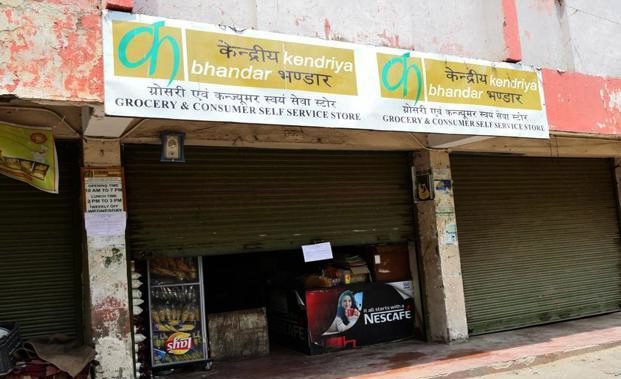
In a notable ruling, the Central Registrar of Cooperative Societies has set aside directions issued by the Co-operative Ombudsman in a case involving the Central Govt. Employees Consumer Co-operative Society Ltd. (Kendriya Bhandar), New Delhi.
The order was passed by Anand Kumar Jha in his capacity as Appellate Authority under Section 85A(3) of the Multi-State Co-operative Societies Act, 2002.
The matter arose from two appeals filed by Kendriya Bhandar against Ombudsman orders dated August 27 and October 3, 2025. These orders had directed the society to furnish certain information and documents to complainant Rakesh Gupta under Section 108 of the Act. Challenging these directions, the society argued that the information sought was not in accordance with the legal provisions and that the Ombudsman had not properly considered the facts of the case.
During the course of proceedings, it was brought on record that the complainant had already been expelled from the membership of the society through a General Body resolution dated September 28, 2025. This development significantly altered the nature of the dispute, as the original grievance was linked to the complainant’s status as a member.
The Appellate Authority, after granting a personal hearing to both parties on March 27, 2026, observed that the circumstances underlying the complaint had materially changed. As a result, the relief originally sought before the Ombudsman no longer survived in its original form, rendering the matter infructuous.
Accordingly, without going into the merits of the case, the Appellate Authority set aside the Ombudsman’s directions issued in both orders. The appeals filed by Kendriya Bhandar were disposed of on this basis.
The Authority also condoned the delay in filing one of the appeals, noting that it had been submitted beyond the prescribed one-month period. However, considering the facts and in the interest of justice, the appeal was admitted and heard along with the other matter.
This decision underscores the principle that significant changes in circumstances can impact the maintainability of disputes in cooperative governance, even leading to closure without a merits-based adjudication.