






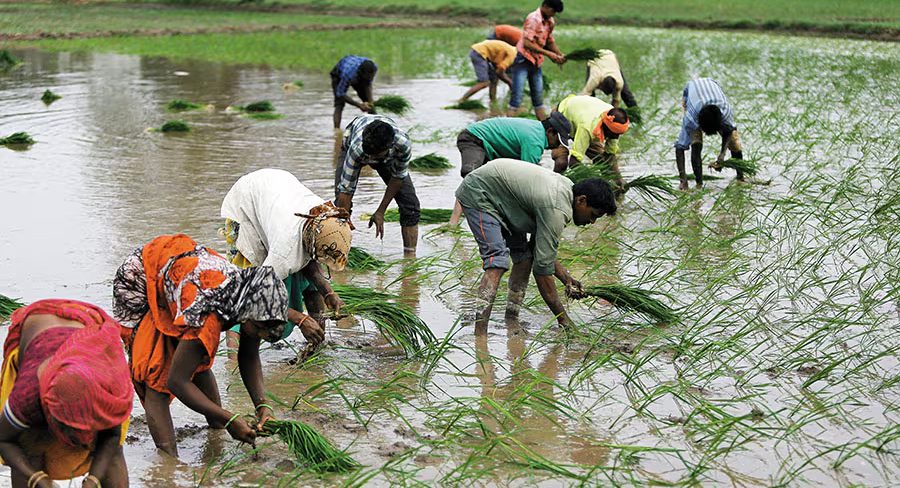
As spring sowing picks up across India, the countryside hums with renewed optimism. The National Bank for Agriculture and Rural Development (NABARD) has projected that agriculture credit extended by commercial banks and regional rural banks will exceed Rs 32.5 lakh crore in FY26, marking a fresh all-time high.
This sharp surge, up from nearly Rs 28.7 lakh crore in FY25, signals more than just bigger numbers. In the first half of FY26 alone, banks have disbursed around Rs 14.5 lakh crore in farm loans, reflecting rising demand for crop loans, investment in allied sectors, and a broader shift away from informal lending.
For farmers in small villages and remote talukas, this means better access to timely credit, for seeds, fertilisers, livestock, and equipment. The increased flow of institutional finance could bolster yields and livelihoods, reduce dependence on informal lenders, and encourage investment in modern farming methods.
Yet challenges remain. Credit distribution is uneven: southern states still absorb a disproportionately large share of these loans, while many eastern and northeastern districts lag behind in both infrastructure and financial literacy.
Still, with NABARD’s renewed push to formalise rural credit, deepen banking outreach, and narrow regional gaps, FY26 might mark a turning point. What had once been patchy finance may become the foundation for a stronger, more inclusive rural India.