





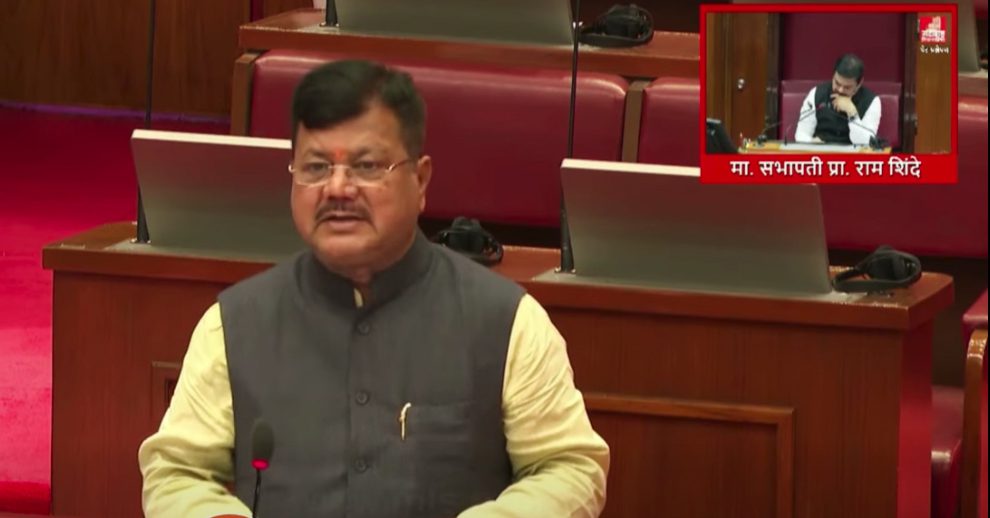
While addressing the Maharashtra Assembly, BJP MLC and senior cooperative leader Pravin Darekar raised serious concerns over mounting challenges in the cooperative sector, particularly the amended provisions of the Banking Regulation Act, 1949 that limit directors’ tenure on cooperative bank boards to ten years.
Darekar cautioned that such restrictions could adversely affect the long-term stability of cooperative banks. He argued that replacing experienced directors with less-experienced individuals may create operational difficulties and weaken institutional governance.
He urged the state government to take up the matter with the Centre, requesting Chief Minister Devendra Fadnavis and Cooperation Minister Babasaheb Patil to initiate discussions for a practical resolution.
Highlighting the broader crisis, Darekar warned that nearly 50% of urban cooperative banks could shut down within the next 2–3 years due to financial stress and regulatory constraints imposed by the Reserve Bank of India. He stressed that Maharashtra, a pioneer in the cooperative movement, cannot afford such a decline.
He pointed out that District Central Cooperative Banks, considered the backbone of rural credit, are facing severe challenges due to regulatory restrictions and the absence of a unified mechanism to address their issues.
Darekar noted that while loan waivers provide relief to farmers, they disrupt recovery cycles and strain bank liquidity. He advocated for the implementation of zero-interest crop loans, with timely reimbursement of interest by the government to ensure financial stability of banks.
Darekar also highlighted that past lending to stressed sectors such as sugar mills and spinning mills has weakened bank balance sheets. Urban cooperative banks, he added, are struggling to compete with private and nationalised banks, with their share in total banking assets steadily declining. He proposed that 25% of surplus funds of state-run corporations be mandatorily deposited in urban cooperative banks to improve liquidity.
Raising concerns over policy frameworks, he alleged that e-tender conditions are sidelining cooperative federations. He also drew attention to the precarious financial condition of the Maharashtra State Cooperative Union, which is facing losses of Rs 17–18 crore and has not paid salaries to employees for 26 months. He called for urgent government financial assistance to revive the century-old institution.
Among other demands, Darekar sought a time-bound decision within one month on concessions for self-redevelopment of cooperative housing societies. He also urged the government to support a cooperative taxi service model, inspired by initiatives backed by Union Cooperation Minister Amit Shah, as a viable alternative to private aggregators.
Responding to the concerns, Cooperation Minister Babasaheb Patil assured the House that he would discuss the issues with the Chief Minister and convene a comprehensive meeting to address the challenges facing the cooperative sector.