





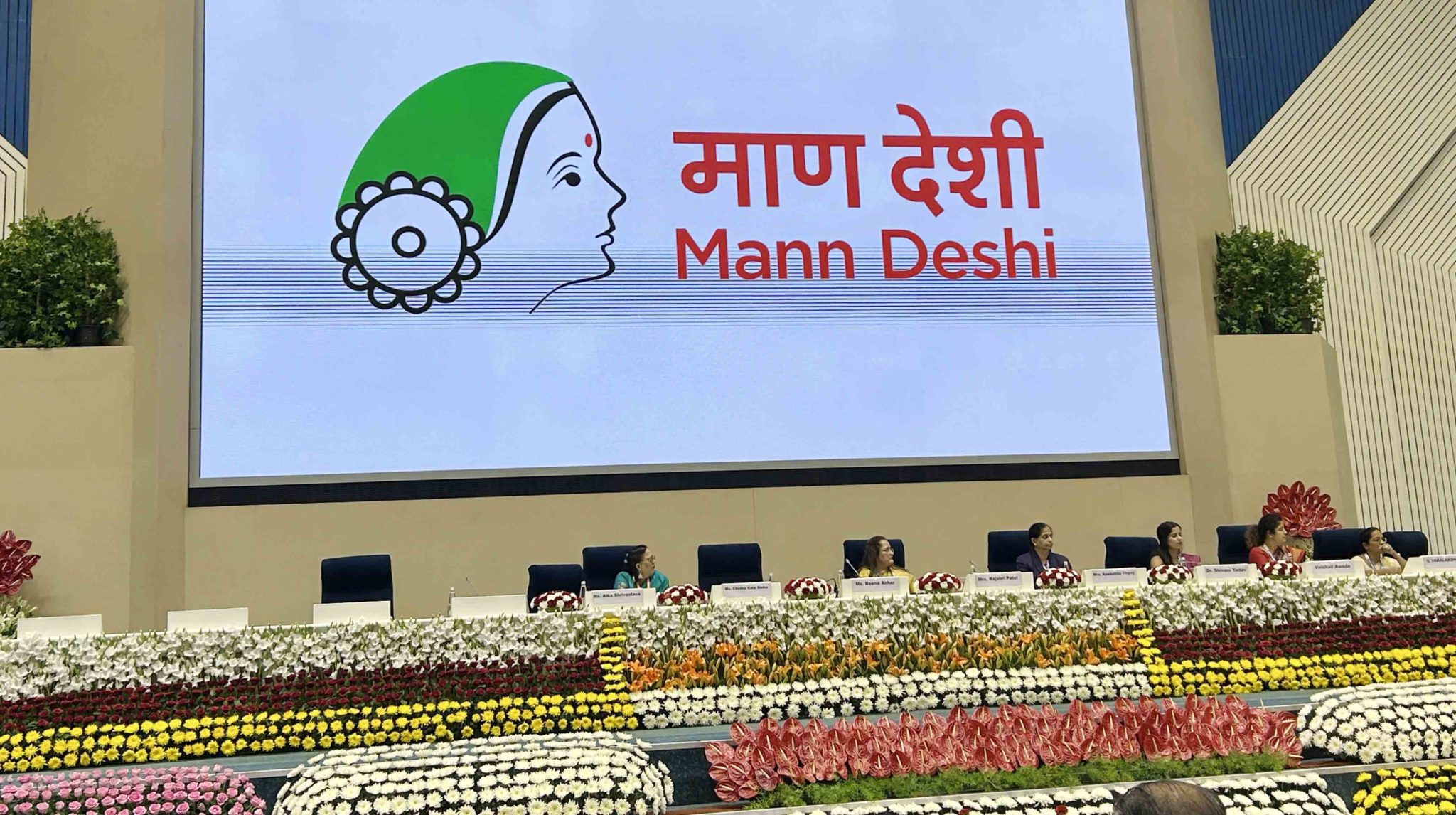
While addressing a session on “Women in Credit Cooperatives: Empowering Change” at CoopKumbh 2025 in New Delhi on Tuesday, Ms. Chetna Sinha, Chairperson of Maan Deshi Mahila Sahakari Bank, narrated the remarkable story of how her women’s cooperative bank for rural women was born out of sheer determination and collective courage.
Sinha recalled that the idea of the bank emerged when several rural women approached her, saying they wanted to save money but no bank was willing to open their accounts. Determined to change this, she met officials at the Reserve Bank of India (RBI) and proposed opening a bank run by and for rural women.
“When I first shared the idea, the RBI officer was shocked,” Sinha recounted. “So, I took a group of local women to meet her. The officer told them, ‘You are not literate, how will you run a bank?’ The women confidently replied, ‘We may not know how to read or write, but we can count-and we know how to calculate interest on any amount.’ Their honesty and confidence deeply impressed the officer,” she said.
Six months later, in 1998, Maan Deshi Mahila Sahakari Bank received its RBI license by post, becoming India’s first rural women’s cooperative bank-and notably, the first women’s bank to receive its license through post. Today, the bank has a share capital of Rs 19 crore, a credit-deposit ratio of 70%, and zero net NPA, despite receiving no special support from the government or the RBI.
Sinha shared how, in 2009, the bank launched India’s first pension scheme for rural women, managed by UTI, inspired by a depositor named Parvati who lived off the interest from her fixed deposit. “The Atal Pension Yojana was later modeled on our initiative,” she claimed with pride.
Now a fully digital bank, Maan Deshi offers doorstep banking services, staying true to Sinha’s guiding belief: “Never provide poor solutions to poor people.” Under the Maan Deshi Foundation, the bank also runs a community radio station where rural women, including Kera Bai, serve as radio jockeys to spread awareness and empowerment.
“I invite everyone to visit our bank and see what we are doing,” Sinha concluded. “We are not just managing money- we are building confidence, dignity, and change in rural India.”