





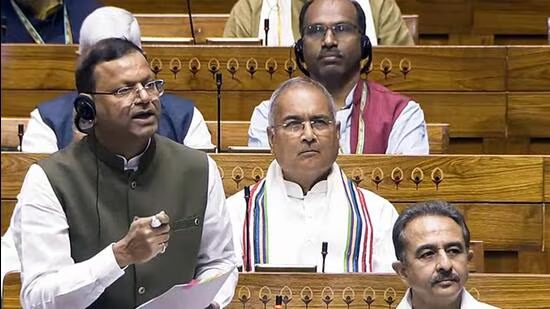
In the Rajya Sabha, Union Minister of State for Finance Pankaj Chaudhary informed that a total of 20 Urban Cooperative Banks (UCBs) are currently placed under All Inclusive Directions (AID) and 431 UCBs are under the Supervisory Action Framework (SAF) of the Reserve Bank of India (RBI).
Additionally, one State Cooperative Bank (StCB) and 15 District Central Cooperative Banks (DCCBs) have also been brought under RBI directions.
“The Government has undertaken several initiatives. These include capacity building programs for Rural Cooperative Banks (RCBs) and the implementation of a comprehensive Turn Around Plan (TAP) for weak RCBs through NABARD”, he added.
To promote transparency and accountability in the cooperative banking sector, both RBI and NABARD have introduced a series of regulatory measures. Among them is the Prompt Corrective Action (PCA) framework for UCBs, aimed at timely supervisory intervention and restoration of financial health through remedial measures.
Further, UCBs with deposits above Rs 100 crore and those not categorized as salary earners’ banks are now mandated to constitute a Board of Management (BoM). This is expected to ensure professional oversight and enhance governance standards.
UCBs have also been directed to implement a transparent Whistle Blower Policy to address complaints related to potential frauds or suspicious account activities. RBI has also mandated the introduction of a Risk-Based Internal Audit (RBIA) system in UCBs to strengthen their internal control mechanisms.