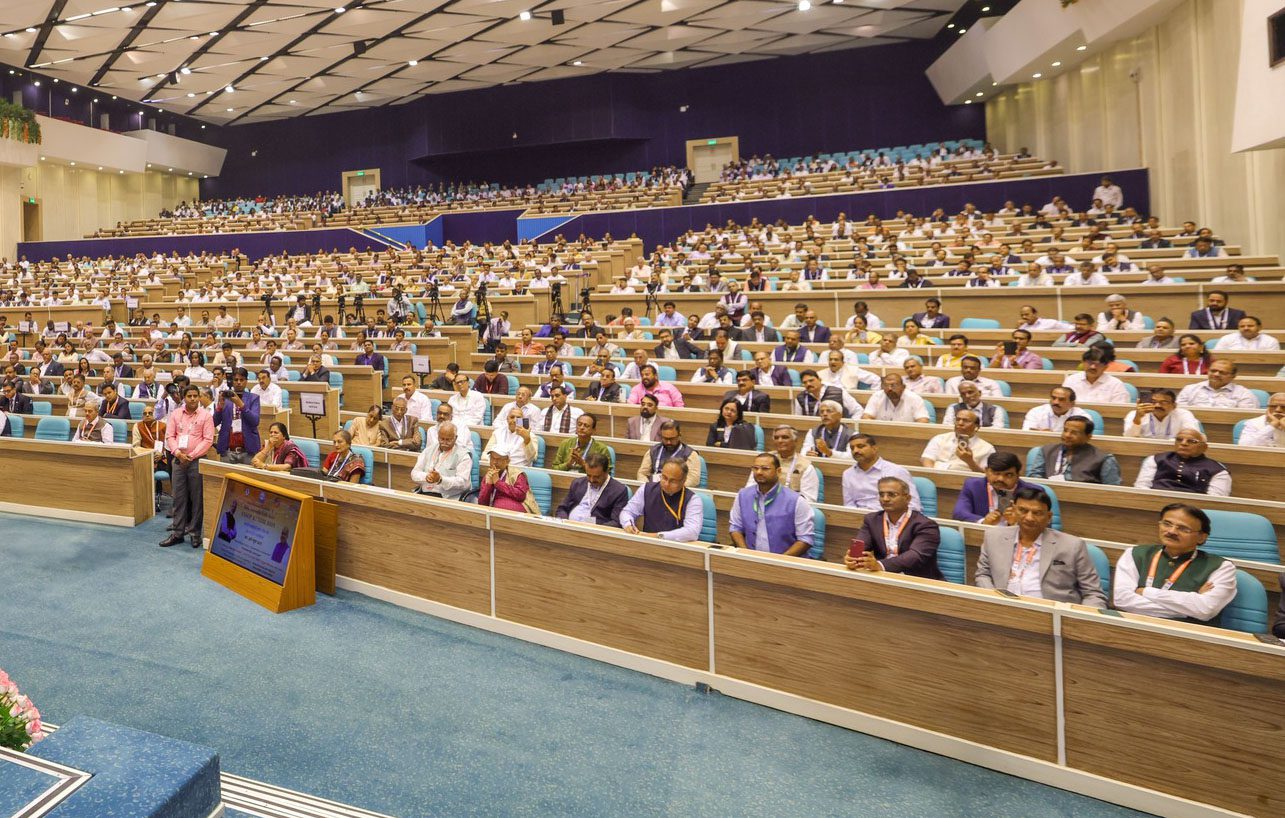






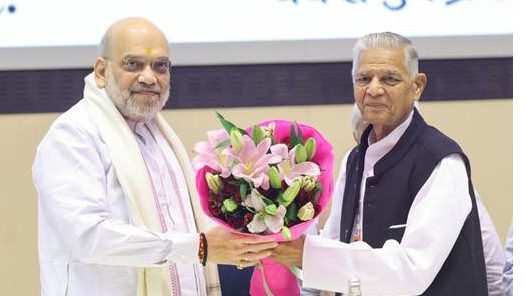
Union Home and Cooperation Minister Amit Shah on Monday outlined a comprehensive roadmap for the transformation and digital empowerment of India’s urban cooperative credit sector while addressing the international conference “Co-Op Kumbh 2025” in New Delhi.
The event, organised by the National Federation of Urban Cooperative Banks and Credit Societies (NAFCUB), will see the unveiling of the Delhi Declaration 2025, a document Shah described will serve as a roadmap for the expansion and modernization of Urban Cooperative Banks across the country.
Shah announced an ambitious plan to establish an Urban Cooperative Bank in every Indian city with a population exceeding two lakh within the next five years. “The cooperative movement is the most inclusive model of development,” he said, asserting that UCBs and credit societies have advanced with renewed enthusiasm under the Modi government. He emphasized that cooperatives are essential not only for economic growth but also for social equity, particularly for small traders, entrepreneurs, and youth.
To mark the occasion, the Umbrella Organization launched two key digital initiatives, Sahkar Digi-Pay and Sahkar Digi-Loan. Shah said these applications would make even the smallest urban cooperative banks part of India’s digital payments revolution, bridging the technology gap between grassroots financial institutions and mainstream banking. “These platforms will become the symbols of the cooperative sector’s participation in the digital revolution,” he said.
Highlighting the achievements of the Ministry of Cooperation since its formation, Shah said several policy reforms have been introduced to modernize the cooperative structure, resolve sectoral issues, and expand its reach. “In the last two years alone, the Non-Performing Assets (NPA) in this sector have been reduced from 2.8% to 0.6%, which is a major success,” he said.
He elaborated on the ministry’s four key goals, developing Generation Sahakar by engaging youth in cooperatives, strengthening cooperative societies to face emerging challenges, expanding UCBs in all cities, and empowering weaker sections through the cooperative model. For capacity-building, he said, the newly established Tribhuvan Sahkari University will meet the educational and research needs of the cooperative ecosystem.
Reiterating that cooperatives play a crucial role in improving livelihoods, Shah said GDP figures alone cannot measure a nation’s true progress unless accompanied by rising living standards and inclusive participation. “Cooperatives ensure that development reaches the last person,” he said, urging states and stakeholders to work transparently and with renewed confidence.
Referring to the global recognition of Indian cooperatives, Shah noted that the International Cooperative Alliance has ranked Amul and IFFCO as the world’s top two cooperative organizations. “This proves that the cooperative idea and culture remain relevant and strong,” he said. Amul, driven by 3.6 million farmers, 65% of them women, operates through 18,000 village societies and 18 district unions, collecting 30 million litres of milk daily. With a turnover exceeding Rs 90,000 crore in 2024–25, Amul exemplifies cooperative success, he added.
Similarly, IFFCO, which Shah called “a society of cooperative societies,” has over 35,000 member societies and represents more than five crore farmers. With a turnover of Rs 41,000 crore and profits of Rs 3,000 crore, it has become a backbone of India’s Green Revolution. IFFCO’s nano fertilizers are now being exported to 65 countries, including Brazil, Oman, and the United States.
Shah concluded by affirming that the Delhi Declaration 2025 and digital initiatives launched at Co-Op Kumbh 2025 will chart a new course for India’s cooperative banking sector, empowering communities, boosting financial inclusion, and driving sustainable growth through the cooperative model.