
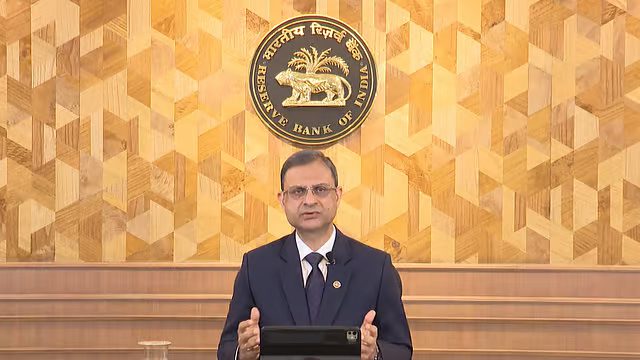
In a significant regulatory development, the Reserve Bank of India (RBI) has issued a new set of harmonised guidelines titled “Reserve Bank of India (Lending Against Gold and Silver Collateral) Directions, 2025,” aimed at standardising the lending practices of all regulated entities, including commercial banks, cooperative banks, urban cooperative banks, and NBFCs.
Effective from April 1, 2026, these directions consolidate and replace 31 circulars issued from 1964 to 2023, bringing much-needed clarity and uniformity to lending secured by gold and silver.
For the first time, silver has been formally recognised as acceptable collateral within the Indian banking system, a move expected to particularly benefit small borrowers and rural households that depend on cooperative and regional banks.
Borrowers will now be able to pledge up to 10 kilograms of silver ornaments and 500 grams of silver coins for loans. For gold, the permitted collateral limit per borrower is 1 kilogram in the form of ornaments and 50 grams in coins. Importantly, lending against primary bullion such as bars or raw gold and silver remains prohibited, reinforcing the RBI’s stance against speculative practices.
The new framework introduces standardised Loan-to-Value (LTV) ratios to mitigate risk and ensure fair valuation practices. Loans up to Rs 2.5 lakh can now be disbursed at an LTV of 85 percent, while loans between Rs 2.5 lakh and Rs 5 lakh are capped at 80 percent, and loans above Rs 5 lakh at 75 percent.
This tiered approach is expected to ensure that small and vulnerable borrowers—who form a significant client base of cooperative banks—have easier and more transparent access to credit. Collateral will be valued using the lower of either the average price over the last 30 days or the previous day’s market closing rate, based on prices published by the Indian Bullion and Jewellers Association or SEBI-recognised exchanges.
The directions also specify that loans offered for consumption purposes with a bullet repayment option must not exceed a 12-month term and can only be renewed after the borrower pays the interest. Although the circular does not clarify the timing of interest payments or cap on loan amounts under such schemes, it introduces uniformity in assaying procedures.
Borrowers must now be physically present during the assaying process, and pledged assets must be stored securely in vault-equipped branches. These must be returned within seven working days post-repayment, with any delay attracting a penalty of Rs 5,000 per day. Furthermore, the lender will bear full responsibility for any loss or damage to the assets.
To further protect borrower interests, the RBI has tightened auction rules. Auction notices must be published in newspapers, and the reserve price must be set at a minimum of 90 percent of the current market value, with a provision to reduce it to 85 percent after two failed attempts.
Any surplus amount realised in the auction must be refunded to the borrower within seven days. The directions also prohibit re-pledging of the collateral and disallow loans against gold or silver-backed financial instruments such as ETFs.
By bringing silver into the formal collateral ecosystem and strengthening norms for cooperative and small banks, the RBI aims to widen formal credit access and safeguard the interests of small-scale borrowers across India.