
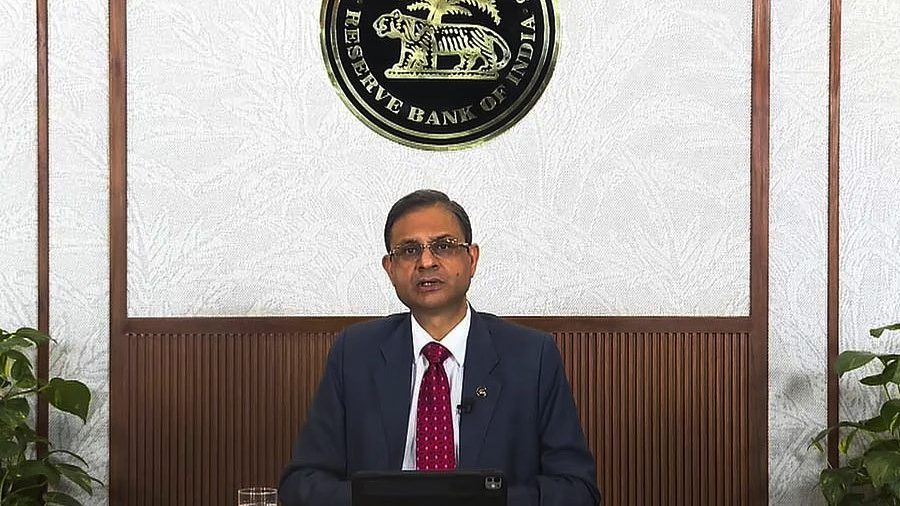
In a major move to streamline regulations and promote sustainable growth in the co-operative banking sector, the Reserve Bank of India (RBI) has released the Draft Master Direction on Business Authorization for Co-operative Banks. The draft, open for public and stakeholder comments until August 25, 2025, aims to simplify and modernize regulatory norms for Urban Cooperative Banks (UCBs).
The provisions of this Direction shall apply to all co-operative banks (hereinafter called the ‘banks’), i.e., Primary (Urban) Co-operative Banks (UCBs), State Co-operative Banks (StCBs), and District Central Co-operative Banks (DCCBs).
Under the proposed framework, UCBs will be classified into four tiers based on deposit size. Tier 1 includes banks with deposits up to Rs 100 crore; Tier 2, from Rs 100 crore to Rs 1,000 crore; Tier 3, between Rs 1,000 crore and Rs 10,000 crore; and Tier 4, those with deposits above Rs 10,000 crore. The classification will be based on audited data as of March 31 each year. Banks moving to a higher tier will get up to two years to comply with the corresponding regulatory requirements.
A major highlight is the introduction of Eligibility Criteria for Business Authorization (ECBA), which banks must meet to open new branches or expand services. These include meeting the minimum capital adequacy ratio, keeping net NPAs below 3%, earning profits in the last two financial years, and facing no regulatory restrictions.
Full Core Banking Solutions (CBS) implementation and having at least two professional directors on the board are also mandatory. Non-compliance may lead to regulatory action and temporary disqualification from expansion.
The RBI has proposed relaxation in branch expansion rules. ECBA-compliant banks can open branches within their home district and in up to three additional districts in the same state without prior RBI approval. Tier 3 and Tier 4 banks with net worth above Rs 50 crore may also expand into two new states annually, subject to regulatory clearance.
The draft also outlines norms for setting up Extension Counters (ECs). These can be established within educational institutions, offices, hospitals, factories, or residential colonies, provided there’s no existing bank branch or EC nearby. Each EC must be linked to a base branch within 10 km and may offer limited services such as deposits, withdrawals, encashment of drafts, and disbursement of loans up to Rs 10 lakh.
Banks will be allowed to install ATMs, CRMs, and CDMs without prior RBI approval, but they must not carry third-party advertisements.
Banks may also shift, merge, or close branches without prior permission, provided they notify the RBI afterward and comply with local guidelines. The introduction of Doorstep Banking Services has also been permitted, subject to appropriate risk controls and board-level oversight.
On the branding front, the RBI has made it mandatory for all co-operative banks to prominently display their full registered name, including the words “co-operative bank,” on all boards, websites, apps, and communication materials. Abbreviations may be used only alongside the full name, with equal font size and prominence. Any change in the bank’s name will require a No Objection Certificate from the RBI, approval from the Registrar, and issuance of a revised licence.
To strengthen compliance monitoring, all co-operative banks must report branch and infrastructure changes through the CISBI portal within seven days. Even if there are no changes, monthly NIL reports are mandatory. Failure to report may result in penalties and a three-year restriction on expansion.
The draft also lays down conditions for inclusion of UCBs and State Co-operative Banks (StCBs) in the Second Schedule of the RBI Act. Eligible banks must comply with ECBA norms, maintain Tier 3-level deposits for two years, and ensure a CRAR 3% above the minimum requirement. Applications must be submitted through the PRAVAAH portal, and in the case of StCBs, via NABARD.
The RBI has invited feedback from all stakeholders via the ‘Connect 2 Regulate’ section on its website.
Through these reforms, the central bank aims to enhance transparency, improve governance, and enable co-operative banks to grow responsibly and efficiently in a modern financial ecosystem.
(Disclaimer: This news report is based on the Draft Master Direction on Business Authorization for Co-operative Banks issued by the Reserve Bank of India as of 28th July 2025 and has been simplified for the readers of Indian Cooperative. For complete details, readers are advised to visit the RBI’s official website.)