
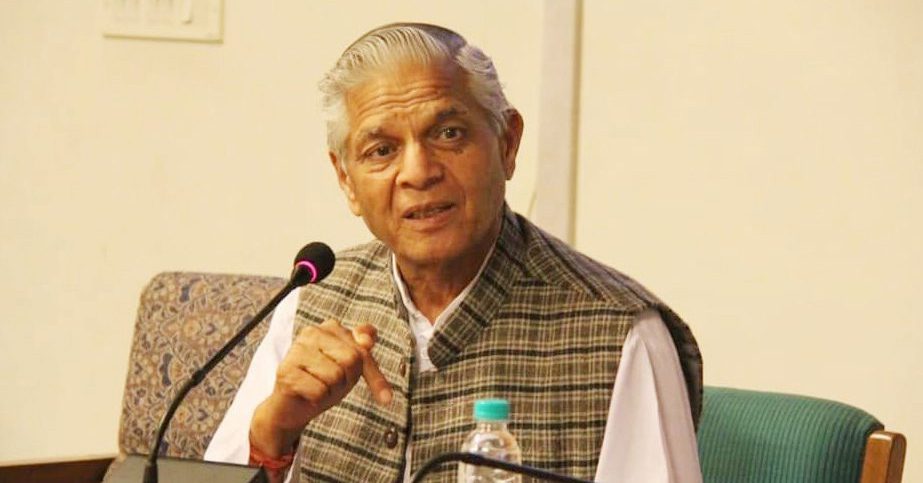
President of the National Federation of Urban Cooperative Banks and Credit Societies (NAFCUB), Laxmi Dass, has written to Reserve Bank of India Governor Sanjay Malhotra, objecting to the Draft Reserve Bank of India (Urban Cooperative Banks – Governance) Amendment Directions, 2026.
In his letter, Laxmi Dass referred to the RBI press release dated 8 January 2026, through which the central bank invited public comments on the proposed amendments concerning the governance of Urban Cooperative Banks (UCBs). He stated that NAFCUB has examined the draft guidelines in detail.
The NAFCUB Chairman pointed out that the Banking Regulation (Amendment) Act, 2020 (Act 39 of 2020) is presently under judicial scrutiny before the Hon’ble High Court of Madras. In this context, he expressed concern that all subsequent amendments to the Banking Regulation Act, as well as directions issued by the RBI relating to cooperative banks, may be untenable while the matter remains sub judice.
Laxmi Dass, therefore, urged the RBI to keep all decisions and directions relating to Urban Cooperative Banks that emanate from the Banking Regulation Act in abeyance, until the judicial process is completed.
It bears recalling that the RBI has recently proposed amendments to the governance framework of both Urban and Rural Co-operative Banks to strengthen compliance with statutory tenure norms prescribed under the Banking Regulation Act, 1949.
The draft directions seek to address instances where directors, after completing the maximum permissible continuous tenure of ten years, resigned briefly and returned to the board through re-election or co-option, thereby bypassing the intent of the law.
To plug this gap, the RBI has proposed a mandatory cooling-off period of three years before such directors can be re-appointed to the board of the same co-operative bank. The amendments also clarify that interruptions of less than three years will be counted while calculating continuous tenure.
Through these proposals, the central bank aims to ensure orderly board rotation, prevent prolonged concentration of control, and improve governance standards in Urban and Rural Co-operative Banks, while seeking stakeholder feedback before finalising the framework.