






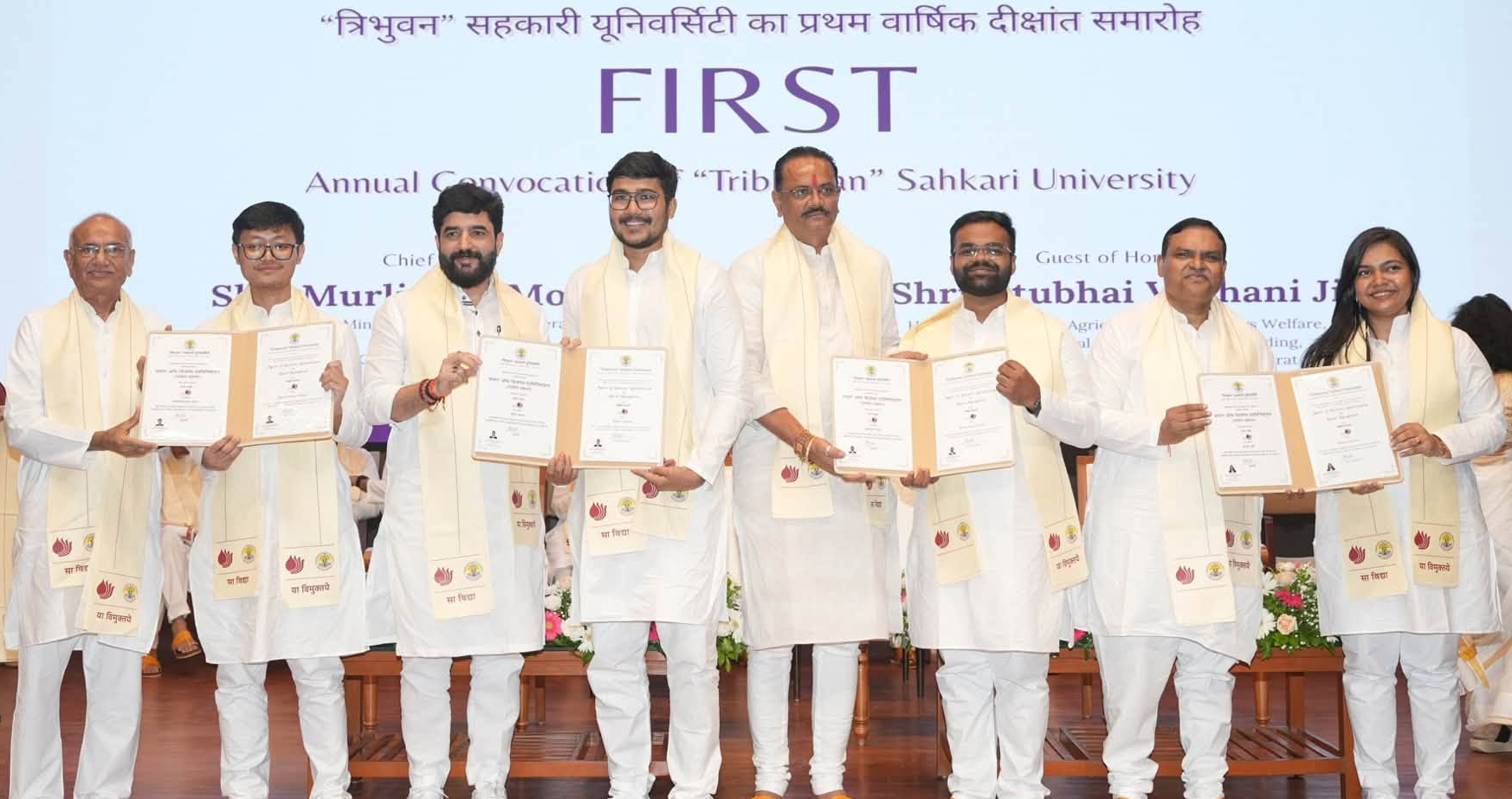
Union Minister of State for Cooperation and Civil Aviation Murlidhar Mohol presided over the first convocation of Tribhuvan Sahkari University (TSU) at Anand, Gujarat, describing the institution as a landmark initiative to create a new generation of professionally trained cooperative leaders, researchers and managers.
Established under the vision of Prime Minister Narendra Modi’s “Sahakar Se Samriddhi” and the leadership of Union Home Minister and Minister of Cooperation Amit Shah, TSU is India’s first national university exclusively dedicated to the cooperative sector.
A total of 302 students received graduate degrees, while two scholars were awarded PhD degrees during the inaugural convocation. Mohol said a convocation is not the end of education but the beginning of a new journey of responsibility and service in the real world. He urged graduates to use their knowledge for strengthening the cooperative movement and contributing to national development.
Highlighting the significance of the university, Mohol said TSU has been created to bridge cooperation with modern management, technology, innovation and research. Built on the nearly 45-year academic legacy of the Institute of Rural Management Anand (IRMA), which became an Institution of National Importance in 2025, the university aims to meet the growing demand for skilled professionals in the expanding cooperative sector.
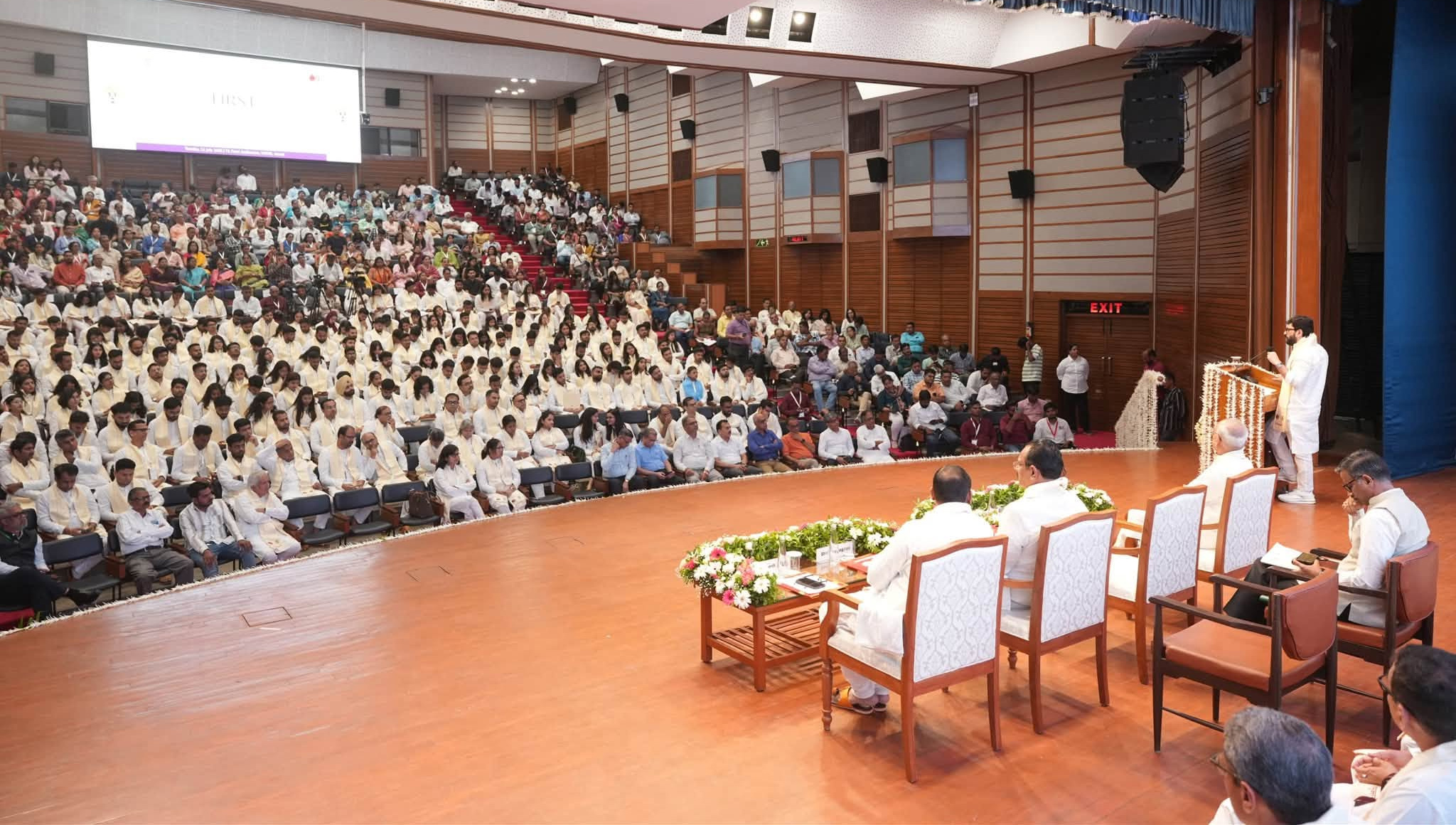 Recalling Anand’s historic contribution to India’s White Revolution, Mohol paid tribute to Tribhuvandas Patel and Dr. Verghese Kurien, whose cooperative model transformed India into the world’s largest milk producer. He said the same spirit of cooperation would now drive growth across agriculture, banking, fisheries, storage, insurance, food processing, digital services and several emerging sectors.
The Minister noted that India today has over 8.5 lakh cooperative societies with more than 32 crore members, making cooperation one of the country’s largest grassroots economic movements. Since the creation of the Ministry of Cooperation in 2021, more than 140 reform initiatives have been undertaken to modernise and strengthen the sector.
These include multipurpose PACS, the world’s largest grain storage initiative, NUCFDC for Urban Cooperative Banks, Sahakar Sarathi for Rural Cooperative Banks, and national cooperative institutions such as NCEL, NCOL and BBSSL to provide farmers with an integrated seed-to-market ecosystem.
Mohol also highlighted the massive expansion in financial support through the National Cooperative Development Corporation (NCDC), stating that cooperative institutions received nearly Rs 4.5 lakh crore in assistance between 2014 and 2025, compared with around Rs 55,000 crore from the corporation’s inception until 2014. He said initiatives such as Bharat Taxi, White Revolution 2.0, governance reforms, Cooperative Election Authority and Cooperative Ombudsman are transforming the sector into a modern, transparent and professionally managed ecosystem.
Emphasising future opportunities, Mohol said the cooperative sector would require more than 17 lakh trained youth in the coming years. He called upon students to leverage Artificial Intelligence, digital platforms and innovation to improve cooperative institutions and agricultural enterprises while serving as ambassadors of the cooperative movement and carrying forward the spirit of “Sahakar Se Samriddhi.”
During his Gujarat visit, he also reviewed preparations for the rollout of academic programmes at Tribhuvan Sahkari University’s National Institute of Cooperative Management campus in Gandhinagar.