







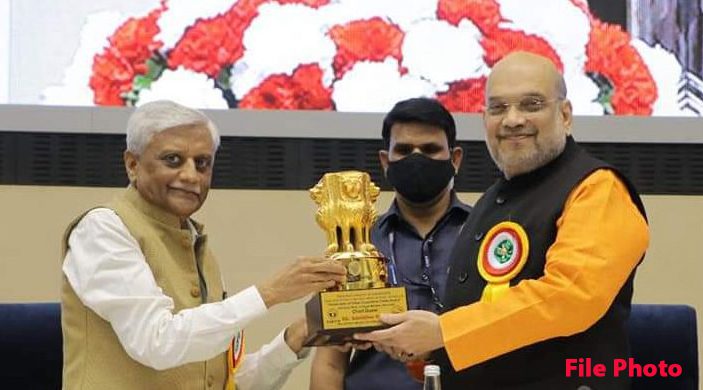
Amid mounting stress in the cooperative banking sector, Jyotindra Mehta, Chairman of the National Urban Co-operative Finance and Development Corporation (NUCFDC), has written to Union Home and Cooperation Minister Amit Shah, seeking urgent regulatory relief for Urban Co-operative Banks (UCBs) grappling with mark-to-market (MTM) losses.
In his letter, Mehta flagged the severe impact of global uncertainty and war-like conditions on financial markets, which have triggered a sharp decline in Government Securities prices. This has led to significant MTM losses across UCB balance sheets, raising concerns over sector-wide financial strain.
As per regulatory norms, UCBs are required to mark their investments in Available for Sale (AFS) and Held for Trading (HFT) categories to market value as on March 31, 2026. This has resulted in substantial provisioning towards Investment Depreciation Reserve (IDR), significantly eroding current-year profitability.
The representation warns that several UCBs may report net losses, not due to operational weaknesses, but despite holding fundamentally secure Government Securities, solely on account of mandatory provisioning requirements. While banks maintain Investment Fluctuation Reserves (IFR) as a buffer, the current situation has been described as “exceptional,” with existing reserves proving inadequate to absorb the scale of valuation losses.
The letter notes that a formal representation has already been submitted to the Reserve Bank of India, seeking regulatory forbearance. Key proposals include a one-time exemption from IDR provisioning for FY 2025–26, permitting transfer of Government Securities from AFS/HFT to Held to Maturity (HTM) without MTM impact, and allowing phased adjustment of losses against existing reserves.
Highlighting the critical role of UCBs in advancing grassroots financial inclusion, Mehta has urged the Minister to advise the RBI to consider immediate relief measures.
With valuation losses, not credit risks, driving the stress, the sector now looks to policymakers for timely intervention to prevent a broader financial setback.













































Respected sir
Please help for Adarsh credit cooperative society sir last 8 years we shall struglling for getting matured payment Humble Request to mehta sir we shall hope on getting payment.