






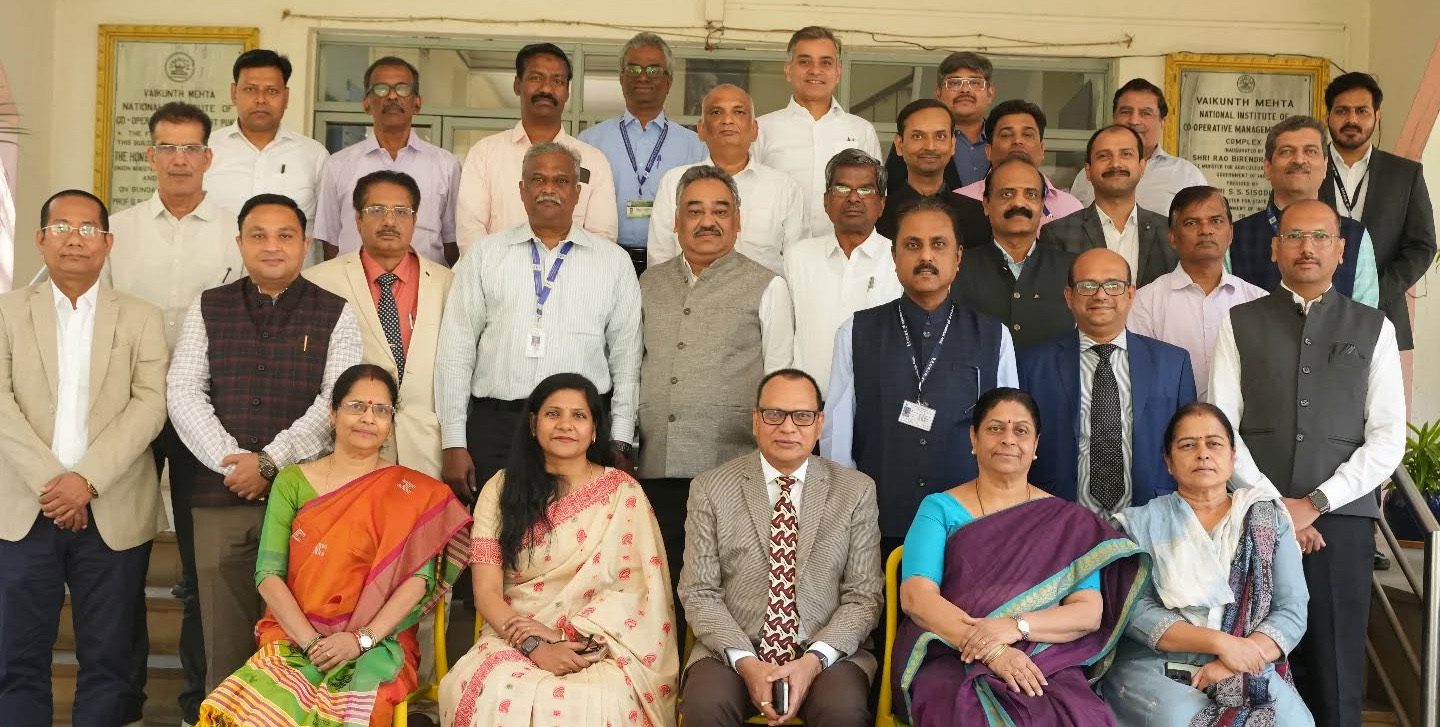
The National Council for Cooperative Training (NCCT) convened its 52nd Conference of Directors of VAMNICOM, Regional Institutes of Cooperative Management (RICMs) and Institutes of Cooperative Management (ICMs) at the Vaikunth Mehta National Institute of Cooperative Management (VAMNICOM) in Pune on Monday, bringing together key stakeholders to review training initiatives and chart the future course of cooperative capacity building in India.
The conference assumed significance as the cooperative sector continues to play a pivotal role in rural development and financial inclusion, in line with the vision of the Ministry of Cooperation to strengthen grassroots institutions. Over the past few years, the Ministry has emphasised professional training and institutional reforms to make cooperatives more efficient, transparent and competitive.
Opening the session, Minu Shukla Pathak, IRS, Secretary, NCCT, welcomed participants and underlined the need to modernise training frameworks to meet emerging challenges. She stressed that capacity building remains central to empowering cooperative institutions and enhancing their contribution to economic growth.
The Director of VAMNICOM highlighted the institute’s role as a premier national centre for cooperative education and training, noting that institutions like VAMNICOM must lead innovation in curriculum design and leadership development. Established in 1964, VAMNICOM has been instrumental in training cooperative professionals and supporting policy-oriented research in the sector.
 Pankaj Bansal, IAS, Additional Secretary in the Ministry of Cooperation and Chairman of the NCCT Executive Council, shared strategic insights on expanding the reach and impact of NCCT’s programmes. He emphasised the importance of aligning training modules with evolving sectoral needs, including digital transformation, governance reforms and business diversification in cooperatives.
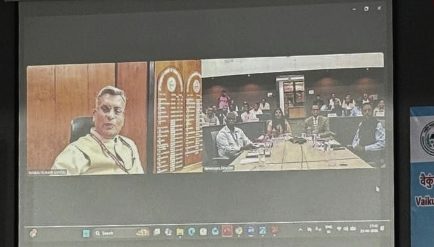
Joining virtually, Siddharth Jain, IAS, Joint Secretary in the Ministry and Vice Chairman of the NCCT Executive Council, called for making training programmes more outcome-oriented. He highlighted the need for measurable results, industry linkages and adoption of modern tools to ensure that cooperative personnel are equipped to handle contemporary challenges.
According to official policy direction, the government has been actively promoting the “Sahakar se Samriddhi” (prosperity through cooperation) vision, with initiatives aimed at strengthening Primary Agricultural Credit Societies (PACS), expanding cooperative reach, and improving access to credit and services in rural areas.
The conference concluded with a reaffirmation of NCCT’s commitment to strengthening the cooperative training ecosystem. Participants collectively emphasised the need for continuous learning, institutional collaboration and innovation to ensure that cooperatives remain a key driver of inclusive growth in India.