







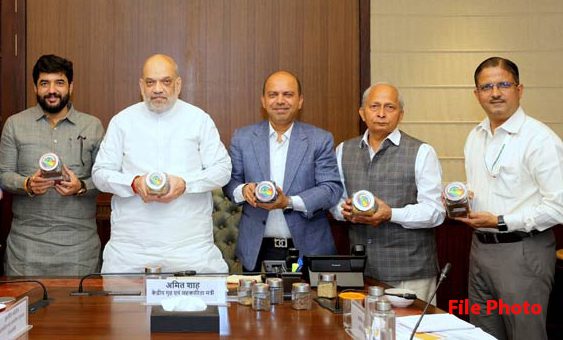
In a remarkable development for India’s cooperative sector, Bharatiya Beej Sahakari Limited has emerged as the country’s largest Multi-State Cooperative Society within just three years of its registration, reflecting the rapid transformation underway in the cooperative ecosystem.
According to the organisation, BBSSL has enrolled over 37,000 cooperative institutions as members, the highest in the country, while expanding its footprint across 34 states. This unprecedented scale highlights the growing acceptance of a unified national platform for seed production, distribution, and agricultural support through the cooperative model. Notably, BBSSL counts a significant number of Primary Agricultural Credit Societies among its members, reinforcing its deep grassroots connect.
BBSSL was established under the guidance of the Ministry of Cooperation as part of a broader push to revitalise India’s cooperative sector. The initiative aligns with the government’s vision of “Sahkar Se Samriddhi,” aimed at strengthening rural economies by empowering cooperative institutions and enhancing their role in value chains such as seeds, fertilisers, and agri-services.
One of the most notable innovations introduced by BBSSL is enabling PACS to directly engage in business with multi-state cooperatives. Traditionally, PACS have largely functioned as last-mile credit providers.
However, this new framework allows them to participate in procurement, processing, and marketing activities, thereby diversifying income streams and improving financial viability at the village level. Experts view this as a game-changing step that integrates grassroots institutions into larger cooperative networks.
The organisation’s focus on seeds is also significant in the context of India’s agricultural priorities. By promoting quality seed production and distribution through cooperatives, BBSSL aims to enhance crop productivity, ensure seed security, and reduce dependence on private intermediaries. This approach is expected to benefit small and marginal farmers by providing timely access to high-quality inputs at affordable prices.
The rapid rise of BBSSL also reflects a broader structural shift in India’s cooperative landscape, where scale, technology adoption, and institutional integration are becoming key drivers of growth.
Digital platforms, improved governance frameworks, and policy support have enabled cooperatives to expand beyond traditional roles and compete more effectively in modern agri-markets.
Officials believe that BBSSL’s success could serve as a model for other sectors, demonstrating how aggregation of small institutions into large federated structures can unlock efficiencies and create sustainable economic opportunities.
By bridging the gap between grassroots organisations and national-level institutions, BBSSL is positioning itself as a catalyst for inclusive growth and rural empowerment.
As India looks to strengthen its agricultural and rural economy, BBSSL’s rapid expansion underscores the potential of cooperatives to drive large-scale transformation while keeping farmers and local institutions at the centre of development.