






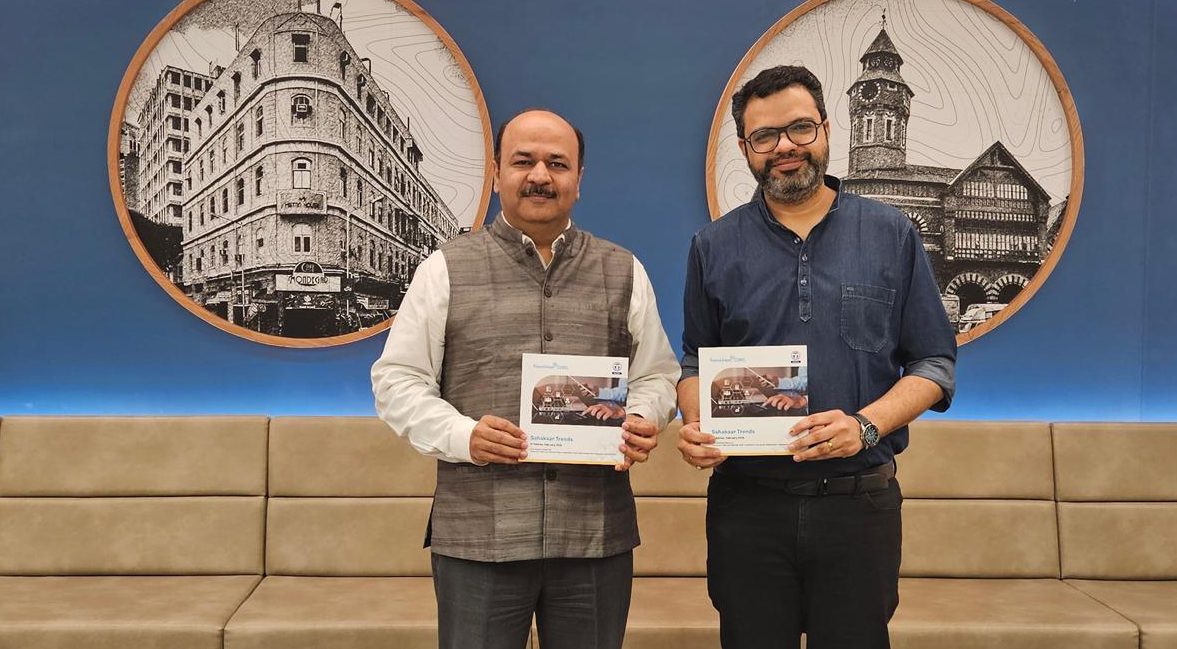
Urban Co-operative Banks (UCBs) are steadily reinforcing their role in India’s credit architecture, with outstanding balances nearly doubling over the past five years even as asset quality metrics show marked improvement. According to the latest edition of Sahakaar Trends, a joint publication by the National Urban Co-operative Finance and Development Corporation (NUCFDC) and TransUnion CIBIL, UCBs’ total outstanding credit reached Rs 3.4 lakh crore as of September 2025, reflecting a 1.9-fold increase compared to September 2020.
Although UCBs account for a modest 1.8 percent share of overall industry credit, the data signals a sector expanding in scale and adapting to evolving borrower profiles, competitive pressures and regulatory expectations.
Growth has been driven by rising demand from retail customers and small businesses, particularly in semi-urban and emerging regions where formal credit penetration remains uneven. Industry leaders say UCBs’ proximity to local communities continues to be a structural advantage, enabling them to extend credit based on relationship-led insights while widening access to the formal financial system.
The portfolio remains concentrated, with eight core products accounting for 83 percent of outstanding balances. Commercial loans lead with a 30 percent share, followed by housing loans at 14 percent and retail business loans at 12 percent.
Loan against property, personal loans, gold loans, auto loans and loans against bank deposits make up the rest of the dominant categories. Over the five-year period, gold loans recorded the fastest compound annual growth rate at 49 percent, followed by auto loans at 38 percent. Housing and retail business loans each expanded at 19 percent CAGR, reflecting sustained traction in both household and small enterprise segments.
Commercial lending continues to anchor UCB balance sheets. Demand indicators show a sharp rise in enquiries since 2020, and UCBs report higher enquiry-to-origination conversion rates than public sector banks.
However, disbursement timelines remain relatively slower, with 45 percent of commercial loan originations disbursed within 15 days compared to 61 percent for PSU banks. Notably, UCBs serve a higher share of entities with exposure above Rs 1 crore and maintain a borrower mix skewed toward low-risk profiles, with nearly half of commercial borrowers classified in the lowest risk band.
Housing loans have emerged as the second-largest portfolio segment, with balances doubling over five years. Demand has been particularly strong in metro and semi-urban markets, attracting younger borrowers, women and new-to-credit customers. Asset quality in this segment has improved, with 90-plus day delinquencies declining to 2.8 percent in September 2025 from 3.2 percent a year earlier.
Personal loans have also seen strengthening demand. UCBs reported significantly higher conversion rates on personal loan enquiries than non-banking finance companies in recent months, though disbursement speeds trail competitors. Importantly, delinquencies in personal loans have fallen sharply from about 4.5 percent in September 2020 to nearly 2.1 percent by September 2025, underscoring better underwriting and monitoring standards.
Gold loans, while constituting 5 percent of the portfolio, represent a notable growth opportunity. Even though UCBs cater to a relatively higher share of below-prime borrowers in this segment compared with PSU banks, balance-level delinquencies have declined steadily, pointing to improved risk management.
The data also highlights untapped potential. Of nearly 30 lakh live retail borrowers with UCBs as of March 2025, only 6 percent have a commercial credit footprint. In the first half of FY26, around 3,000 such borrowers sourced commercial loans from PSU banks, indicating scope for deeper cross-selling within the UCB ecosystem.
Overall, the sector’s trajectory reflects expanding balance sheets, disciplined credit growth and improving asset quality. With ongoing investments in governance, technology infrastructure and risk frameworks, UCBs appear increasingly positioned to strengthen their contribution to inclusive and balanced economic growth across India’s urban and semi-urban landscape.