







Reactions from leaders across the cooperative banking and credit sector to the Union Budget 2026-27 indicate broad appreciation for its reform-oriented and cooperative-centric measures, even as some stakeholders expressed disappointment over the absence of direct tax relief for urban cooperative banks.
Bahadur Gurav, General Manager-in-Charge of Shri Beereshwar Cooperative Credit Society, described the Budget’s cooperative-focused measures as forward-looking. He welcomed tax exemptions for primary cooperatives supplying cattle feed and cotton seed, along with deductions for inter-cooperative dividends under the new tax regime. Gurav also appreciated enhanced support to NCDC and national federations and urged implementation of the Bharat-VISTAAR scheme through cooperatives for wider grassroots impact.
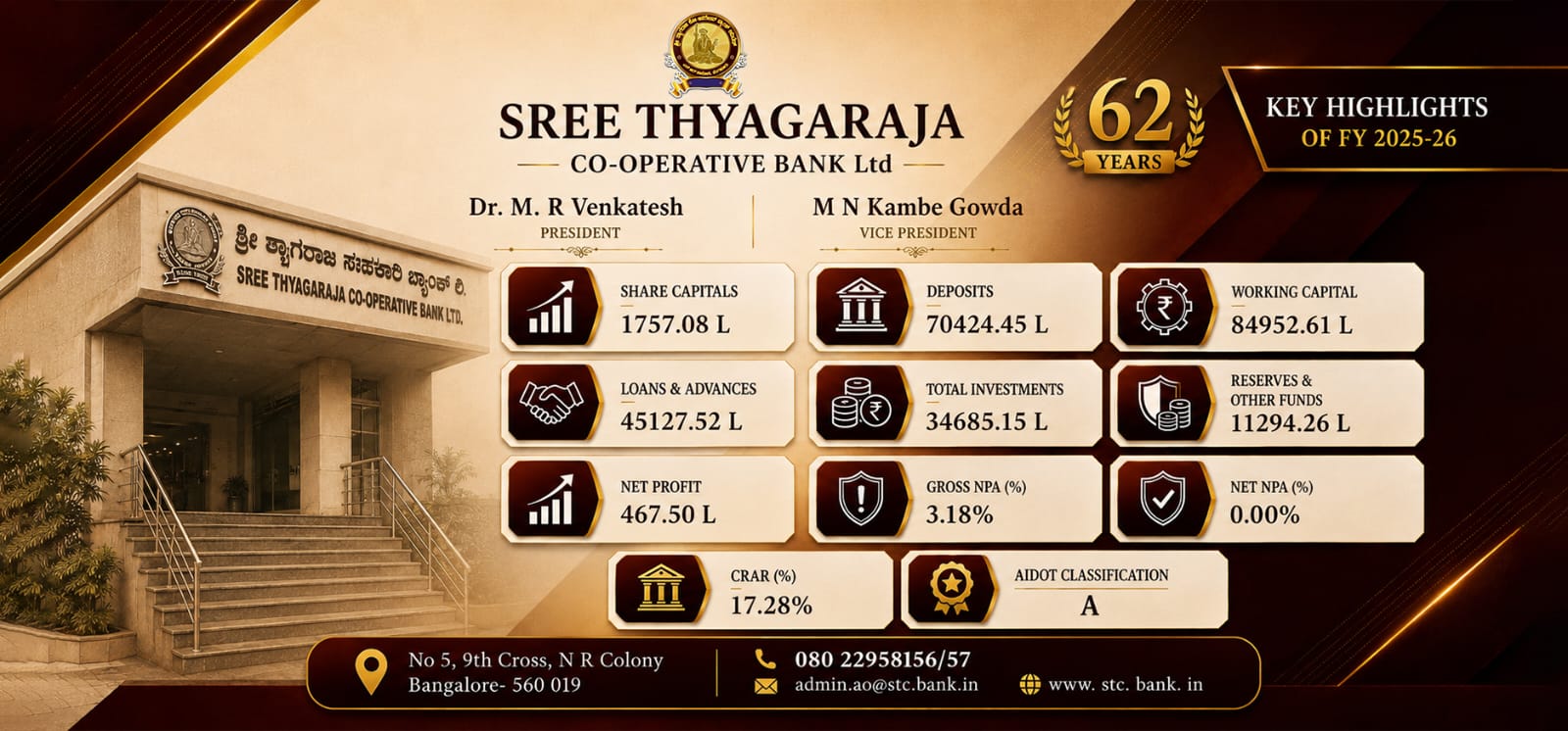
From Karnataka, M. R. Venkatesh, Director of the Karnataka State Urban Cooperative Banks Federation and Chairman of Thyagaraj Cooperative Bank, said the Budget reflects the Centre’s strong commitment to strengthening cooperatives. He welcomed the increased allocation for the Ministry of Cooperation, PACS computerisation, enhanced funding for cooperative education, and greater support to States and Union Territories. He also lauded tax relief measures for primary cooperatives and inter-cooperative dividends, adding that the proposed extension of the Ombudsman framework to cooperatives would enhance transparency and member confidence.
Rajesh Kulshrestha, Managing Director of Uttar Pradesh State Cooperative Bank, said the Budget’s emphasis on tax rationalisation and incentives would improve the financial sustainability of cooperatives. He noted that relief for primary cooperative societies and encouragement for inter-cooperative investments would enhance liquidity, support reinvestment, and strengthen member-driven growth.
Similarly, Mangal Jit Rai, Chairman of the Sikkim State Cooperative Union, described the Budget as progressive. He highlighted tax deductions for cattle feed and cotton seed supply, relief on inter-cooperative dividends to prevent double taxation, and the three-year dividend tax exemption for national cooperative federations. Dr. Rai also welcomed enhanced support to NCDC and stronger linkages between cooperatives and agricultural and rural credit schemes.
Tauseef Hussain, Chairman of The Udaipur Urban Co-operative Bank Ltd. and Director of the Rajasthan Urban Co-operative Banks Federation, termed the Budget progressive and reform-focused. He pointed to its emphasis on ease of compliance, financial inclusion, and credit expansion, stating that measures such as the Central KYC Registry, rationalisation of TDS/TCS, and enhanced MSME support would simplify operations, streamline customer onboarding, and strengthen retail and priority sector lending.
Echoing similar views, Ms. Sayali Bhoir, former CEO of the Maharashtra Urban Co-operative Banks Federation, said the Budget reflects a strong and forward-looking commitment to strengthening the cooperative ecosystem. She welcomed the enhanced allocation for the Ministry of Cooperation, continued support to NCDC, promotion of cooperative exports through NCEL, and digital transformation of PACS. Bhoir also highlighted the increased focus on capacity building, education, and training as a clear signal of intent to empower grassroots cooperatives and promote inclusive, sustainable growth.
Dhananjay Tambekar, Managing Director of Godavari Urban and Director, MAFCOS, said the Budget adopts a balanced approach to growth, stability, and inclusiveness. He noted its strong focus on the rural economy, MSMEs, cooperatives, agriculture, and infrastructure, adding that measures promoting digital transactions, financial discipline, employment generation, and financial inclusion would create a supportive ecosystem for cooperative banks and credit institutions.
However, not all responses were positive. Mohan Parashar, Chairman of the Rajasthan Urban Cooperative Banks Federation, said the Budget does not provide any direct benefit to the cooperative banking sector. He pointed out that only marginal relief through a reduction in surcharge on tax liability has been announced, while the absence of changes in income tax slabs limits meaningful relief for urban cooperative banks.
Offering a nuanced perspective, Vinod G. Dadlani, CGM of Cosmos Cooperative Bank and former CEO of Kalupur Commercial Co-operative Bank, welcomed the Budget’s focus on fiscal prudence, with the fiscal deficit maintained at 4.30% of GDP and continued efforts to reduce the debt-to-GDP ratio. While noting that no specific measures were announced for urban cooperative banks, he acknowledged benefits such as tax relief on inter-cooperative transactions and funding support for agricultural cooperatives. He also said the Three Kartavya framework and the proposed expert committee on banking for Viksit Bharat could prove significant in the long term. (Views expressed are personal.)
Abhijit Patil, Chairman of Adarsha Sahakari Patsanstha, Raigad, said the Budget takes a constructive approach toward strengthening cooperatives through institutional support, capacity building, and tax rationalisation. While welcoming initiatives such as Technical Support Units, enhanced NCEL allocation, and training support, he said that TDS relief on cooperative investments would have had a broader liquidity impact. Patil stressed the need to integrate credible urban cooperative credit societies into the national digital financial ecosystem under clear compliance norms to enhance transparency and financial inclusion.
Subhra Jyoti Bharali, Managing Director of The Industrial Co-operative Bank Ltd., Guwahati, termed the Budget people-centric and encouraging for the cooperative sector. He welcomed provisions for cooperative education and training institutes, expressing confidence that these initiatives would attract youth and skilled professionals to the cooperative movement.
At the same time, Dinesh Oswal, former Chairman of Rajgurunagar Cooperative Bank, said the absence of specific income tax relief for urban cooperative banks has caused disappointment within the sector. Nevertheless, he welcomed tax relief on inter-institutional dividends and described the proposal to set up a High-Level Committee on Banking for Viksit Bharat as a constructive step that could enhance banking outreach and literacy in rural and remote areas.
Dr. Sanjay P. Hosmath, Director, Karnataka State Co-operative Credit Societies Federation Ltd., said the Union Budget 2026–27 sends a positive signal to the cooperative sector. He welcomed tax deductions for primary cooperatives supplying cattle feed and cotton seed, relief on inter-cooperative dividends, and the three-year dividend exemption for national cooperative federations, noting that these measures will improve liquidity, sustainability, and farmer-centric growth.
Anjali Patil, Chairperson, Kalyani Mahila Nagari Sahakari Patsanstha, said Budget 2026–27 brings financial and administrative relief to cooperative credit and salary earners’ societies. She noted the increase in cash withdrawal limits, continuation of Section 80P tax benefits, and reduction in MAT. Patil said digital integration through the National Cooperative Database will improve transparency and governance, while tax relief for salary earners will enhance deposit potential for cooperatives. She added that simplified administrative processes and tax compliance timelines make the budget a positive step towards Viksit Bharat.
Reacting to the budget, Sharangowda Patil, Managing Director, Karnataka State Souharda Credit Cooperative Societies, said it reflects a micro-planning approach with a strong focus on “Sahakar se Samriddhi.” He welcomed the 78 per cent increase in the Ministry of Cooperation’s allocation to ?1,744.74 crore, stating that measures on tax relief, digital infrastructure, and institutional strengthening, along with support for PACS computerisation, Tribhuvan Sahkari University, NCDC, and NCEL, will strengthen governance and the rural economy.
Overall, while the Union Budget 2026–27 has been widely acknowledged for strengthening the cooperative framework through institutional support, tax rationalisation, and capacity building, sector stakeholders continue to seek more targeted measures for urban cooperative banks to fully unlock their potential in India’s growth story.