





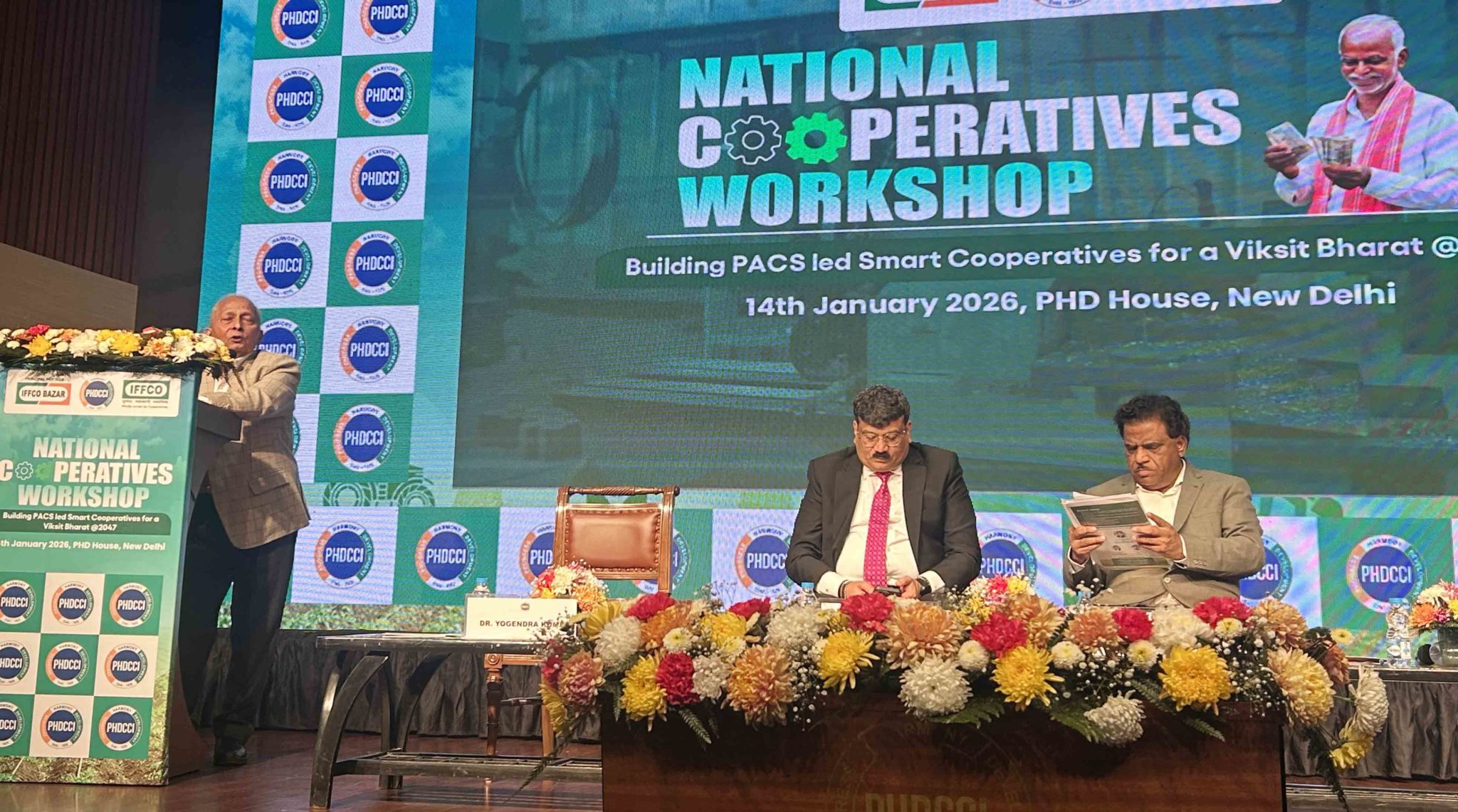
Emphasising the urgent need to reduce excessive dependence on chemical fertilisers, Bharatiya Beej Sahakari Samiti Chairman and IFFCO Marketing Director Yogendra Kumar said that long-term agricultural sustainability can only be achieved by protecting soil health and promoting organic and natural farming practices.
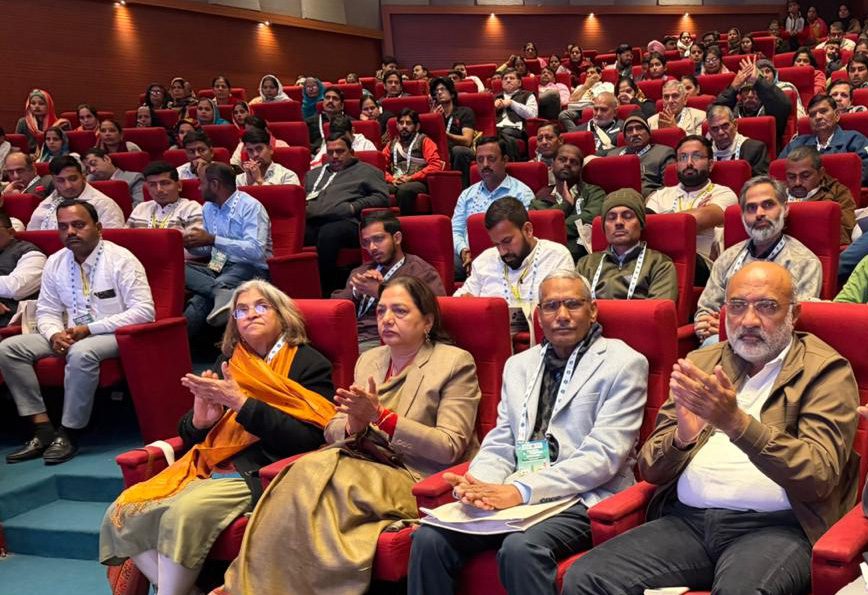
Kumar was speaking at a session organised by the PHD Chamber of Commerce and Industry (PHDCCI) on Wednesday as part of a workshop on sustainable agriculture. The session brought together policymakers, cooperative leaders and agriculture experts to deliberate on challenges and solutions for ensuring environmentally responsible farming.
IFFCO officials Tarun Bhargava and Sanjay Kulshreshtha also participated as panellists and shared insights on cooperative-led initiatives in the sector.
Addressing the gathering, Kumar underlined that true sustainability lies in maintaining soil fertility so that quality agricultural production can be sustained for future generations. He urged farmers and stakeholders to revisit farming practices followed four decades ago, when high productivity was achieved with minimal chemical inputs. “At present, excessive dependence on urea may increase short-term income, but it is steadily degrading soil health and reducing the land’s long-term productivity,” he cautioned.
 Yogendra pointed out that indiscriminate use of chemical fertilisers not only harms soil structure and microbial activity but also affects water quality and ecological balance. He stressed that restoring soil health is critical to ensuring food security, farmer income stability and environmental sustainability.
Highlighting IFFCO’s initiatives in this direction, Kumar said the cooperative has launched the ‘Save the Soil’ campaign, which has received an encouraging response from farmers across various states. The campaign focuses on creating awareness about scientific soil testing and promoting the use of bio-fertilisers, green manure and organic inputs alongside balanced fertiliser application. According to him, soil testing enables farmers to apply nutrients based on actual crop and soil requirements, thereby reducing wasteful input costs.
Stressing the importance of organic manure, Kumar said sustainable agriculture would remain incomplete without strengthening the production and use of organic fertilisers. He noted that organic manure improves soil structure, enhances water retention and increases microbial activity, all of which are essential for long-term productivity.
He cited examples from parts of Haryana, where farmers are increasingly adopting organic farming practices, diversified cropping patterns and improved crop rotation methods with positive results.
He also highlighted the role of nano fertilisers as a supportive technology in the transition towards sustainable farming. He said nano urea and nano DAP can significantly reduce the excessive use of conventional fertilisers while ensuring efficient nutrient delivery to crops and protecting soil health.
In his concluding remarks, he appealed to participants to contribute to ecological balance by planting at least five trees at their homes. He suggested planting species such as Indian gooseberry (amla), bael (bel), neem and lemon, noting that these trees provide environmental benefits while also supporting household nutrition and biodiversity.
The session reinforced the role of cooperatives and responsible input management in building a sustainable and resilient agricultural future for the country.