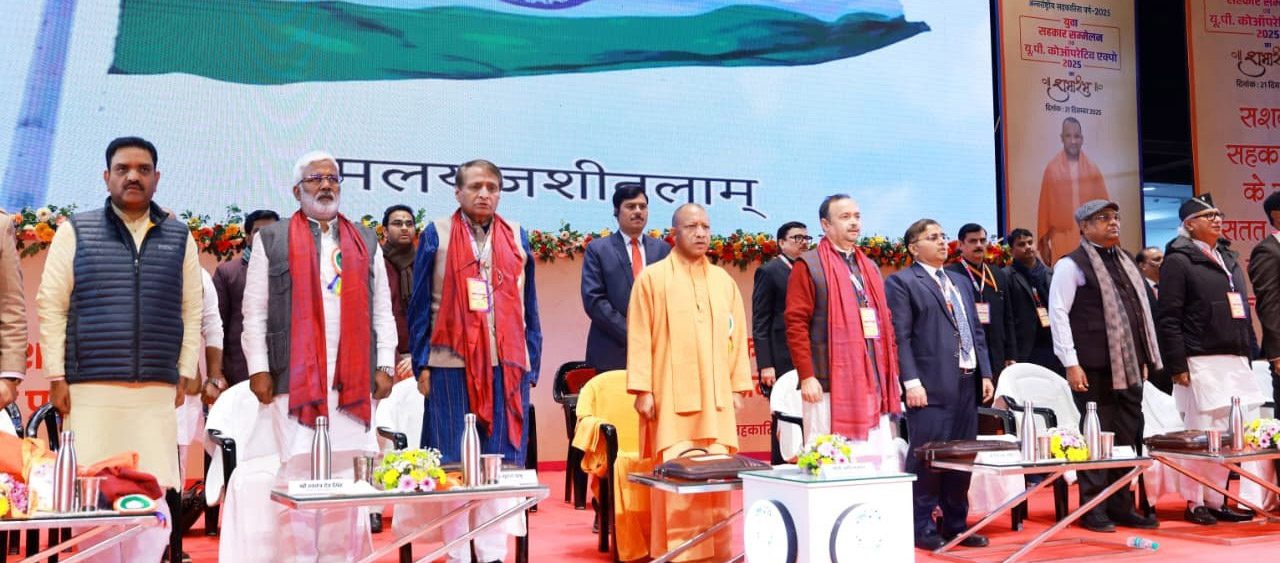







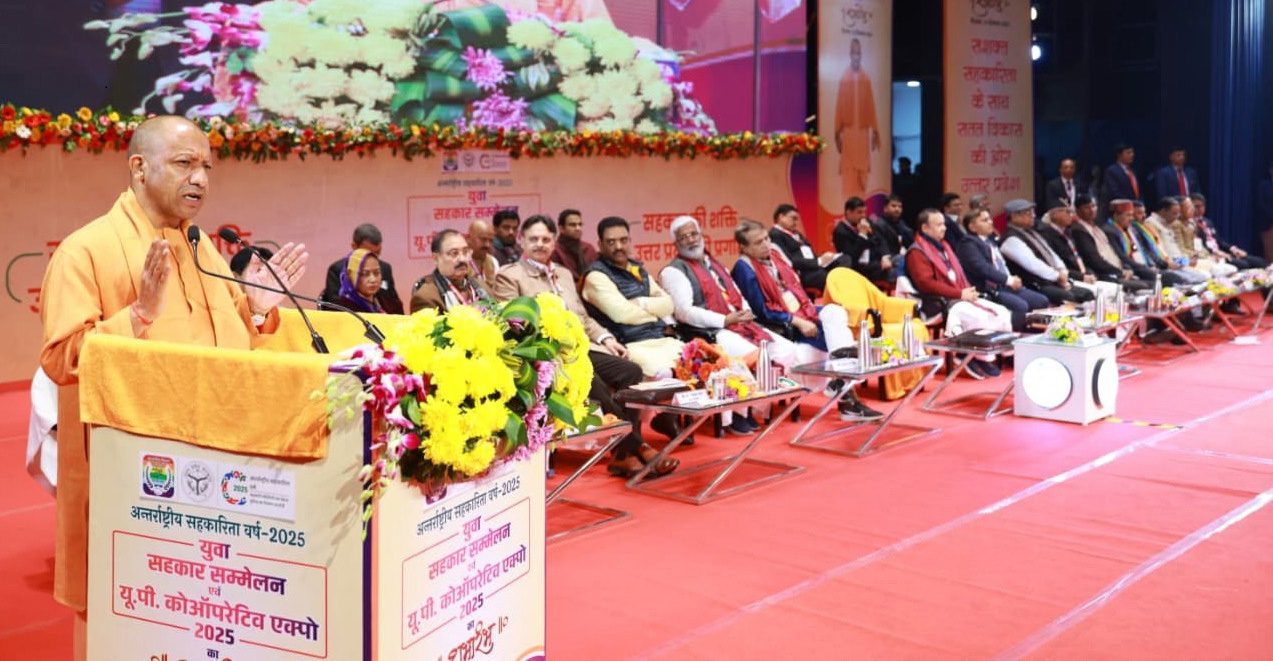
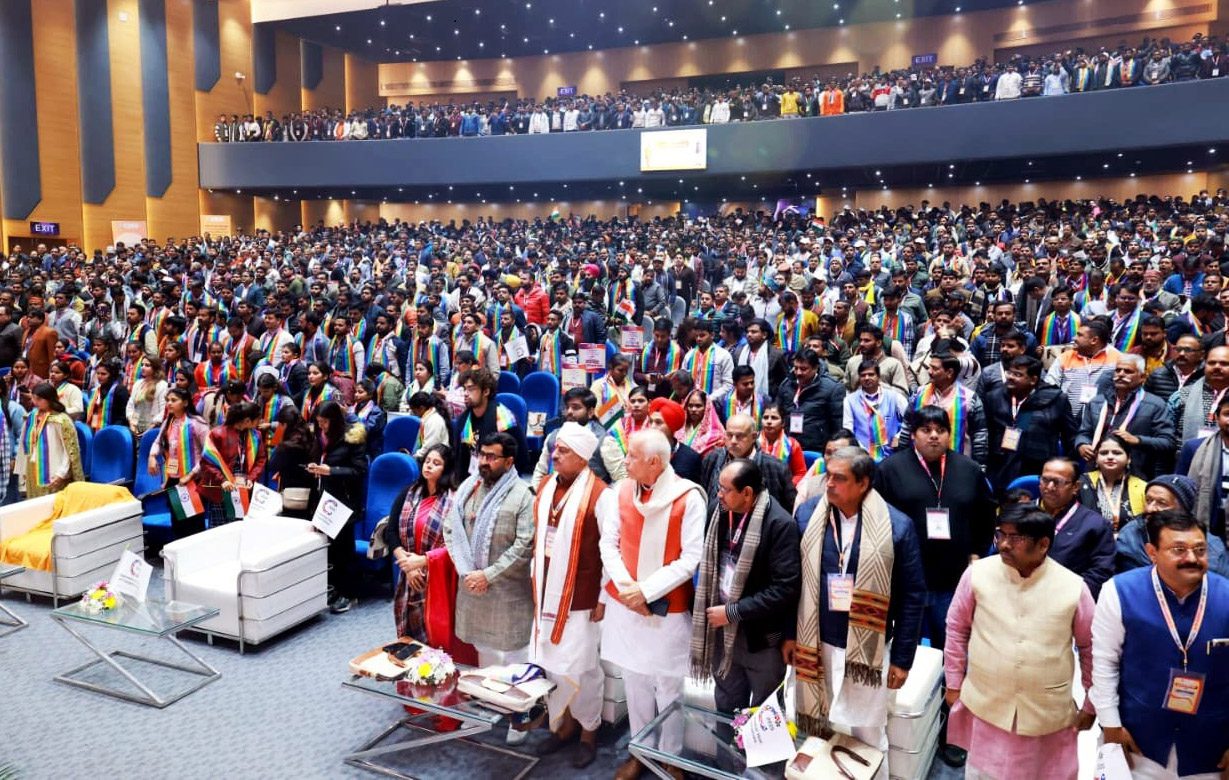
Lucknow witnessed a major push to strengthen the cooperative movement as the Uttar Pradesh government announced a historic reduction in agricultural loan interest rates while formally concluding the International Year of Cooperatives–2025 with the grand inauguration of the Youth Cooperative Conference–2025 and Cooperative Expo at Indira Gandhi Pratishthan on December 21.
Chief Minister Yogi Adityanath declared that loans provided through the Uttar Pradesh Cooperative Village Development Bank would be brought down from 11.50 percent to 6 percent, a move aimed at providing significant relief to small and marginal farmers across the state.
The event was organised by the Cooperation Department of the Uttar Pradesh government and attended by a large gathering of ministers, legislators, senior bureaucrats and cooperative leaders. Former Union Cabinet Minister Suresh Prabhu, state cabinet ministers Swatantra Dev Singh, Asim Arun, Girish Chandra Yadav and J.P.S. Rathore, along with senior IAS officers and elected representatives, were present, underlining the political and administrative importance accorded to the cooperative sector.
Addressing the gathering, Chief Minister Yogi Adityanath said the theme of the International Year of Cooperatives, “Cooperatives Build a Better World,” reflected India’s development philosophy rooted in trust, participation and social equity.
 He noted that the vision of “Prosperity through Cooperation,” articulated by Prime Minister Narendra Modi, gained institutional strength with the formation of a dedicated Ministry of Cooperation under Union Home and Cooperation Minister Amit Shah, which has infused new direction and momentum into the movement nationwide.
The Chief Minister highlighted that Uttar Pradesh has emerged as a key driver of cooperative reforms during IYC 2025. He recalled that the year-long celebrations were formally launched by the Prime Minister at the International Cooperative Alliance global conference in New Delhi in November 2024, followed by the state-level launch in Uttar Pradesh on January 26, 2025, marked by a massive “Run for Cooperation” marathon involving thousands of citizens.
Detailing the state’s achievements, Yogi Adityanath said cooperative banks in Uttar Pradesh had undergone a remarkable turnaround. All 50 district cooperative banks are currently profitable, a sharp contrast to the financial distress they faced in earlier years.
In 2024–25 alone, cooperative banks recorded profits exceeding Rs 162 crore. He stressed that cooperative banks in the state were no longer weak institutions but had regained public confidence, with deposits rising sharply and nearly two lakh new accounts opened.
The Chief Minister emphasised the success of the MPACS membership drive, which added around 24 lakh new members, mobilised Rs 43 crore in share capital and generated over Rs 550 crore in deposits for district cooperative banks.
He also pointed to expanded roles for MPACS in fertiliser distribution, operation of Jan Aushadhi Kendras, and enhancement of rural storage capacity. Nearly 980 MPACS buildings have been renovated at a cost of about Rs 70 crore, with further budgetary support planned for 2025–26.
A notable focus of the event was youth and women’s participation. Beneficiaries under youth entrepreneurship schemes and the Chief Minister’s Youth Self-Employment Scheme received loan sanction cheques, while women trained under the Nammo Drone Didi initiative were honoured for their performance in modern agricultural services. The programme also showcased the training of drone operators and the integration of technology into cooperative-led agriculture.
Outstanding contributions to the cooperative movement were recognised through awards to district magistrates, cooperative officials and bank leadership from several districts for achievements in membership expansion, infrastructure rejuvenation and deposit mobilisation.
Senior officers from Varanasi, Maharajganj, Barabanki and other districts were specifically commended for strengthening cooperative institutions and improving rural storage and service delivery.
Concluding his address, Chief Minister Yogi Adityanath said the future of the cooperative movement lay with youth, describing them as both its backbone and architects. He asserted that the Youth Cooperative Conference would serve as a milestone in generating employment, strengthening rural livelihoods and building a resilient, inclusive economy through cooperation in Uttar Pradesh.