






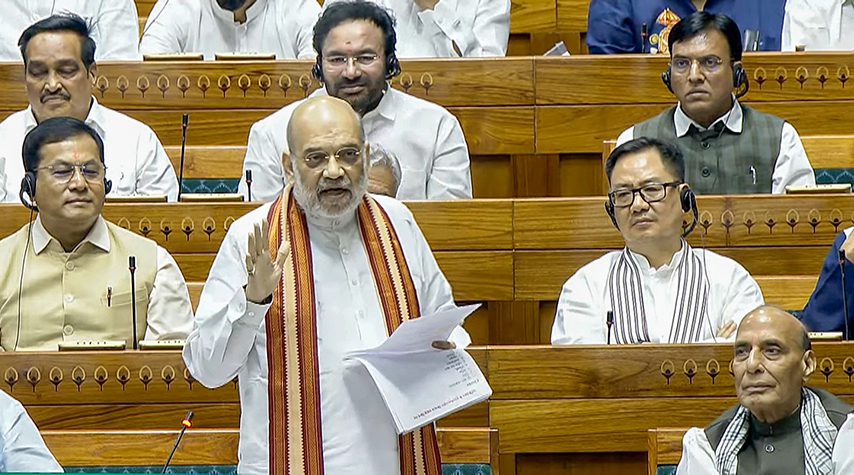
Union Home and Cooperation Minister Amit Shah, in a written reply in the Lok Sabha, highlighted a series of major initiatives undertaken by the National Council for Cooperative Training (NCCT) to strengthen cooperative education, capacity building and grassroots training across the country.
Shah informed that, on the directions of the Ministry of Cooperation, the NCCT has constituted a special committee to develop NEP-aligned, age-appropriate and grade-specific modules on cooperatives for Classes VI to X.
In a significant step, NCERT has already introduced a chapter on cooperatives for Class 6, following sustained persuasion by NCCT and guidance from the Ministry, enabling young students to gain foundational awareness of the cooperative movement.
To further deepen this exposure, NCCT, in consultation with NCERT, has developed a Special Module on Cooperation aimed at secondary-level students of NCERT schools. The module seeks to inspire youth to understand the role of cooperatives in nation-building and consider cooperatives as a career path.
The Minister also stated that the government has opened a new object head, “Grants-in-Aid General”, for NCCT-an important financial reform that will allow the Council to continue its vital work in cooperative training and education without strain on the Training and Development Fund (TDF). The Ministry has simultaneously constituted Building Sub-Committees for each NCCT institute to ensure timely expansion and upgrade of training infrastructure.
NCCT’s training interventions have expanded sharply. In collaboration with CSC e-Governance Services India Ltd, 648 training programmes were conducted for PACS on-boarded onto the CSC Portal, covering 30,210 participants across 564 districts in 25 States. A fresh round of activation and on-boarding training for over 24,500 PACS has also been initiated as per directions of the Ministry.
Shah further informed that NCCT has started training newly established Multi-Purpose Cooperative Societies (M-PACS). With 22,283 MPCS created nationwide, 153 programmes have already been completed, training 6,817 participants as on 31 October 2025.
Under a MoU signed with the Agriculture Ministry’s Crop Insurance Division, NCCT will conduct 200 training programmes to build capacity among 10,000 PACS stakeholders under PMFBY/RWBCIS. The proposal has been approved and is being implemented in phases.
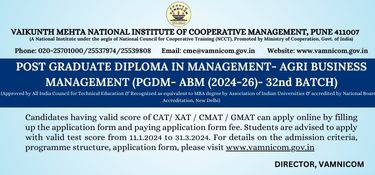
In the academic domain, RICM Chandigarh has launched a biannual peer-reviewed journal, Sahkarita Anusandhan, with its first issue released in April 2025 and the second due in December. The institute is also reviving the PGDM-ABM programme, approved by AICTE, with admissions beginning December 2025.
Shah added that a new initiative is also underway wherein PMBI, in collaboration with NCCT, will train PACS to operationalise 300 new PMBJKs with approved store codes.
With these large-scale interventions, Amit Shah noted, NCCT is emerging as a central pillar in the government’s mission to strengthen cooperative education, training and institutional capacity across India.