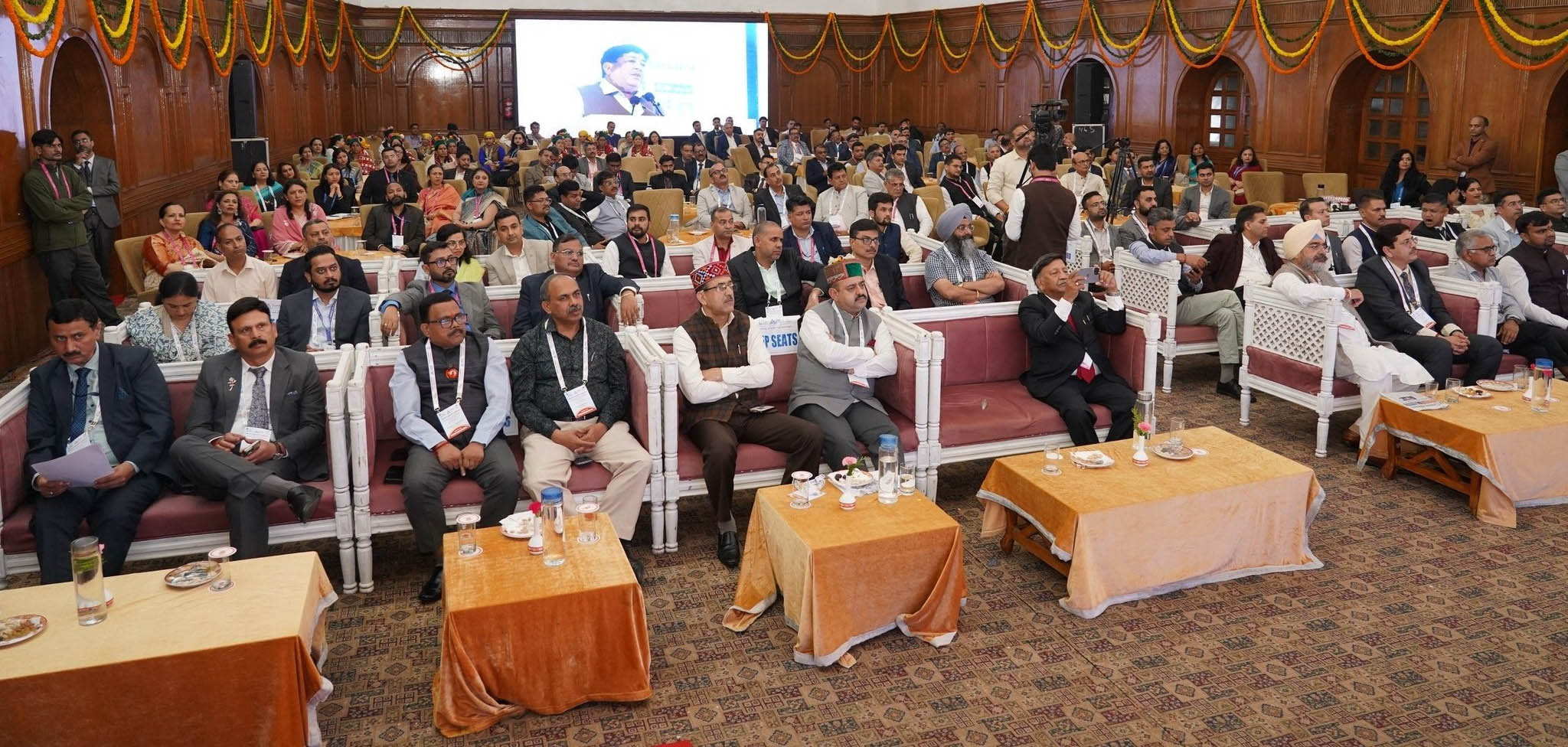







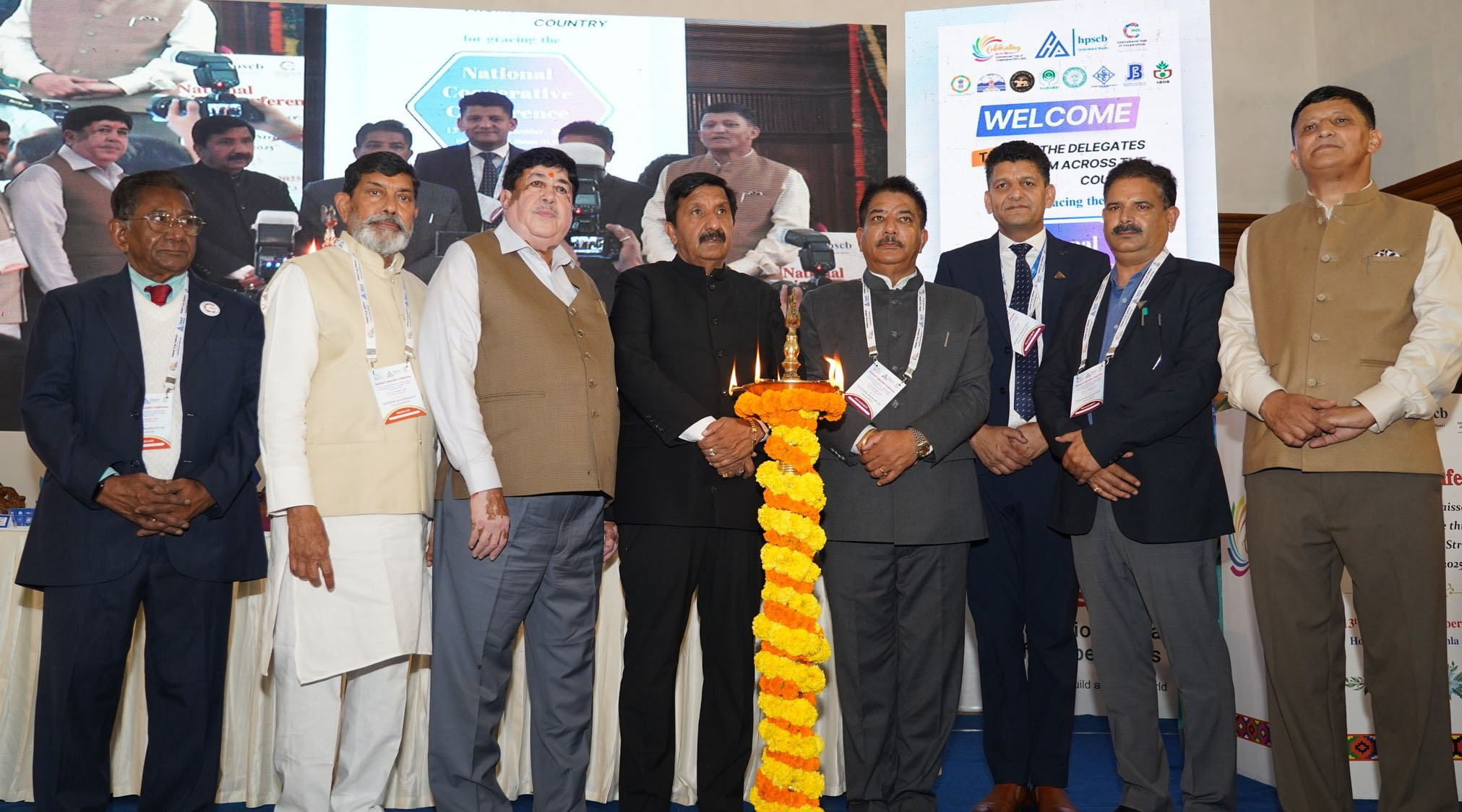
The Himachal Pradesh State Cooperative Bank, as part of the United Nations’ International Year of Cooperatives (IYC-2025) celebrations, hosted a two-day National Cooperative Conference in Shimla. The conference began on Saturday with its inaugural session attended by top cooperative leaders, policymakers, and banking officials.
The event was graced by Himachal Pradesh Deputy Chief Minister and Cooperation Minister Mukesh Agnihotri, NCUI Chairman Dileepbhai Sanghani, NAFSCOB Chairman Konduru Ravinder Rao, NAFCARD Chairman Dollar Kotecha, Himachal Pradesh State Cooperative Bank Chairman Devendra Shyam, MD Sharwan Manta along with chairmen and MDs of state cooperative banks, senior officials from RBI, NCDC, and other key stakeholders.
In his address as a chief guest, Deputy Chief Minister Mukesh Agnihotri traced Himachal Pradesh’s legacy as the birthplace of India’s cooperative movement, which began over 125 years ago with the first cooperative society formed in 1906 in Haroli village.
He noted that today, the state’s cooperative banks and societies manage more than Rs 60,000 crore of capital, a symbol of people’s trust. “This Mahakumbh of cooperatives, hosted by Himachal Pradesh State Cooperative Bank, is scripting history. Himachal Pradesh, where India’s cooperative journey began, remains a stronghold of cooperative power with 10 cooperative banks and thousands of societies,” he said.
Welcoming the delegates, Devendra Shyam said the International Year of Cooperatives 2025 has opened new opportunities to strengthen the sector. He noted that the conference would deliberate on emerging challenges and initiatives, with a special focus on technology adoption, dairy development, and livelihood generation in hilly regions.
“We are working under the theme of ‘Prosperity through Cooperation,’ empowering cooperatives to expand into new areas such as milk production and allied activities,” he said.
NAFSCOB Chairman Konduru Ravinder Rao described the conference as a bold and timely initiative to reinvent and revive the cooperative structure in India.
He pointed out that while cooperatives once held an 80% share in India’s credit system, this has fallen to nearly 10–12% today. “With 30–40% of the population still unbanked, cooperatives, with their last-mile reach, are best positioned to bring people into the banking fold. Our share must rise to 40–50% in the coming years to fulfill the vision of Viksit Bharat,” he asserted.
NCUI Chairman Dileepbhai Sanghani hailed the Government of India’s steps under Prime Minister Narendra Modi, particularly the creation of a dedicated Ministry of Cooperation under Amit Shah.
He highlighted reforms such as the introduction of model by-laws, new cooperative societies in seeds, organic farming, and exports, and the strengthening of PACS and village institutions like CARD. Calling cooperatives not just a business model but a movement of “trust, equality, and collective progress,” Sanghani urged the sector to innovate in honey farming, dairy, and fertilizer technology.
“Peaceful and bloodless revolutions are possible only through the cooperative movement. From Devbhoomi Himachal, we call for making cooperatives the foundation of a self-reliant India,” he said.
A vote of thanks proposed by NAFSCOB MD Bhima Subramanyam, who commended the collaborative spirit of the participants and underlined the significance of the conference in shaping the cooperative sector’s roadmap for the future.